In Conversation with Claudia Rose and Vincenzo De Cotiis

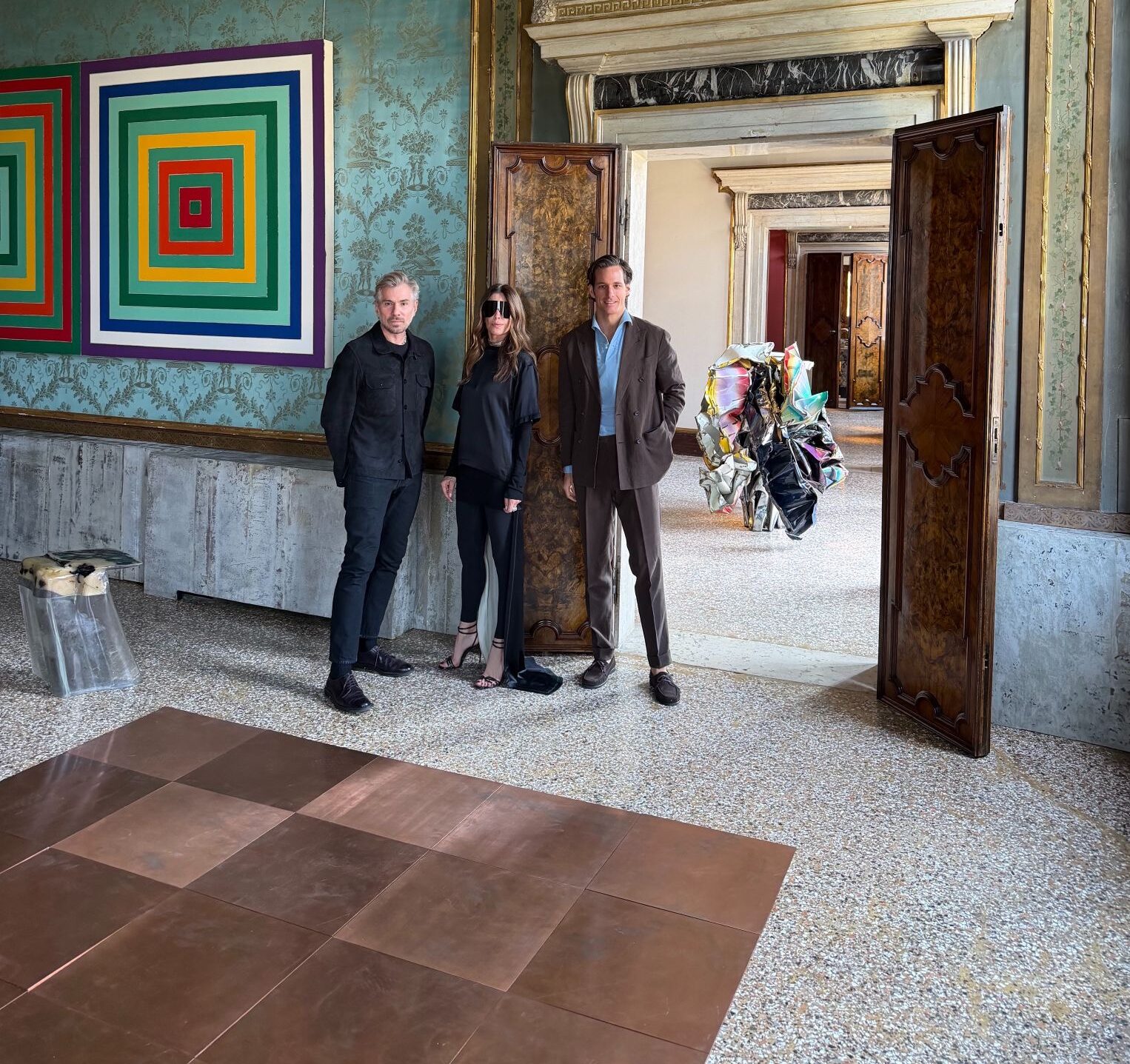
In light of Lawrence van Hagen’s collaboration with the Vincenzo De Cotiis Foundation, Lawrence spoke with artist and architect Vincenzo De Cotiis, as well as with the President of the Vincenzo De Cotiis Foundation, Claudia Rose De Cotiis. The trio recently opened Minimal Legends, bringing together works by historic Minimalist artists within one of Venice’s most remarkable cultural settings, the Vincenzo De Cotiis Foundation. The exhibition creates a dialogue between Minimalist masterpieces and Vincenzo De Cotiis’s contemporary practice.
Lawrence van Hagen approached Claudia Rose and Vincenzo about the collaboration because it felt like a natural extension of LVH Art’s evolving vision. As LVH Art expands into design advisory, collaborating with Vincenzo De Cotiis and the Vincenzo De Cotiis Foundation on this exhibition felt like a beautiful fit. Lawrence has long admired De Cotiis’s work, particularly his unique ability to blur the boundaries between art, architecture, and design, creating environments that are as compelling as the objects within them. At the heart of LVH Art is a desire to present artworks beyond the confines of the traditional gallery space. By staging exhibitions in exceptional and often unexpected settings, Lawrence seeks to create new conversations between artworks, architecture, and their surroundings. Minimal Legends offered a rare opportunity to present historic Minimalist works in a context unlike any other. The Vincenzo De Cotiis Foundation provided the ideal setting: housed within a historic Venetian palazzo yet transformed through De Cotiis’s distinctly contemporary vision, it embodies a compelling balance between heritage and modernity. When Lawrence first visited the Foundation, he was struck by its atmosphere and originality, describing it as one of the most remarkable spaces he had encountered in Venice. As President of the Foundation, Claudia Rose shares a commitment to creating meaningful and unexpected dialogues between art, design, architecture, and culture. This shared vision made the co-curation of the exhibition a natural partnership, allowing Claudia Rose and Lawrence to bring together their perspectives in a thoughtful way.
LVH Art: Your work often exists between art and architecture. Do you still think of these as separate disciplines, or do they now feel like one continuous language?
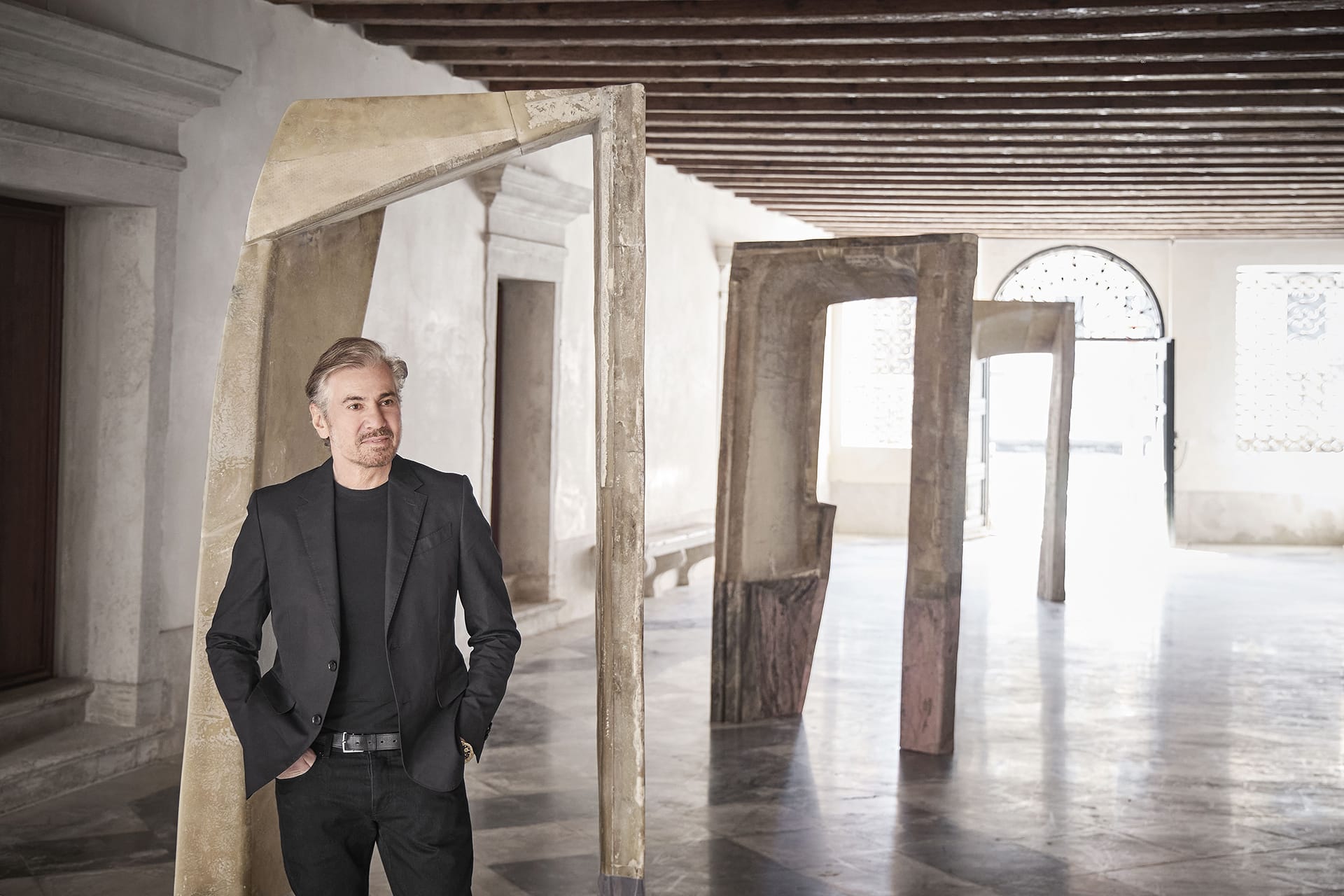
Vincenzo De Cotiis: For me, art and architecture have never been entirely separate. Architecture gives structure, proportion and space, while art introduces emotion, tension and intuition. Over time, these boundaries have become increasingly fluid in my practice. I see them as one continuous language where materials, light, memory and emotion coexist. Whether I am creating an interior, a sculpture or a functional object, the process always begins from the same desire: to create an atmosphere capable of transmitting emotion and reflection.
LVH Art: When starting a new work, what comes first for you: the material, an idea, or an emotion?
Vincenzo De Cotiis: Usually it begins with an emotion or an instinctive sensation. Material then becomes the tool through which that emotion can take shape. I have always been fascinated by the memory contained within materials, especially surfaces marked by time, oxidation and transformation. The process is very intuitive and organic. Often the material itself begins to guide the direction of the work, revealing unexpected possibilities during its transformation.
LVH Art: As President of the Vincenzo De Cotiis Foundation, and a co-curator of the exhibition why did you feel that this collaboration with Lawrence van Hagen was a meaningful and compelling partnership for the Foundation during the Venice Biennale?
Claudia Rose De Cotiis: The collaboration felt very natural because it was based on a shared sensitivity toward art and functional art. Lawrence Van Hagen has a deep understanding of contemporary culture and collectors, and we felt that this dialogue could bring an interesting perspective to the Foundation during such an important cultural moment as the Venice Biennale.
Minimal Legends also reflects the Foundation’s desire to create intimate and thoughtful encounters between historical works, contemporary creation, and architecture. It was important for us that the exhibition feels like a curated experience integrated within the private, intimate atmosphere of the palazzo.
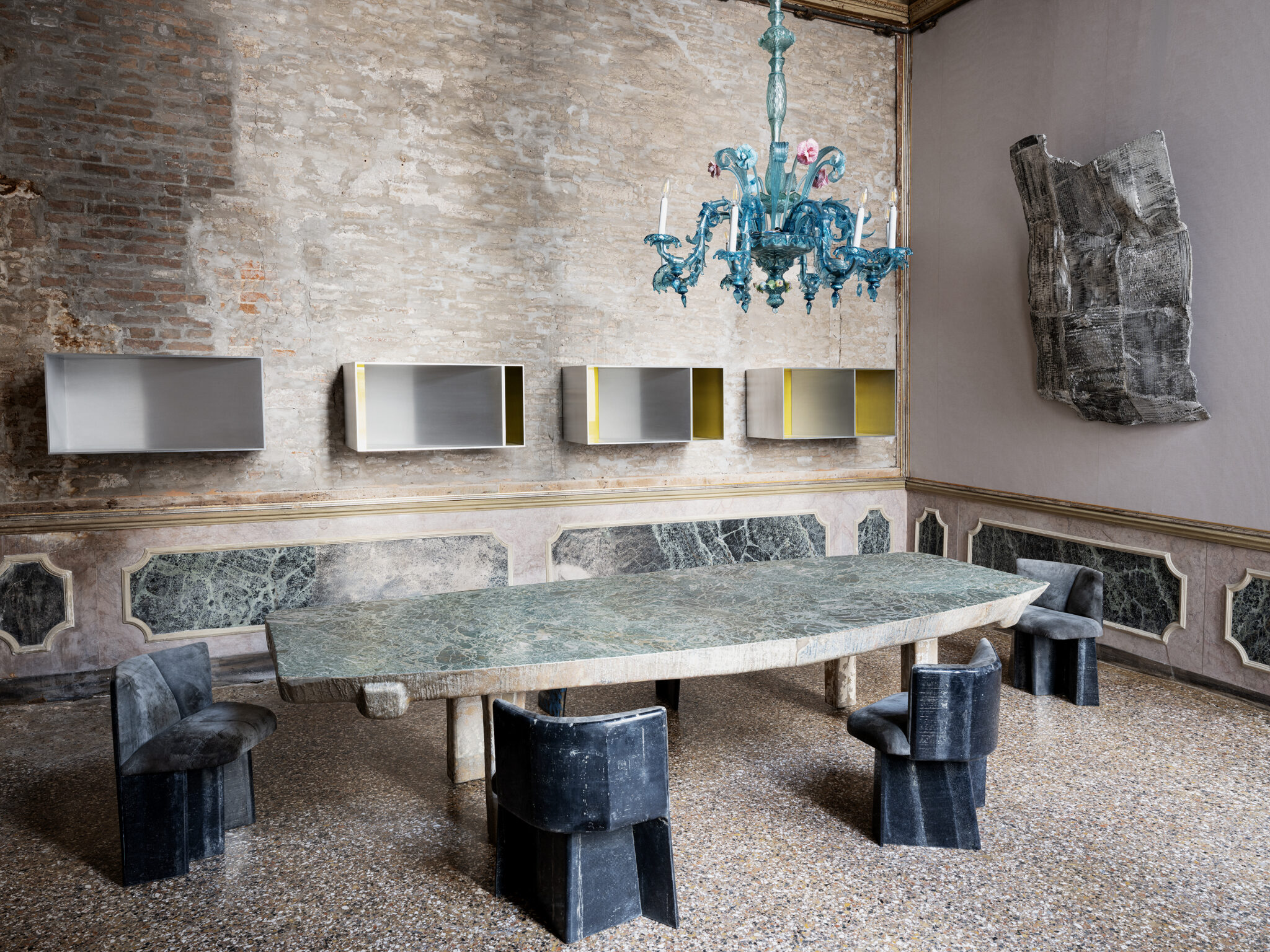
LVH Art: For the Minimal Legends exhibition, could you explain why you selected the two works, Untitled (1997) and Untitled (2026), to be included in the exhibition? Could you tell us more about these two works, what materials they are made of, and the ideas or process behind them?
Vincenzo De Cotiis: The decision to include Untitled (1997) and Untitled (2026) was connected to the idea of creating a dialogue across time. Although separated by almost thirty years, both works reflect a continuity within my research into materiality, abstraction and transformation.
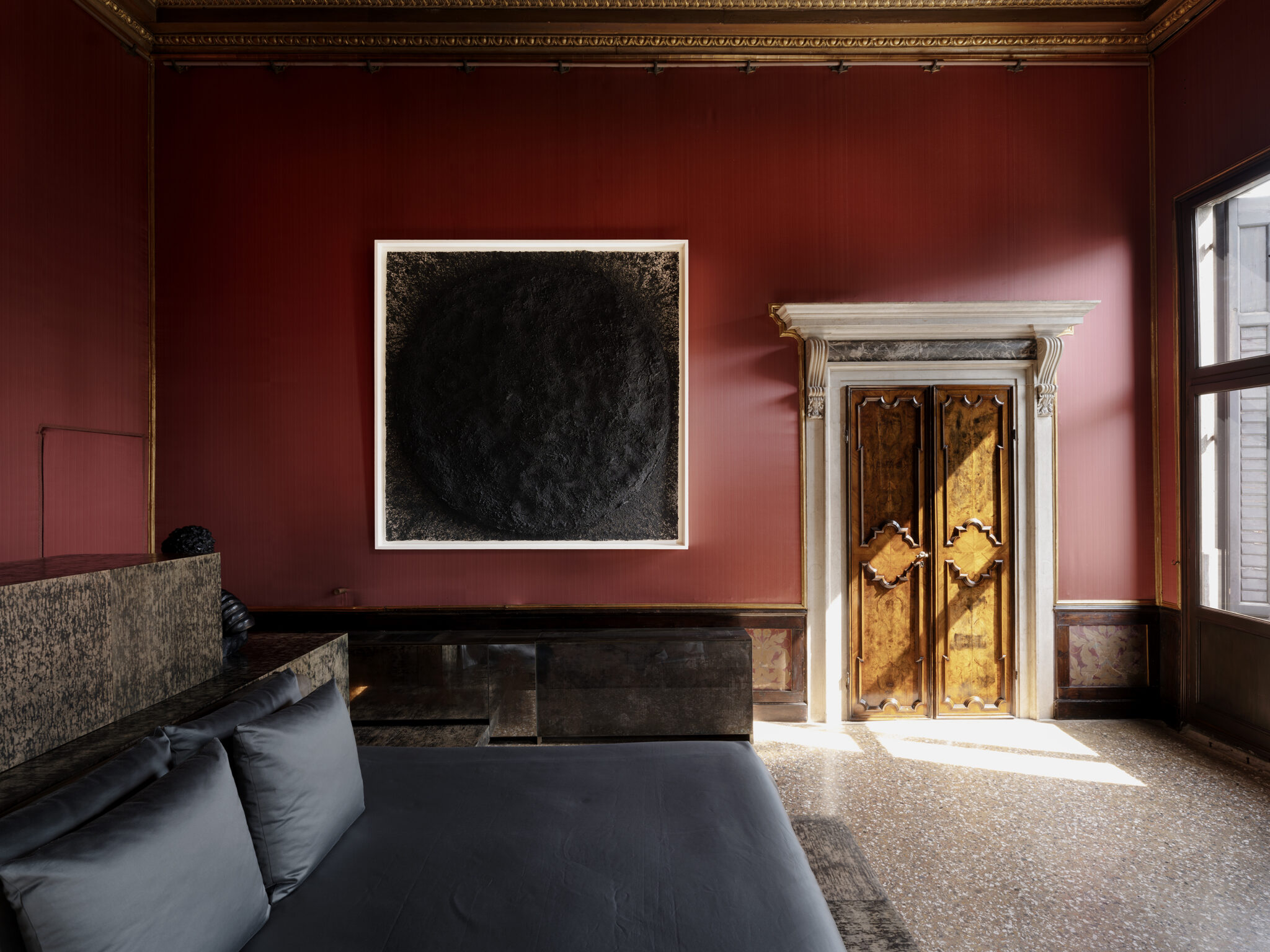
Untitled (1997) represents an earlier moment in my practice, where I was already exploring the relationship between raw materials and sculptural form. The work carries a certain tension between control and imperfection, something that remains central in my work today. During this period, I was particularly focused on exploring the expressive potential of recycled and reclaimed materials, which became central to my investigation of memory, transformation and material authenticity.
Untitled (2026), on the other hand, reflects a more mature and distilled language. The surface, the layering of materials and the interaction with light become almost meditative. The work embodies a quieter but deeper form of tension.
Both works are composed of layered recycled industrial metals and recycled fiberglass. The process behind them is very physical and experimental. I never seek perfection. I am interested in transformation, fragility and the traces left by time and human intervention.
LVH Art: Minimalism is often associated with restraint, order, repetition and reduction. Yet in this exhibition, these works are shown within a richly layered Venetian palazzo. What do you think is interesting in that contrast?
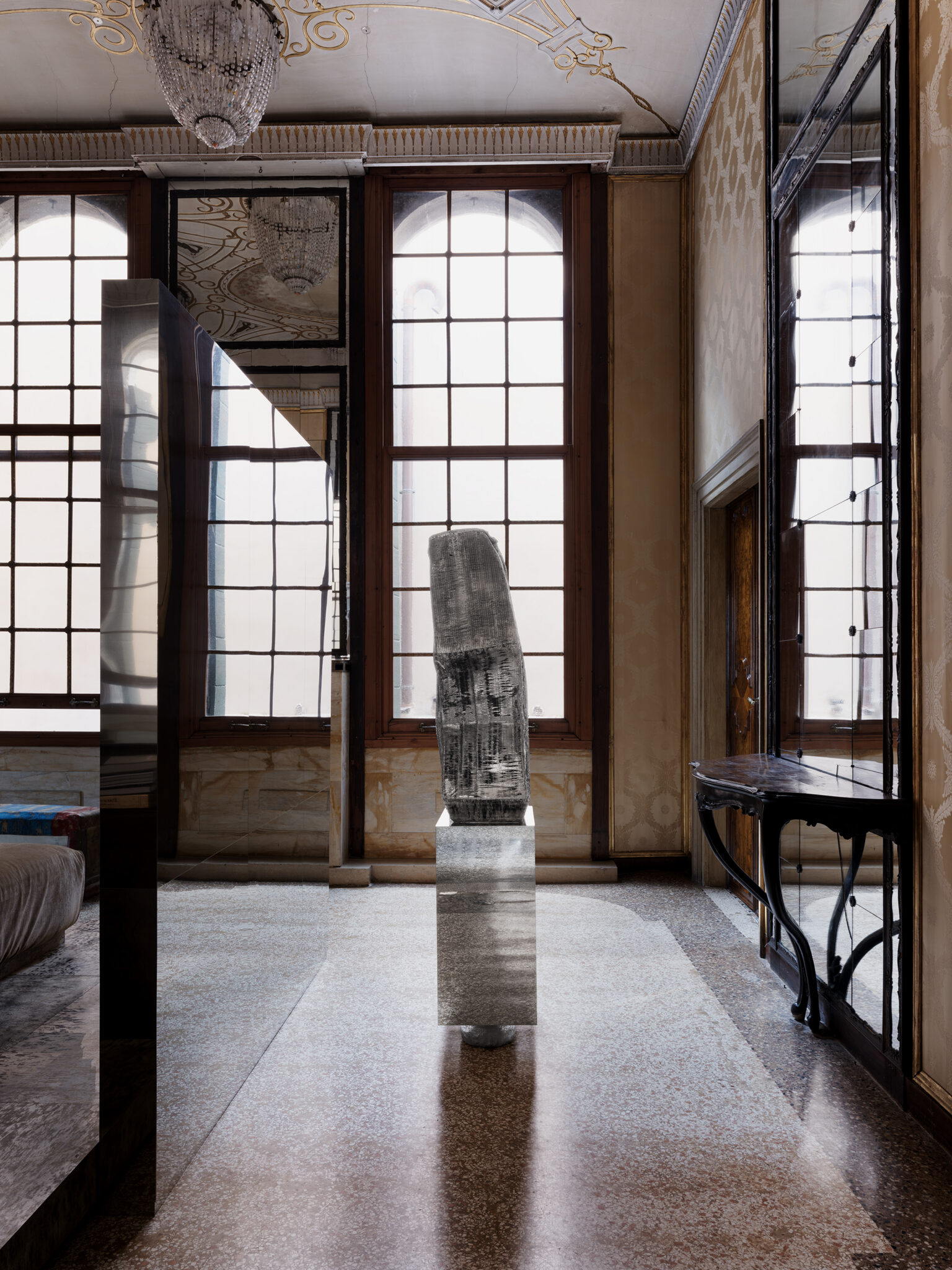
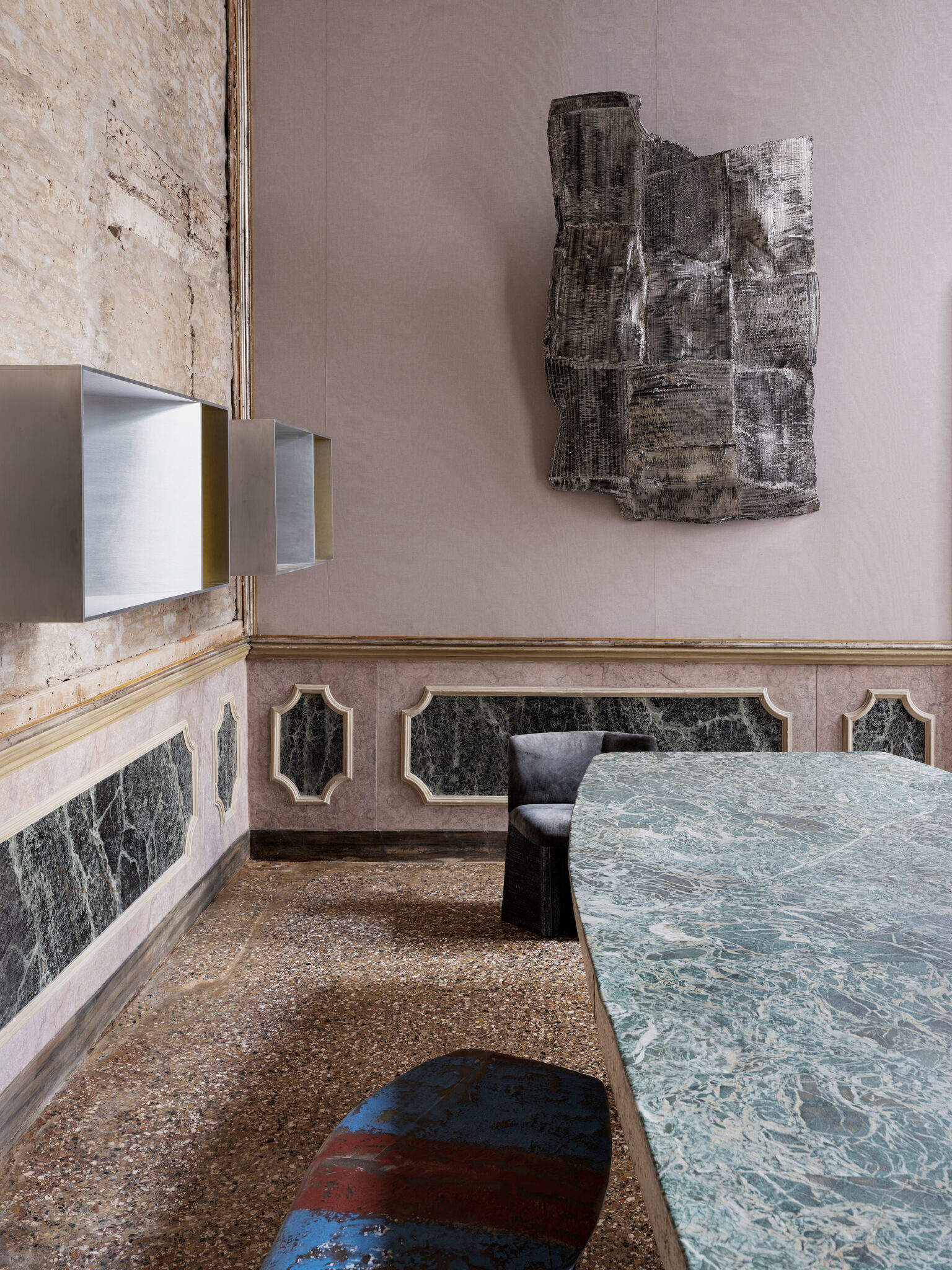
Claudia Rose De Cotiis: The contrast is precisely what makes the exhibition powerful. The purity and silence of Minimalist works become amplified within a space filled with history, texture and memory.
Venice itself is a city of layers, erosion and beauty shaped by time. Presenting Minimalist works within this context creates tension but also harmony. The works are no longer isolated objects. They begin to interact emotionally with the architecture, the light and the atmosphere of the palazzo. Venice has historically been, and remains today, a city where different cultures and influences meet and interact.
LVH Art: What resonated most strongly with you when collaborating on this exhibition?
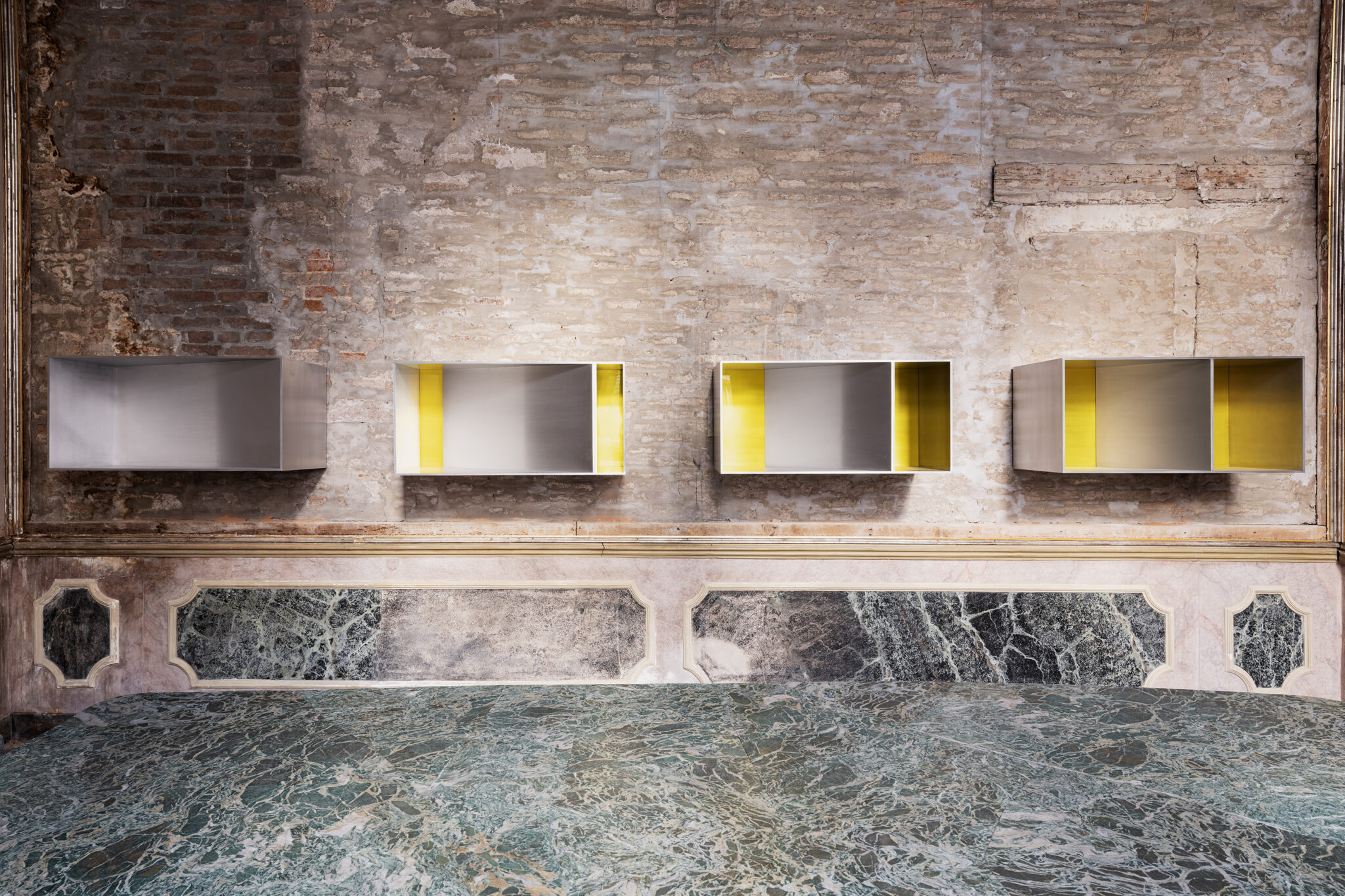
Claudia Rose De Cotiis: What resonated most strongly was the dialogue between the historical Minimalist works and the emotional, layered atmosphere of the Foundation itself. I wanted to create a dialogue between Vincenzo’s fine artworks and the Minimalist context. Some of the works, such as John Chamberlain’s sculpture, are not strictly Minimalist, yet they reflect a similar approach to materiality, transformation and the expressive potential of reclaimed materials. This created a compelling dialogue that felt both unexpected and alive.
I was also fascinated by how differently each visitor experienced the exhibition. Some focused on the purity and silence of the Minimalist works, while others became absorbed by the relationship between the works, the architecture and the textures of the palazzo. This multiplicity of interpretations was very meaningful.
LVH Art: Is there a Minimalist artist in the exhibition whose practice you feel resonates particularly strongly with your own practice?
Vincenzo De Cotiis: I feel a strong connection with artists such as Richard Serra and Donald Judd, although in very different ways. Serra’s relationship with weight, matter and physical presence is something I deeply admire. His works create an emotional and spatial experience through material itself.
With Judd, I appreciate the rigor and clarity of form, qualities that strongly resonate with my architectural practice. However, while Minimalism often pursued purity and reduction, my own work introduces imperfection, layering and emotional memory. I am interested in the tension between order and erosion, between precision and instability.
LVH Art: What was your original vision for the Vincenzo De Cotiis Foundation, and how has that vision evolved since opening it in Venice? Where do you want to take it next?
Claudia Rose De Cotiis: The original vision was to create a living cultural space where art, architecture and functional art could coexist in a more intimate and human way. We never wanted the Foundation to feel institutional or static. It was important to preserve the soul of the palazzo while creating a platform for dialogue and experimentation. It was important to preserve the feeling of a private apartment, where one can experience a historic space while being surrounded by modern and contemporary art and functional art.
Since opening, the Foundation has evolved very organically. It has become a place for exhibitions, encounters, performances and conversations with collectors, artists and creatives from different disciplines.
Looking ahead, we would like to continue developing projects that create meaningful exchanges between contemporary and historical practices, while maintaining the intimate and personal spirit of the Foundation.
LVH Art’s List: What to See in Paris during Art Basel this Year
LVH Art’s List: What to See in Paris during Art Basel this Year
In Conversation with Isabelle and Christine d’Ornano