Hiroshi Sugimoto: A Lifetime Capturing Time

Working across photography, sculpture, architecture and performance, Sugimoto has spent more than five decades investigating how time can be captured. Whether photographing an ancient sea, a prehistoric museum display or an entire feature film compressed into a single frame, his work invites us to reconsider not only what photography can reveal, but also what it can never fully capture.
Sugimoto once described his artistic practice as “time exposed.” The phrase refers both to the long photographic exposures for which he is renowned, as well as to the conceptual nature of his work in trying to make time itself visible. His images possess an extraordinary stillness that recalls the meditative qualities of traditional Japanese aesthetics while remaining firmly rooted in conceptual art.
Born in Tokyo in 1948, Sugimoto studied sociology and politics at St. Paul’s University in Tokyo, before moving to Los Angeles, where he earned a B.F.A. in photography from the Art Centre College of Design in 1972. Two years later, he moved to New York, a city that would become important to the development of his practice.
Sugimoto works almost exclusively in long-term series. He selects a single idea, whether that be museums, cinemas, electricity, architecture or the sea, and investigates it with remarkable depth, often over decades. His practice combines scientific precision with philosophical enquiry, continually pushing the boundaries of what art and photography can achieve.
Although celebrated primarily for his photography, Sugimoto’s interests extend far beyond the medium. In 2008 he established the Odawara Art Foundation to preserve and promote Japanese performing arts. Nearly a decade later, these interests culminated in the opening of the Enoura Observatory, a remarkable cultural site overlooking Sagami Bay that combines architecture, landscape, performance and astronomy into a place dedicated to reflection on time, nature and the cosmos.
In this article, we examine some of the most compelling series by Sugimoto.
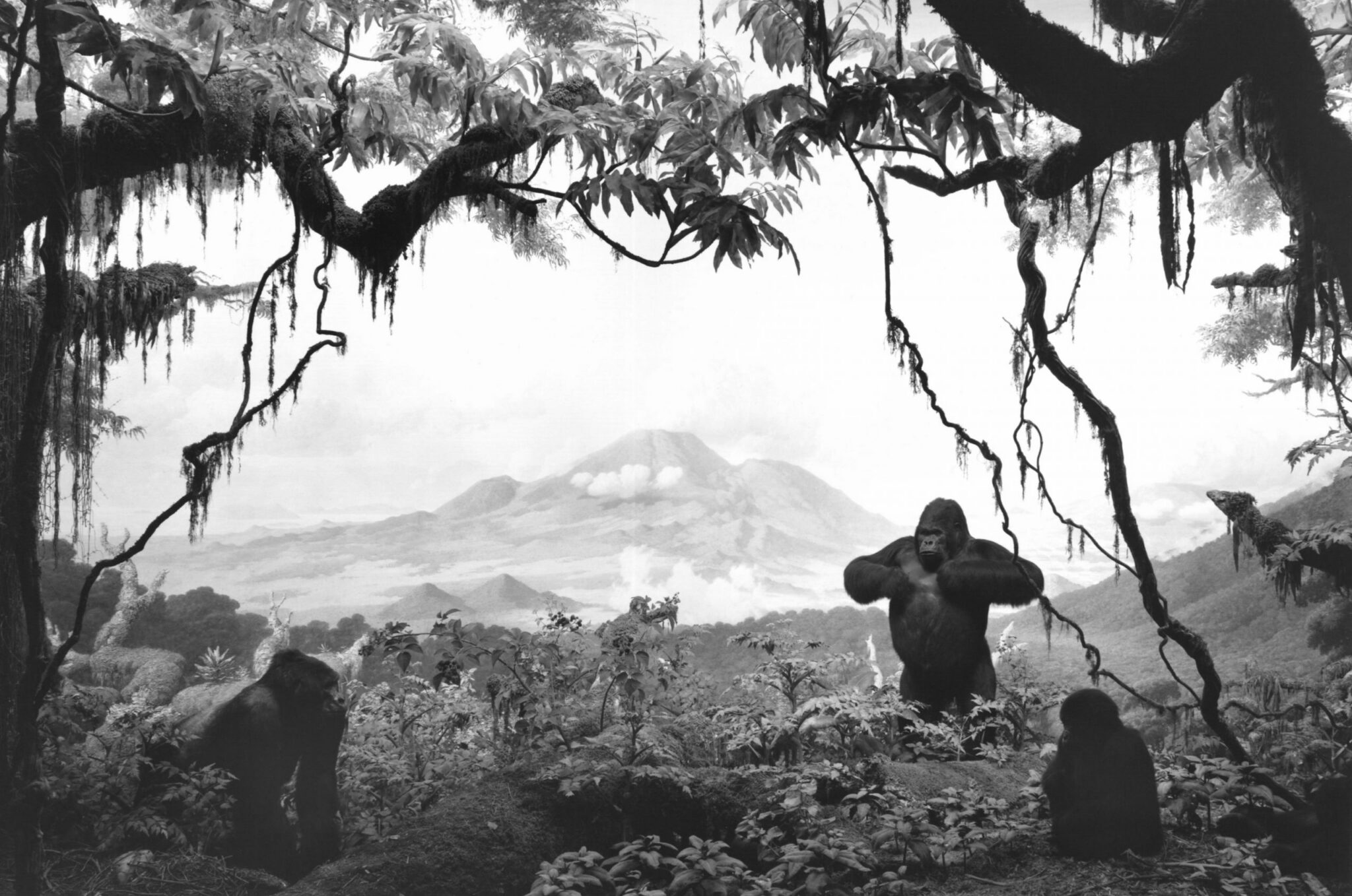
Dioramas (1974 – present)
A few years after moving to New York, Sugimoto developed the first of his celebrated photographic series. During a visit to the American Museum of Natural History in 1976, he realised that by photographing the museum’s taxidermy displays with a large-format camera, using long exposures and black-and-white film, the artificial scenes became startlingly lifelike.
The resulting Dioramas blur the boundaries between reality and illusion. Extinct animals and prehistoric landscapes appear entirely convincing, despite being carefully constructed museum displays. By photographing representations of nature rather than nature itself, Sugimoto explores photography’s ability to blur the boundaries between fiction and reality, a concern that feels even more significant today.
As Sugimoto reflected, “I had found a way to see the world as a camera does. However fake the subject, once photographed, it’s as good as real.” The series established one of the central themes that would continue throughout his career: questioning photography’s relationship with truth.
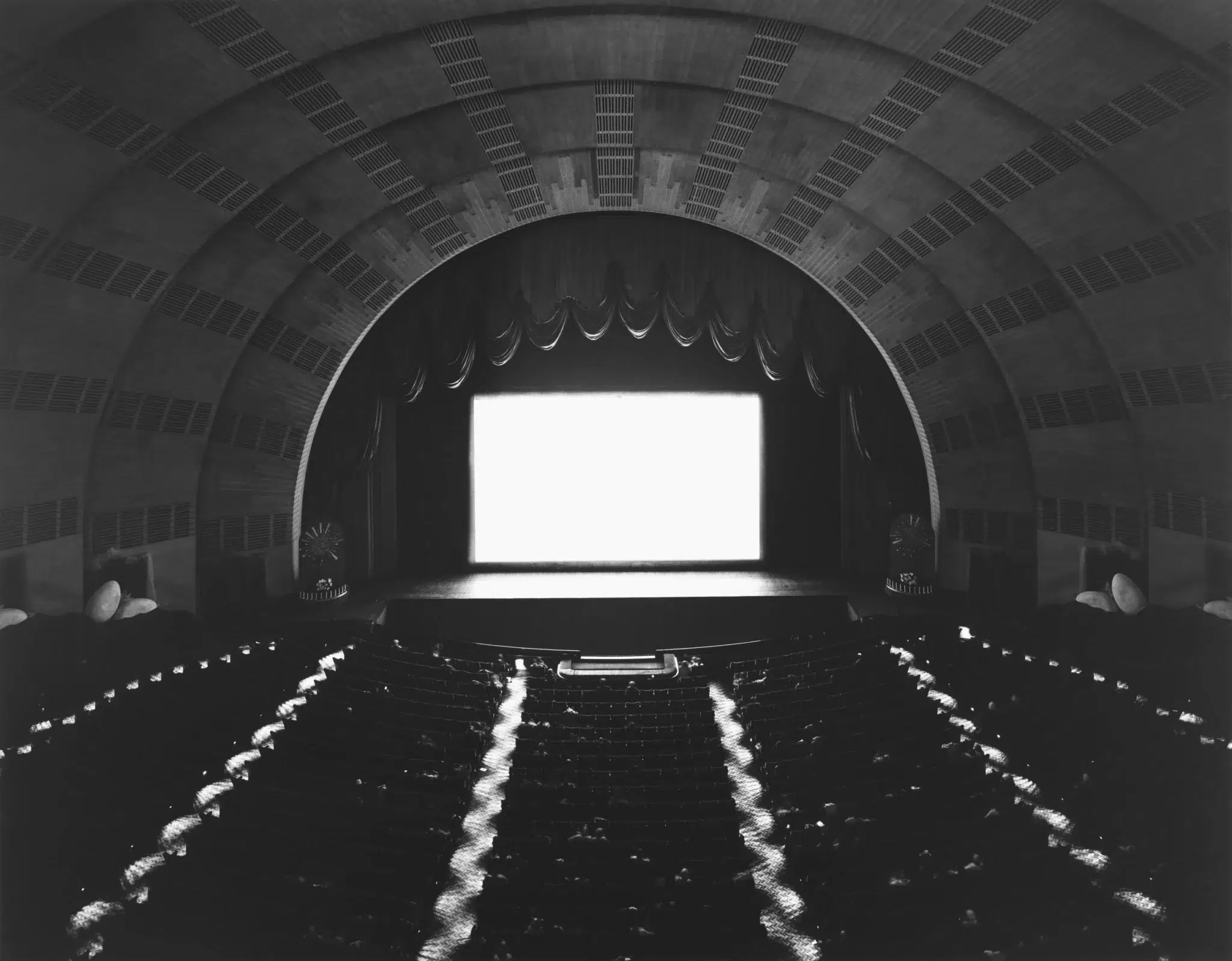
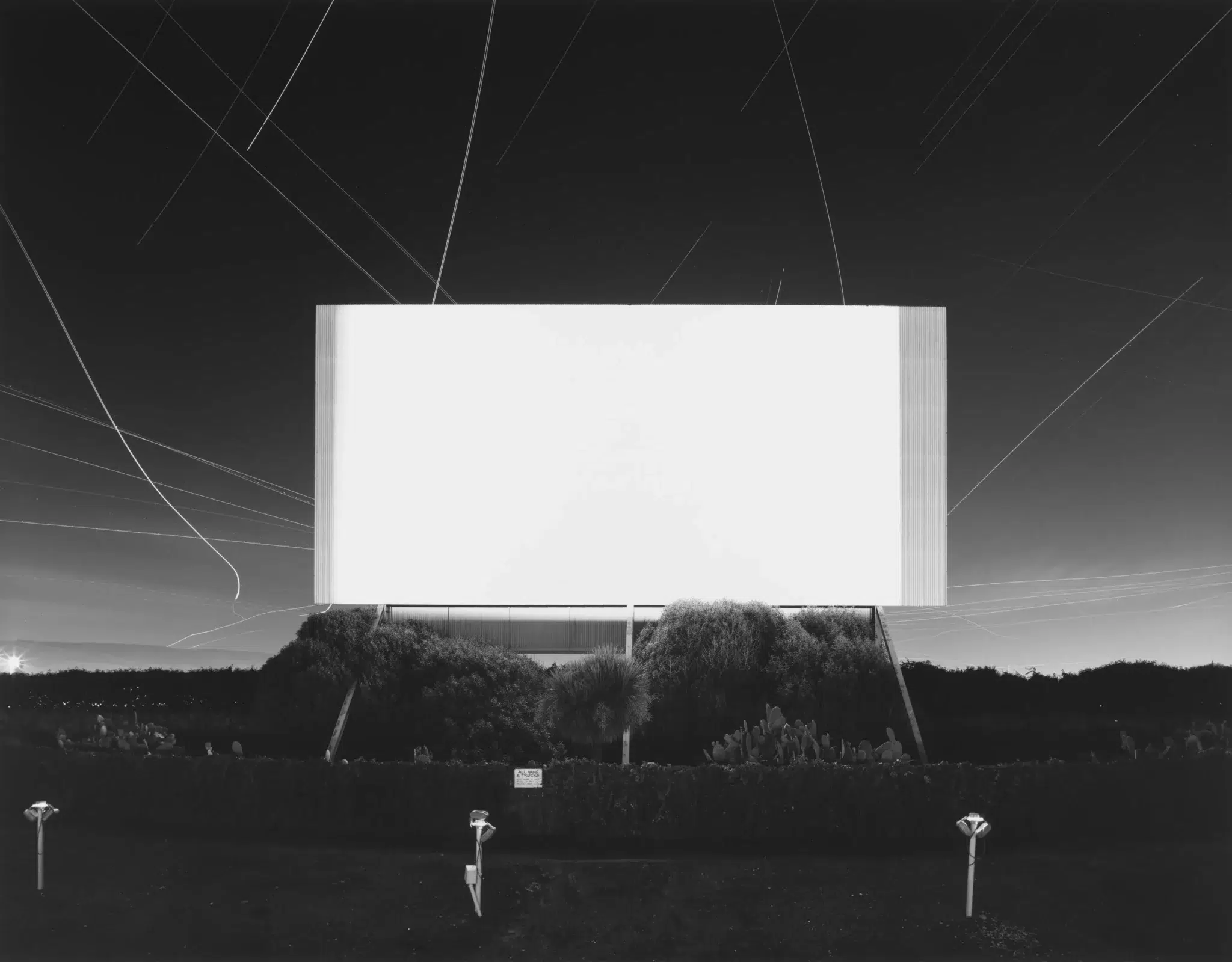
Theaters (1978 – present)
One of Sugimoto’s most beautiful series began with a simple but radical idea: to photograph an entire film in a single frame. The result transformed his career. Working in historic cinemas and drive-in theatres, Sugimoto opens the shutter as the film begins and closes it only when the credits have finished. The camera’s shutter can be open for more than two hours. In this process, every frame of the movie accumulates onto a single negative, causing the screen to become a bright rectangle of pure white.
Sugimoto recalled the first experiment: “One afternoon I walked into a cheap cinema in the East Village with a large-format camera. As soon as the movie started, I fixed the shutter at a wide-open aperture… When the movie finished two hours later, I clicked the shutter closed. That evening I developed the film, and my vision exploded behind my eyes.”
The series compresses an entire cinematic narrative into one shot, transforming moving pictures back into photography while simultaneously documenting the grandeur, as well as gradual disappearance, of historic movie theatres.
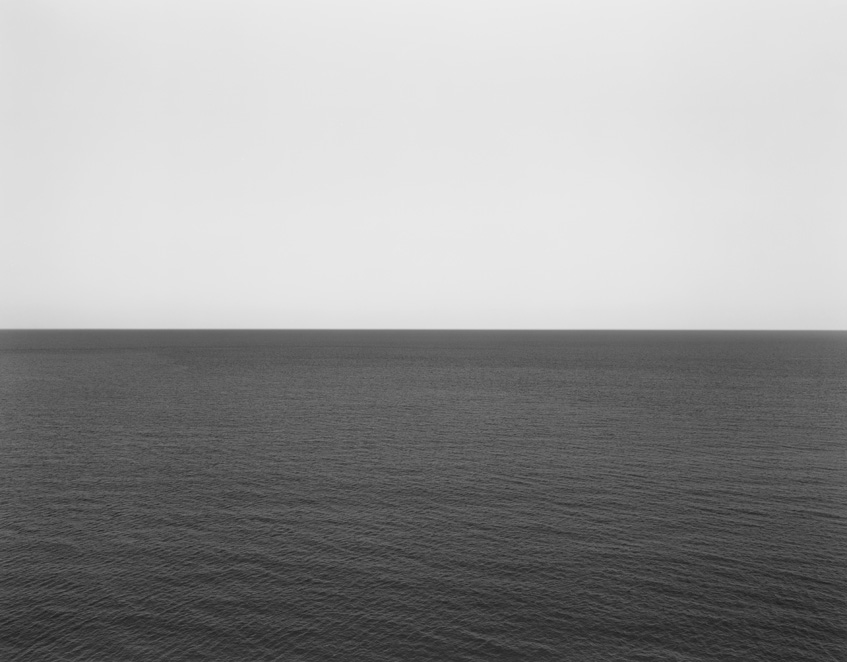
Seascapes (1980 – present)
Perhaps Sugimoto’s most recognisable body of work, Seascapes strips photography back to its essential elements. Each photograph consists solely of sea and sky, divided perfectly centred horizon line. Using long exposures, Sugimoto smooths the movement of the water into tranquil, timeless surfaces that could belong to any century. Each photograph is made at a different location around the world, yet together they suggest that the oceans connecting humanity today are fundamentally the same ones viewed by our earliest ancestors.
As Sugimoto reflected, “Every time I view the sea, I feel a calming sense of security, as if visiting my ancestral home; I embark on a voyage of seeing.” For an artist who has lived in various places, it is significant that he identifies the sea as his ancestral home. While oceans separate continents, they have also long connected them, carrying people, ideas and cultures across the globe. In Seascapes, the sea becomes a metaphor for identity: fluid, ever-changing and resistant to singular definitions.
The seascape is a view that humans have encountered for thousands of years, linking the present with a distant past. Sugimoto also strips away geographical markers, leaving only sea, sky and a perfectly level horizon. The resulting photographs are remarkably abstract. At first glance, it is not immediately obvious that they depict landscapes. Reduced to two horizontal bands, they recall the formal simplicity of Minimalist painting as much as traditional landscape photography. This visual restraint creates a quiet, contemplative experience, transforming the works into meditations on time, perception and existence. Rather than documenting a specific place, Seascapes evokes something more universal: a horizon that has been seen by countless generations and will continue to exist long after our own.
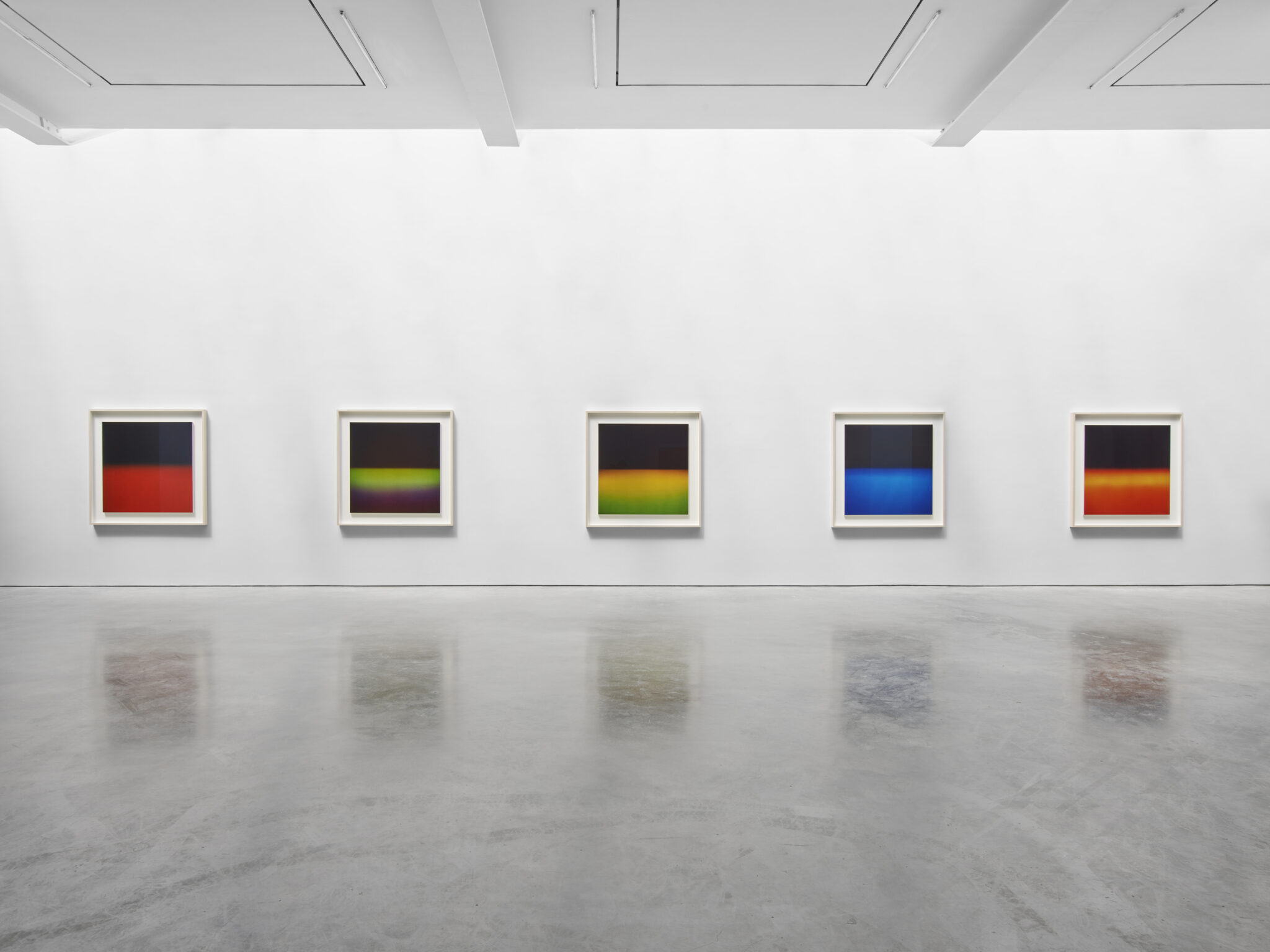
Opticks (2018 – present)
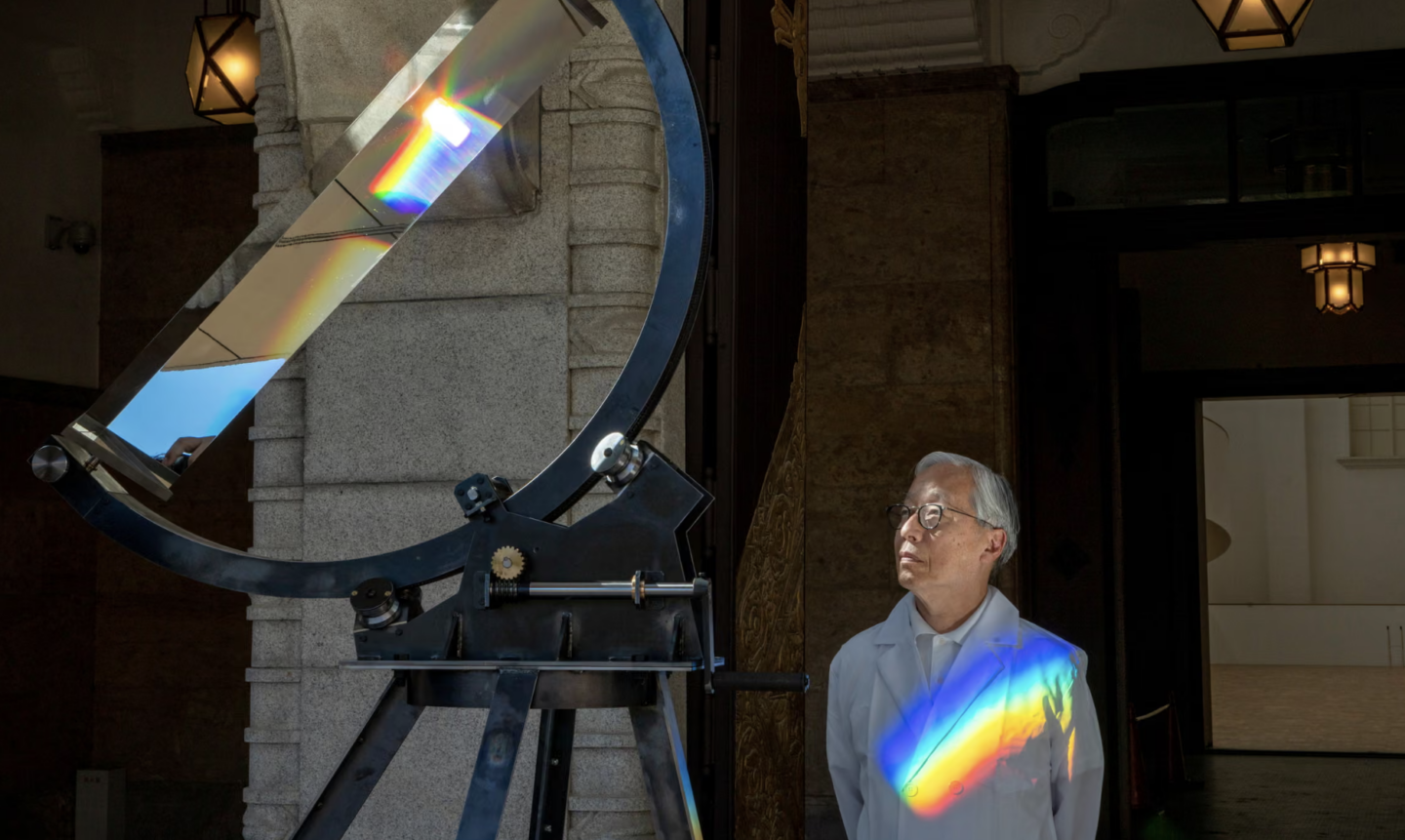
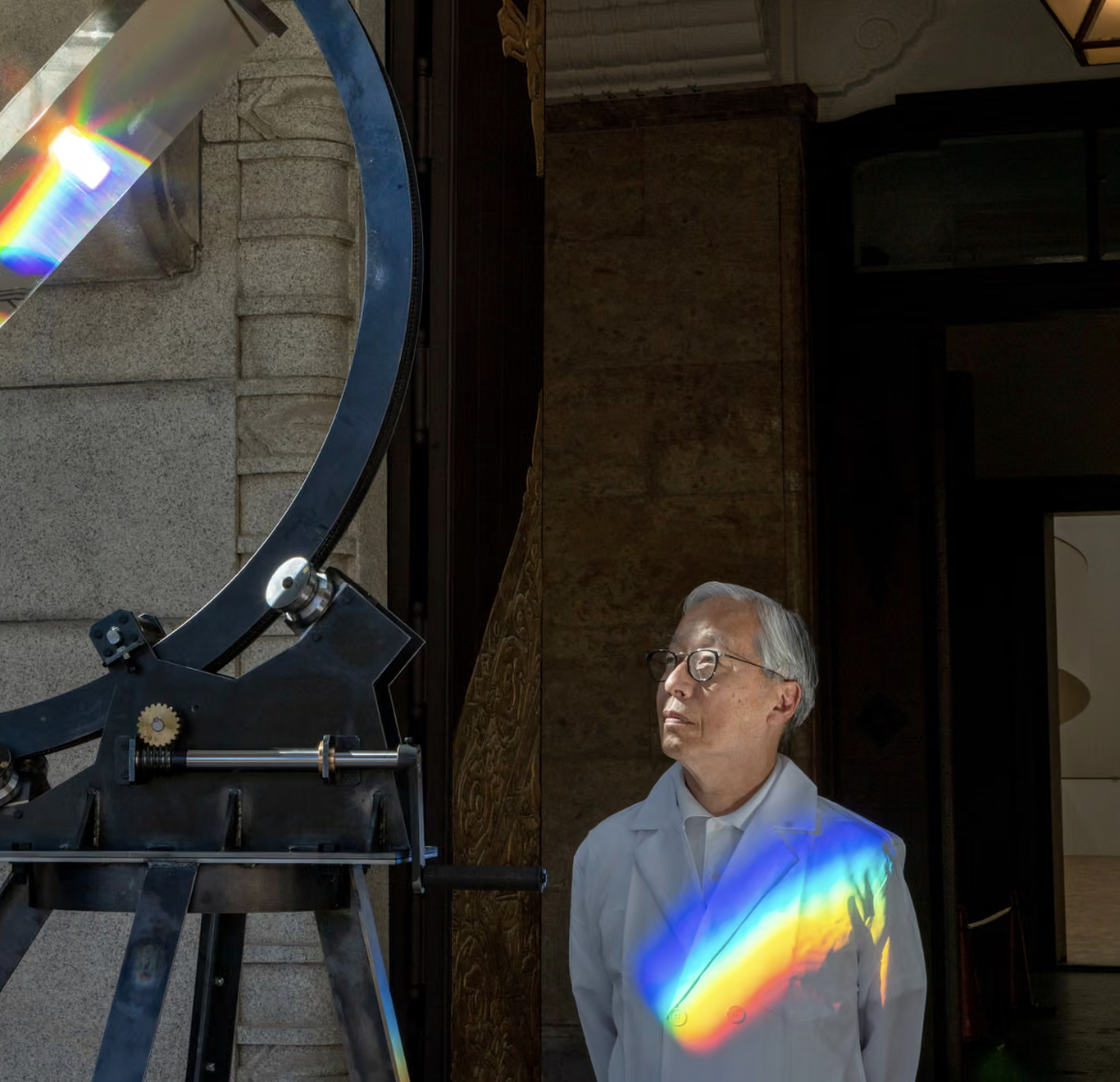
For much of his career, Sugimoto worked almost exclusively in black and white. Opticks, begun in 2018, marks a striking departure from this. Inspired by the writings of Sir Isaac Newton and Johann Wolfgang von Goethe, Sugimoto turns his attention to colour itself. Using a prism to refract natural light, he records fragments of the visible spectrum onto Polaroid film before digitally refining and enlarging the images into monumental chromogenic prints.
Rather than depicting objects, these works make light itself their subject. The subtle transitions between colours become the image, transforming a scientific phenomenon into something almost painterly. As Sugimoto explained, “I realised that I could capture those fine particles of colour within the square frame of a Polaroid photograph. After years of experimentation, I managed to create a colour surface that was sufficiently expansive for me to merge into the colour. With light as my pigment, I believe I successfully created a new kind of painting.“
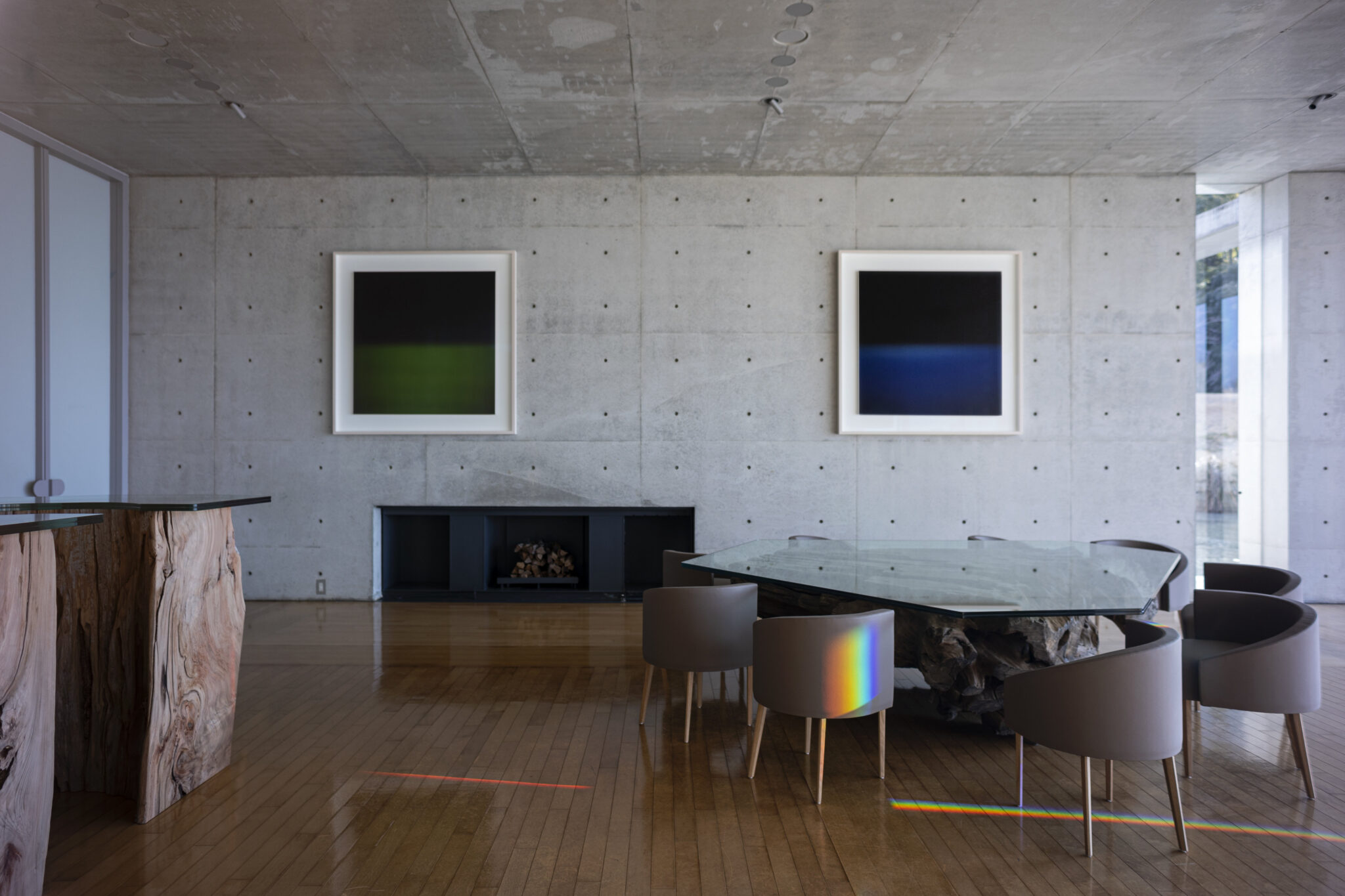
Blown up to a larger scale, their immersive colour and luminous surfaces evoke the works of modernist abstraction and Colour Field painting. By revealing a hidden spectrum that surrounds us yet usually remains unseen, Sugimoto creates images that are at once scientifically grounded and profoundly metaphysical. Opticks also raises questions about photography’s claim to objectivity, which Sugimoto continually returns to in his series. Although the images record a natural phenomenon, our experience of colour is never entirely fixed, varying according to physiology, perception and even cultural context. These works once again remind us that photography is not a record of reality, but a subjective way of seeing.
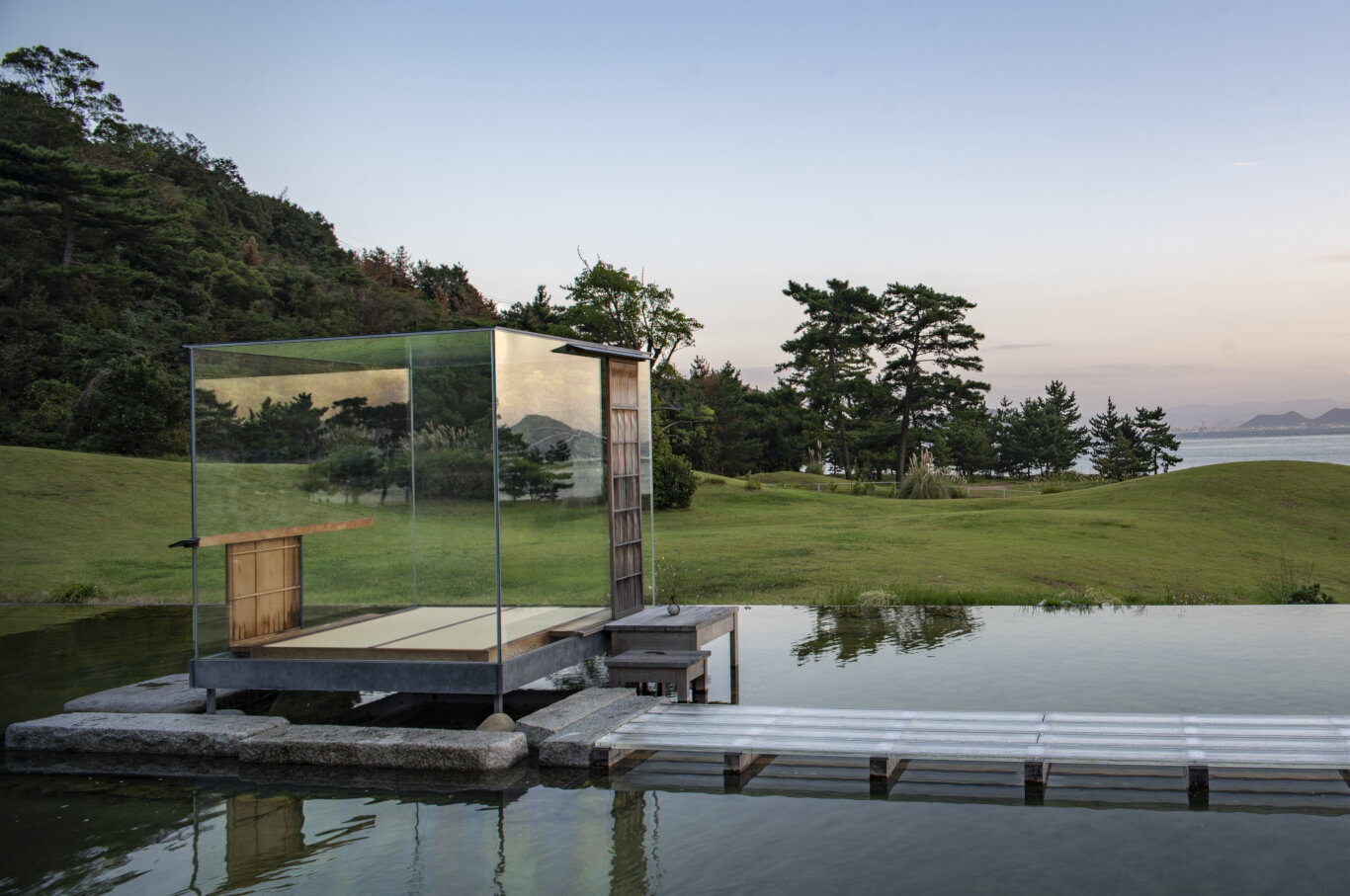
Glass Tea House “Mondrian”
Among Sugimoto’s most remarkable architectural projects is the Glass Tea House “Mondrian”, originally designed for the 2014 Venice Architecture Biennale. First presented at Le Stanze del Vetro in Venice, the structure later travelled to Versailles and Kyoto before finding its permanent home on Naoshima, Japan.
Constructed entirely from transparent glass, the building reimagines the traditional Japanese tea house by removing its physical boundaries while preserving the ritual at its centre. The architecture almost disappears, allowing light, landscape and ceremony to become the true building materials.
The title also reflects Sugimoto’s longstanding fascination with abstraction. Sugimoto reflected that the minimalist principles associated with Piet Mondrian had already been explored centuries earlier by the Japanese tea master Sen no Rikyū, whose sixteenth-century tea houses reduced architecture to its essential forms, and was credited with perfecting the tea ceremony. Sugimoto imagines the project as a dialogue across time between the Dutch modernist and the founder of the Japanese tea ceremony. As he observed, “The quest for abstraction had been underway in the context of the tea ceremony for three hundred years before Mondrian was born.”
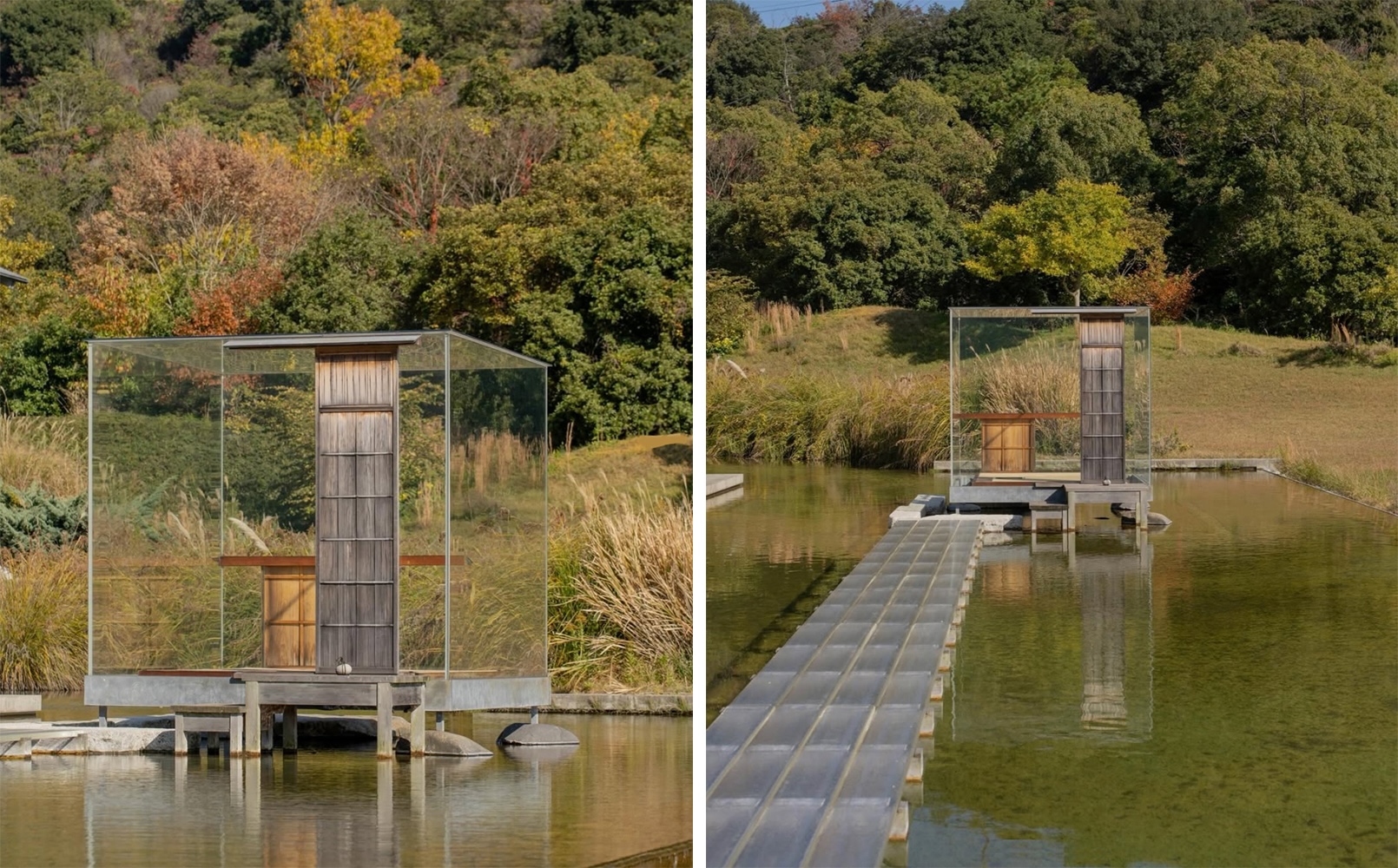
Almost invisible within its landscape, the Glass Tea House demonstrates Sugimoto’s ability to unite art, architecture, history and philosophy in a single contemplative experience. Through the enduring tradition of the tea ceremony, the work reflects his ongoing fascination with time, revealing how ideas and rituals can transcend centuries while remaining relevant in the present. At the same time, it establishes a dialogue between Eastern and Western artistic traditions, suggesting that abstraction is not confined to a single culture or historical moment.
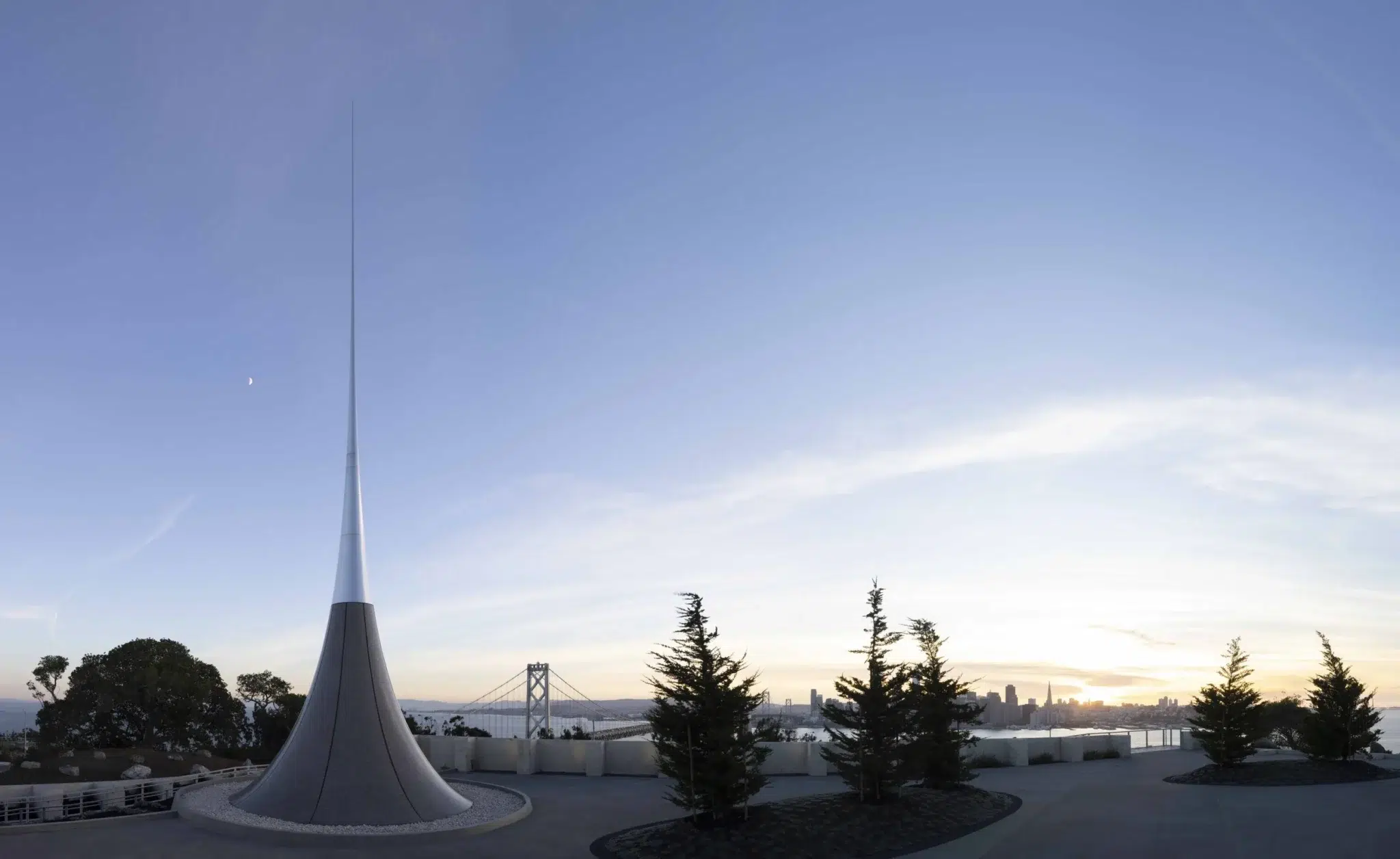
Sundial works and Point of Infinity (2023)
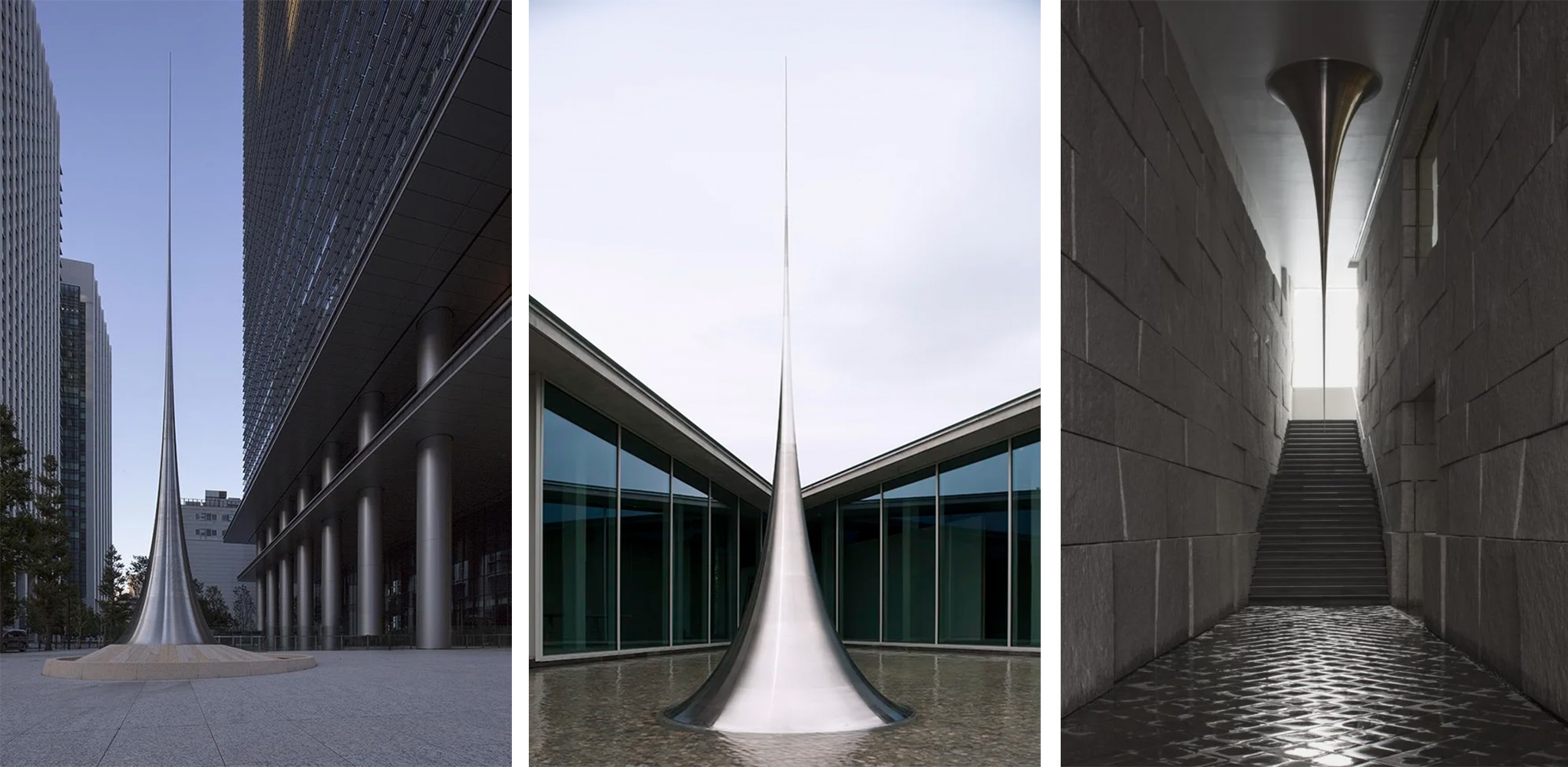
Standing 69 feet high on Yerba Buena Island in San Francisco, Point of Infinity is Hiroshi Sugimoto’s largest sculpture to date. Made from mirror-polished stainless steel, it rises from a broad concrete base before narrowing with extraordinary precision until its tip measures less than an inch across. This taper creates the illusion that the sculpture extends endlessly into the sky, dissolving into the atmosphere.
Its form is based on the geometry of the pseudosphere, inspired by a nineteenth-century mathematical model Sugimoto encountered at the University of Tokyo in 2003. He later recreated the form with exceptional precision, transforming an abstract mathematical concept into a monumental sculpture.
The first Sundial sculpture Sugimoto created was installed at Otemachi Place in Tokyo in 2018. Like these earlier works, Point of Infinity engages with the passage of time through the movement of the sun rather than a conventional clock face. At solar noon on the spring and autumn equinoxes, its shadow aligns precisely with a granite marker set into the ground, linking the sculpture to celestial cycles and reinforcing Sugimoto’s enduring meditation on time, space and the infinite.
While Hiroshi Sugimoto is often introduced as a photographer, that description scarcely captures the breadth of his practice. Across photography, sculpture, architecture and cultural preservation, he has consistently challenged conventional understandings of time, space and perception.
Across all of his work, Sugimoto invites us to slow down, look more carefully and question the nature of what we see. Throughout his career, he has returned to the idea that photography is never a transparent record of reality, but a medium that shapes, distorts and transforms our understanding of the world. As Sugimoto himself reflected, “All my life I have made a habit of never believing my eyes – there has never been any guarantee that what I see is actually there.”
LVH Art’s List: What to See in London This October