How Brazil Became a Design Powerhouse

Brazilian design has become one of the most recognisable and increasingly collectable areas of twentieth-century design. It has become celebrated for its sculptural forms, exceptional craftsmanship and use of rich natural materials.
At the heart of Brazilian design is an ability to absorb seemingly disparate influences and transform them into something distinctly its own. Indigenous traditions and successive waves of European, Middle Eastern and Japanese immigration created an extraordinarily diverse cultural landscape. This multiplicity was matched by the country’s natural environment: vast tropical ecosystems existed alongside the rapidly expanding cities of Rio de Janeiro and São Paulo. It was within this context that a new form of Brazilian modernism emerged.
A New Brazilian Modernism
The decades following the Second World War were among the most transformative periods in Brazil’s cultural history. Between the end of Getúlio Vargas’s Estado Novo dictatorship in 1945 and the military coup of 1964, the country experienced rapid industrialisation, urbanisation and economic development. These years, often referred to as Brazil’s post-war democratic period, were characterised by an extraordinary sense of optimism and experimentation.
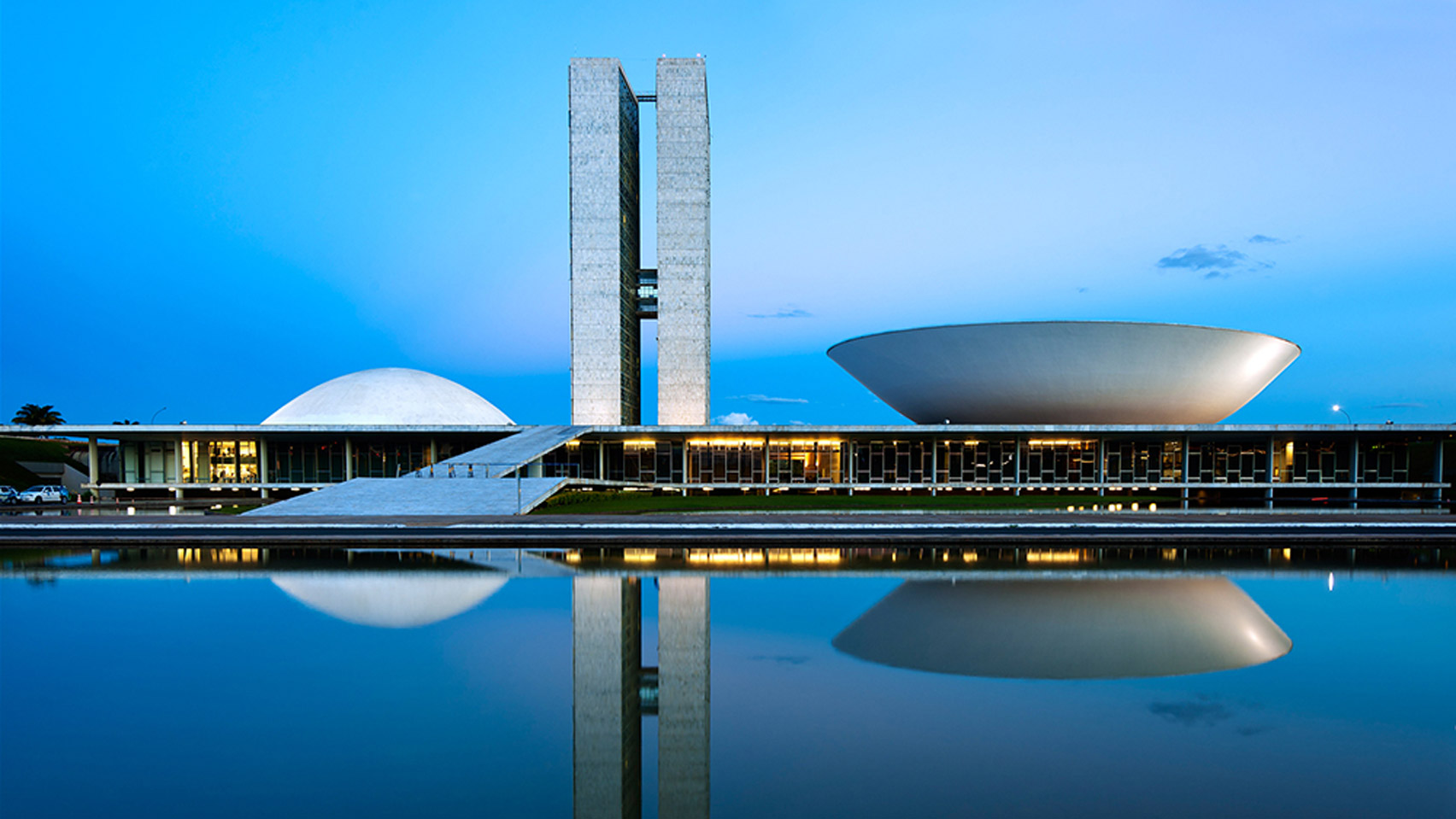
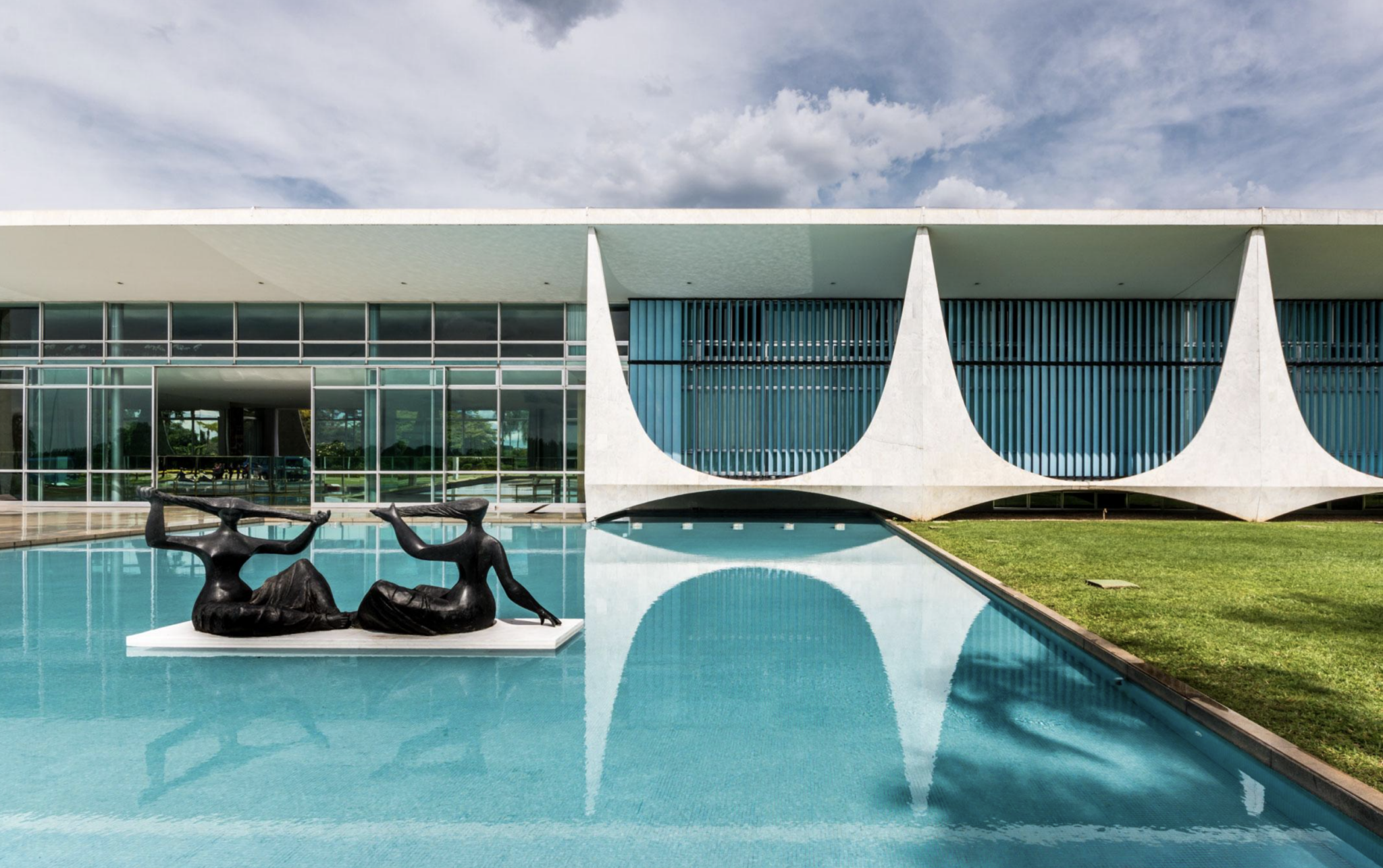
Nothing embodied the optimism of Brazilian modernism more dramatically than the creation of Brasília, which was inaugurated in 1960. When Juscelino Kubitschek became president in 1956, he embarked on an extraordinarily ambitious programme of modernisation, at the heart of which was the construction of an entirely new capital. Brasília was conceived as the physical manifestation of a country looking towards the future. Lúcio Costa developed the city’s master plan, while Oscar Niemeyer designed many of its most important buildings. Brasília’s monumental concrete structures, sweeping curves and vast open spaces made it one of the most ambitious experiments in modernist urbanism ever attempted.
Brazil had become home to architects, artists and designers who had left a Europe transformed by war. Rather than simply importing European modernism, however, Brazil provided the conditions for its ideas to transform into something entirely new. Modernism had emerged in Europe partly in response to industrialisation. Movements such as the Bauhaus championed functionality, clean lines, mass production and industrial materials, while architects and designers sought to strip objects and buildings of unnecessary ornament.
In Brazil, these principles took on a different character. Designers embraced modernism’s clarity and functionality but softened its austerity. Straight lines gave way to curves; steel and glass were combined with tropical hardwoods, leather, cane and woven fibres. Furniture became warmer, more tactile and increasingly sculptural. Access to certain materials also played a role. Materials and industrial processes readily available to European and American designers were not always accessible in post-war Brazil. Brazilian designers instead turned to the materials and craft traditions available around them, particularly Brazil’s abundant native woods. A distinct design language emerged, bringing modernist principles together with local craftsmanship, natural materials and Brazil’s more relaxed lifestyle.
In this article, we explore the key figures who defined Brazilian modern design.
The Pioneers Who Shaped Brazilian Modern Design
1. Joaquim Tenreiro
Portuguese-born Joaquim Tenreiro settled permanently in Brazil in 1928 and became one of the earliest designers to challenge the heavy, European-derived furniture that dominated wealthy Brazilian interiors. A highly skilled cabinetmaker, Tenreiro understood the possibilities of wood intimately. His great innovation was to take Brazil’s dense tropical hardwoods and make them appear almost weightless. His furniture is characterised by beautifully resolved joinery and an extraordinary sensitivity to the grain, colour and individual characteristics of different woods.
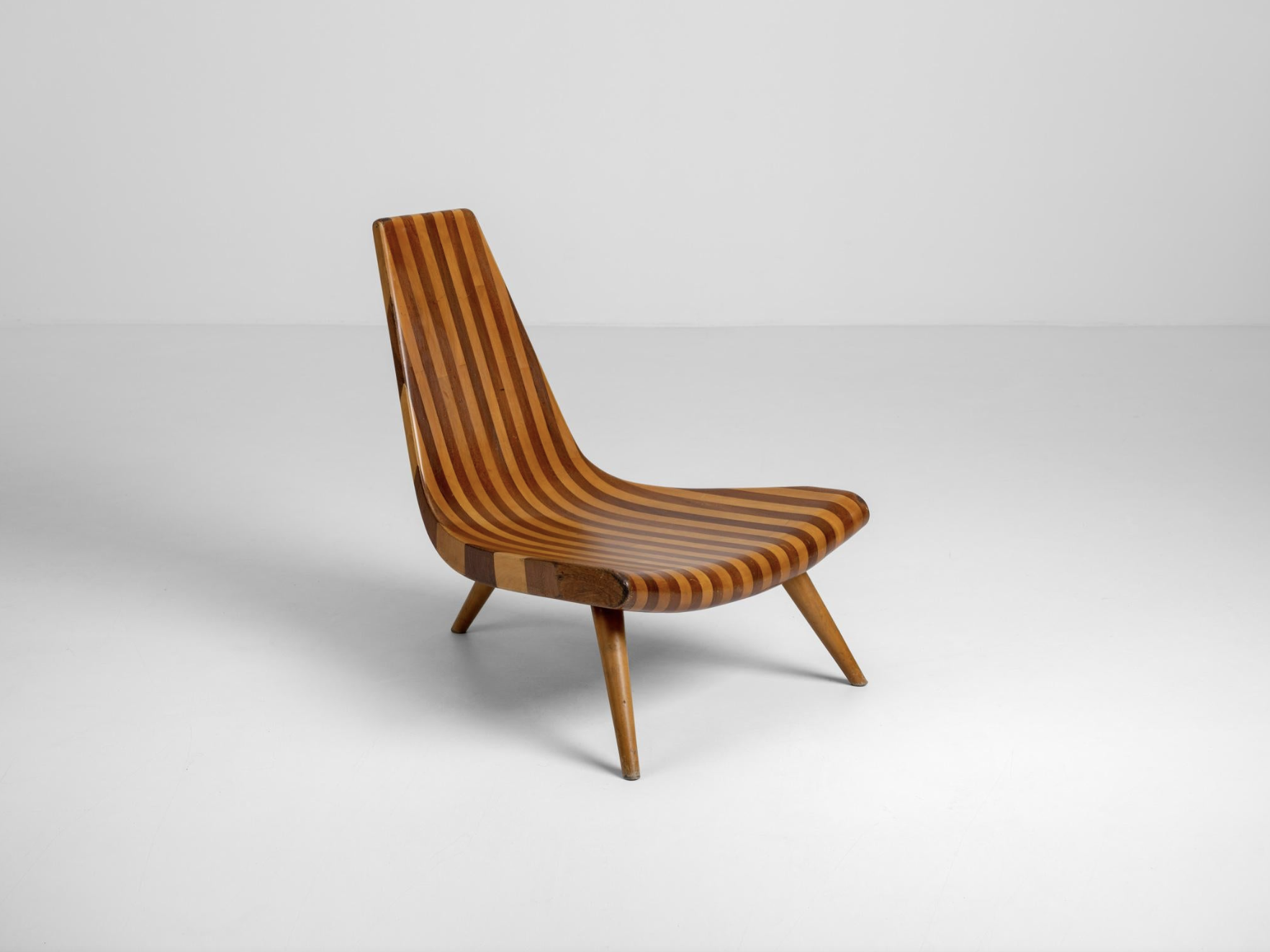
Perhaps no object better demonstrates Tenreiro’s approach than the Three-Legged Chair. Designed in 1947, the chair was produced in different combinations of Brazilian hardwoods. Alternating strips of contrasting timber create a continuous curved seat and back. Despite being constructed from dense hardwoods, its tapered legs and sweeping profile give it an extraordinary sense of lightness. It became one of the defining objects of Brazilian modernism.
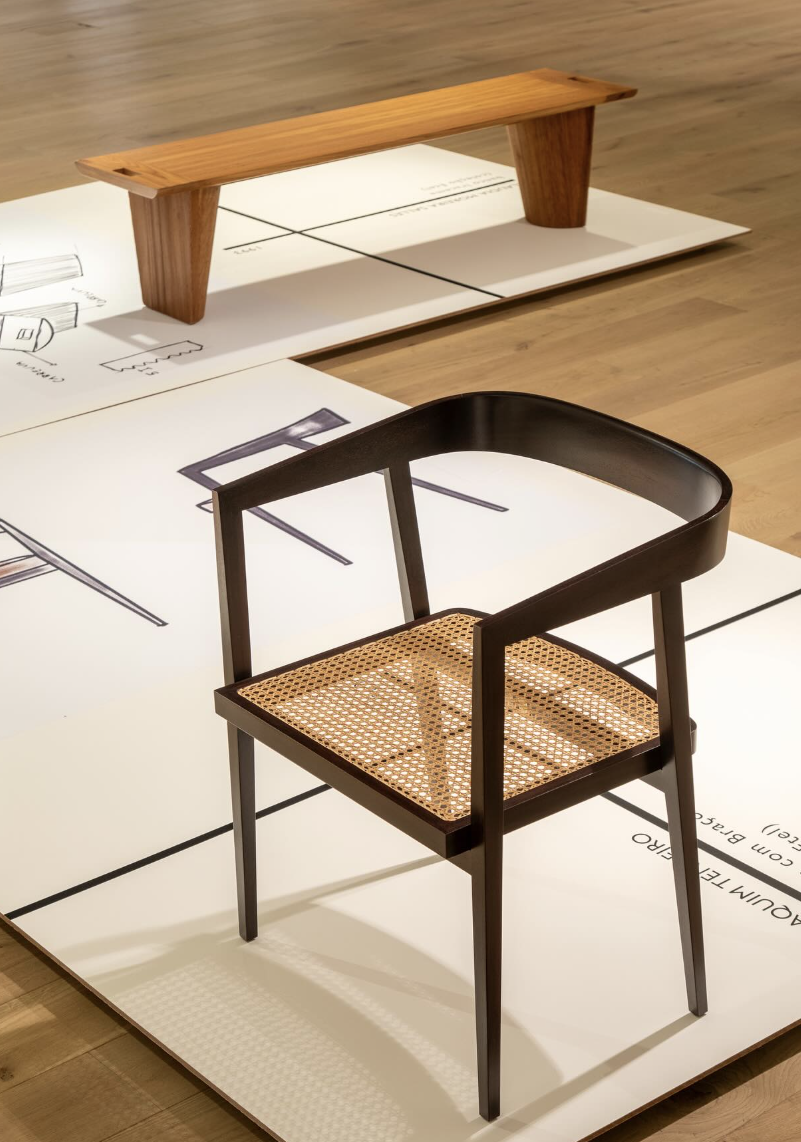
Cadeira com Braços, designed in 1960, also embodies Tenreiro’s design philosophy. The chair combines a slender jatobá wood frame with a natural cane seat, with a continuous U-shaped wooden backrest, which curves elegantly around the body to form the armrests.
2. Sérgio Rodrigues
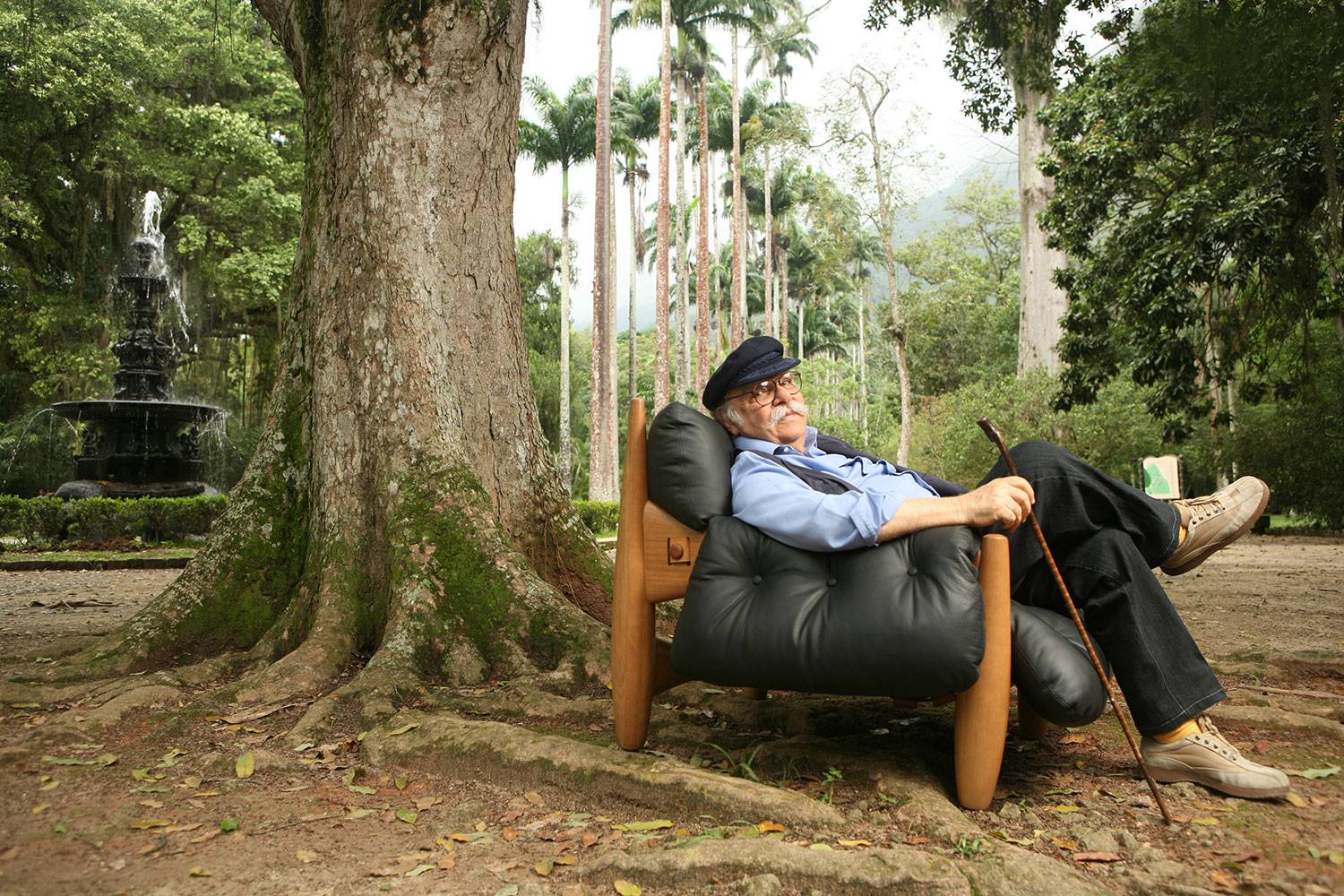
Where Tenreiro pursued lightness and refinement, Sérgio Rodrigues embraced comfort and informality, and his furniture is often low and generous. Thick wooden structures remain visible rather than being concealed, while leather cushions, straps and woven cane give his pieces an unmistakably tactile quality. His work rejected the formality of traditional European interiors in favour of something more relaxed and sensual, reflecting a more Brazilian approach to living.
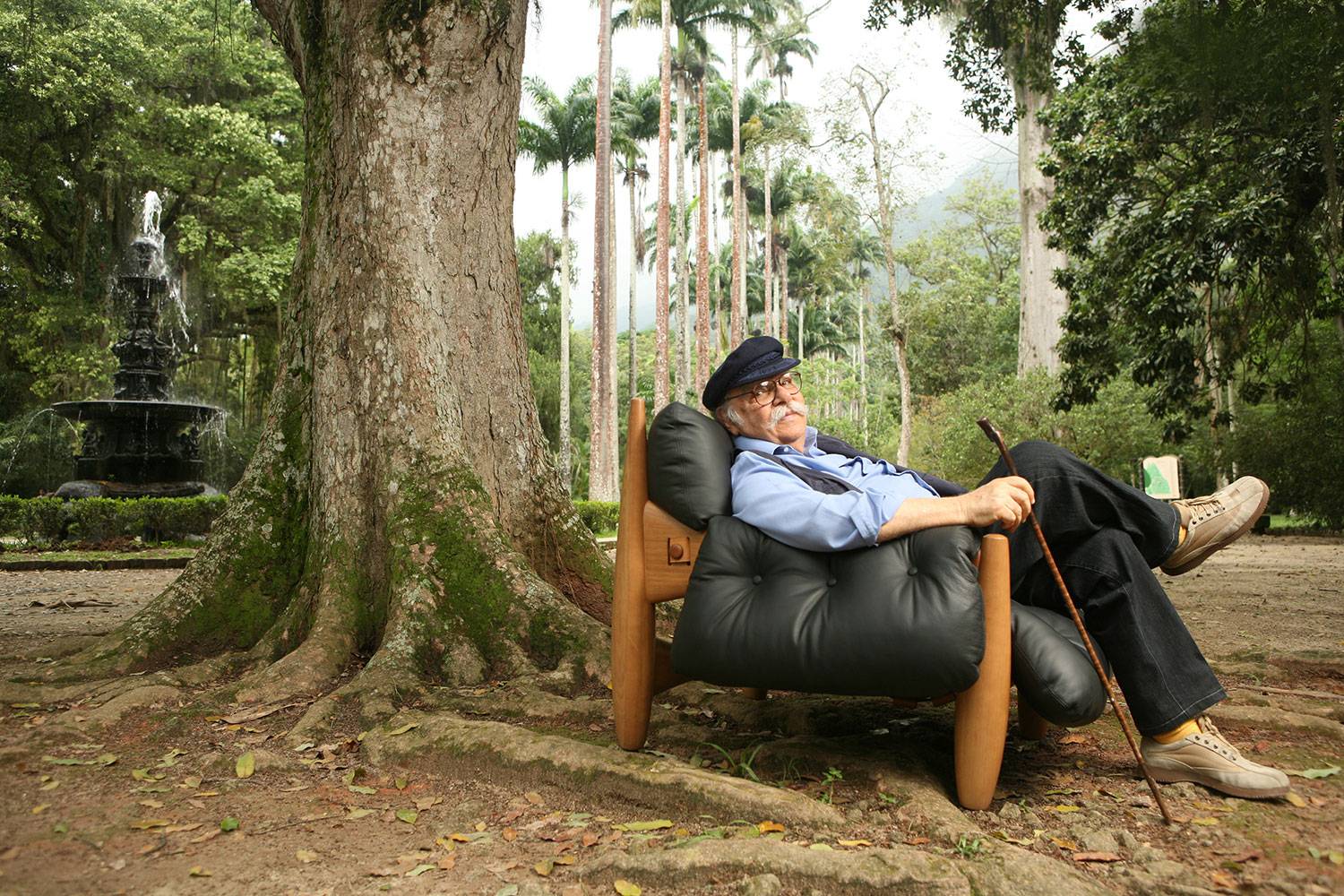
Rodrigues’s Mole armchair is his most recognisable design. It was created in 1957 and later known internationally as the Sheriff Chair. A bulky hardwood structure supports enormous leather cushions held in place by a system of leather straps. The name Mole means “soft” in Portuguese, perfectly capturing the chair’s invitation to sink in and relax. In 1961, a version of the design won first prize at the International Furniture Competition in Cantù, Italy, helping establish Brazilian furniture internationally.

3. Jorge Zalszupin
Polish-born Jorge Zalszupin arrived in Brazil in 1949, and his work sits on the more European side of the Brazilian modern design spectrum. Zalszupin brought the precision of European modernism into dialogue with the possibilities of Brazilian materials. Working frequently with jacarandá, leather and metal, he developed furniture distinguished by extraordinarily refined curves, delicate structures and sculptural surfaces. If Rodrigues’s furniture can feel muscular, Zalszupin’s is often almost impossibly elegant.
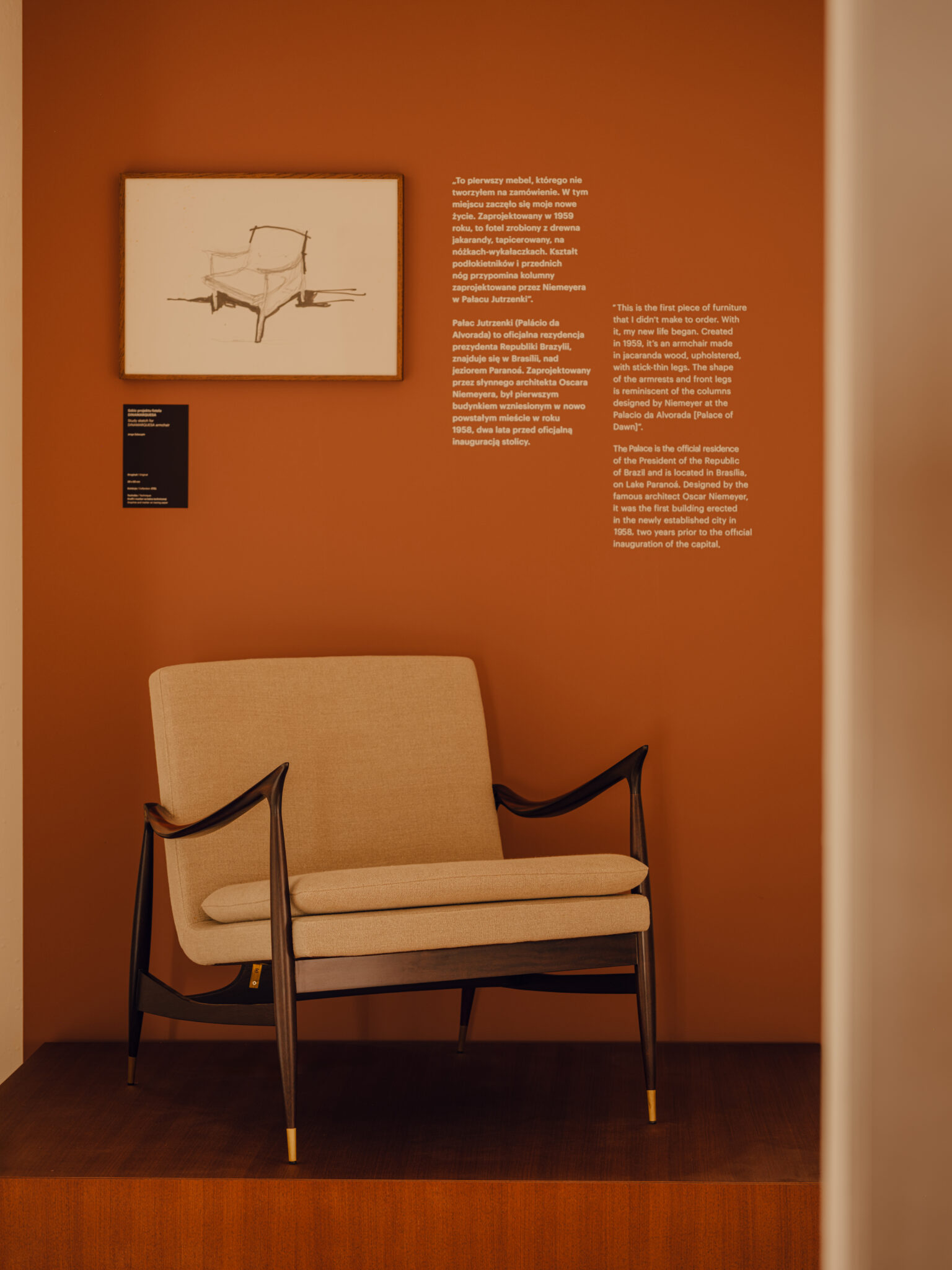
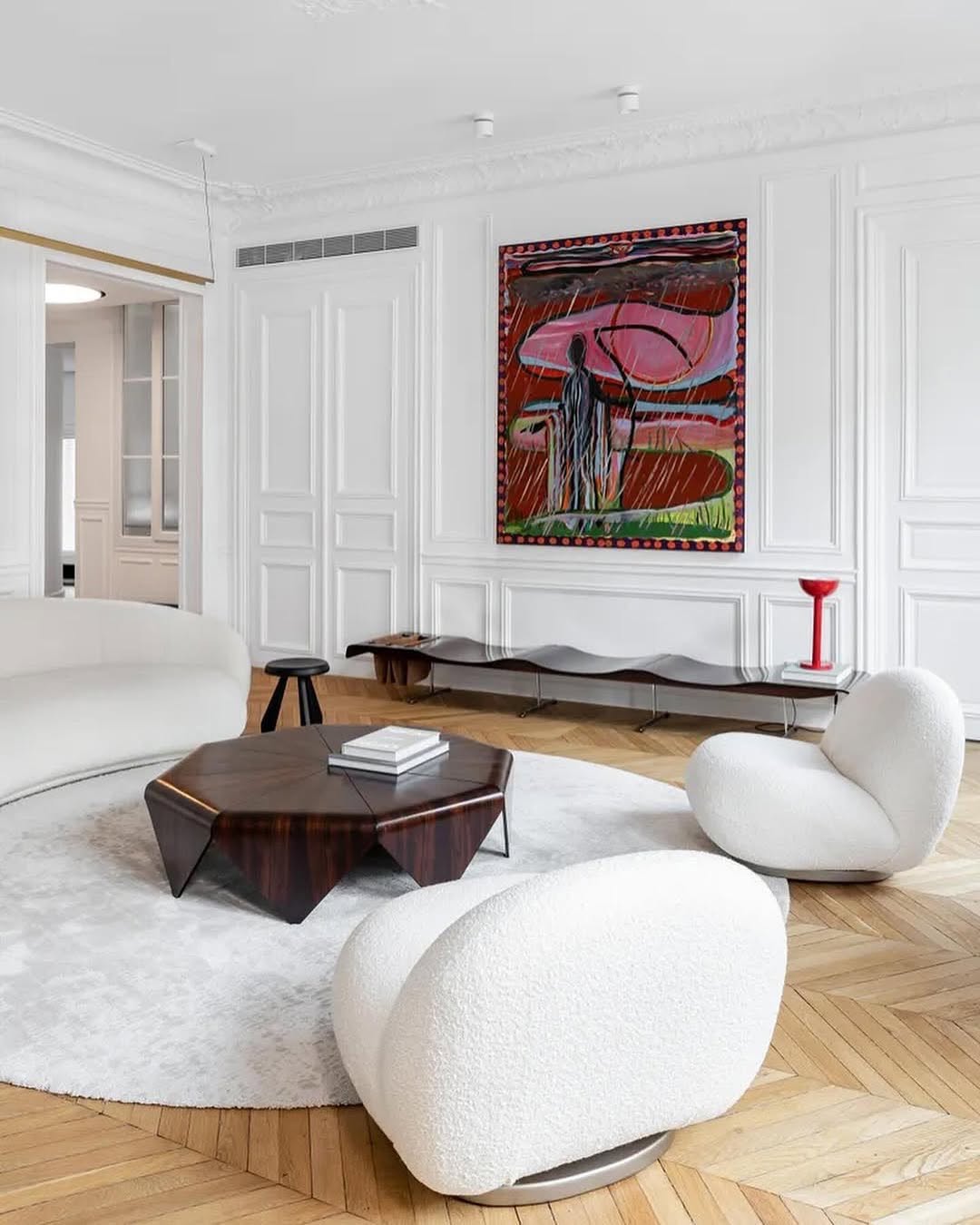
The Dinamarquesa is one of Zalszupin’s most recognisable designs. Created around 1959, its name translates as “Danish”, reflecting the influence of Scandinavian modernism on his early work. Yet the chair transforms these influences through Brazilian materials and craftsmanship, particularly the use of richly grained jacarandá. Its most distinctive feature is its elongated wooden armrests, which sweep upwards into finely pointed tips, while the slender frame appears almost drawn in space. Zalszupin takes a dense tropical hardwood and gives it an unexpectedly delicate silhouette.
First designed in 1959, the Pétala table takes this sculptural approach even further. Its surface is divided into a series of wooden “petals” that curve downwards to form the structure beneath. Rather than treating the tabletop and legs as separate elements, Zalszupin transforms them into a continuous sculptural form.
That same year, Zalszupin created the Onda Bench, which takes its name from the Portuguese word for “wave.” Its long surface of moulded and curved wood rises and falls to create a series of seats, supported by a minimal metal structure that gives the bench an almost floating appearance. Some versions also incorporate a leather magazine holder at one end. The design demonstrates Zalszupin’s ability to bring contrasting materials and forms together: the warmth of wood against the precision of metal, and the rigid supporting structure against the soft, undulating curves of the seat, which evoke the waves of the Brazilian sea. The result is both functional and sculptural.
Lina Bo Bardi
Lina Bo Bardi is first and foremost recognised as one of the great architects of the twentieth century, but her practice extended naturally into furniture, exhibitions, objects and interiors. Born in Italy, Bo Bardi moved to Brazil in 1946. Her furniture was produced in relatively limited quantities, making original examples particularly significant within today’s collectible-design market.
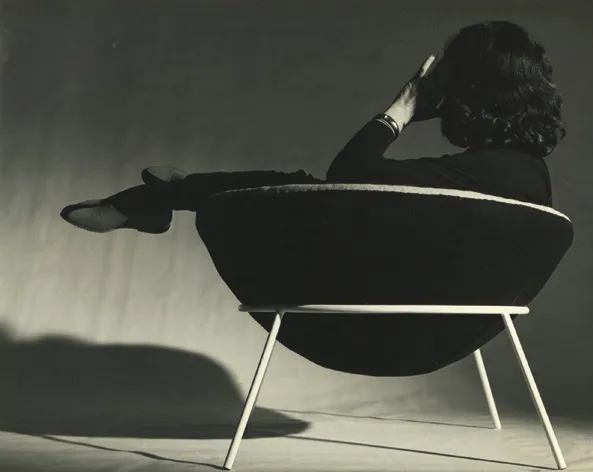
Designed in 1951, the Bowl Chair remains Bo Bardi’s most recognisable piece of furniture. A large upholstered hemisphere rests freely within a delicate steel structure. Crucially, the bowl is not fixed into one position. It can be tilted and repositioned according to how its occupant wishes to sit. It was a remarkably radical proposition for the early 1950s: rather than forcing the body into a prescribed posture, the chair adapts to its user. The result is playful, functional and extraordinarily modern.
The Girafa Chair (1987), designed by Lina Bo Bardi with Marcelo Ferraz and Marcelo Suzuki, reflects Bo Bardi’s later fascination with Brazilian vernacular design. Created in connection with the Casa do Benin in Salvador, the chair is reduced to its essentials: three wooden legs, a circular seat and an unusually elongated backrest, from which its name, Portuguese for “giraffe” derives. This design reflects Bo Bardi’s belief that modern design could emerge from local materials, traditional craftsmanship, the ingenuity of everyday objects and a sense of playfulness.
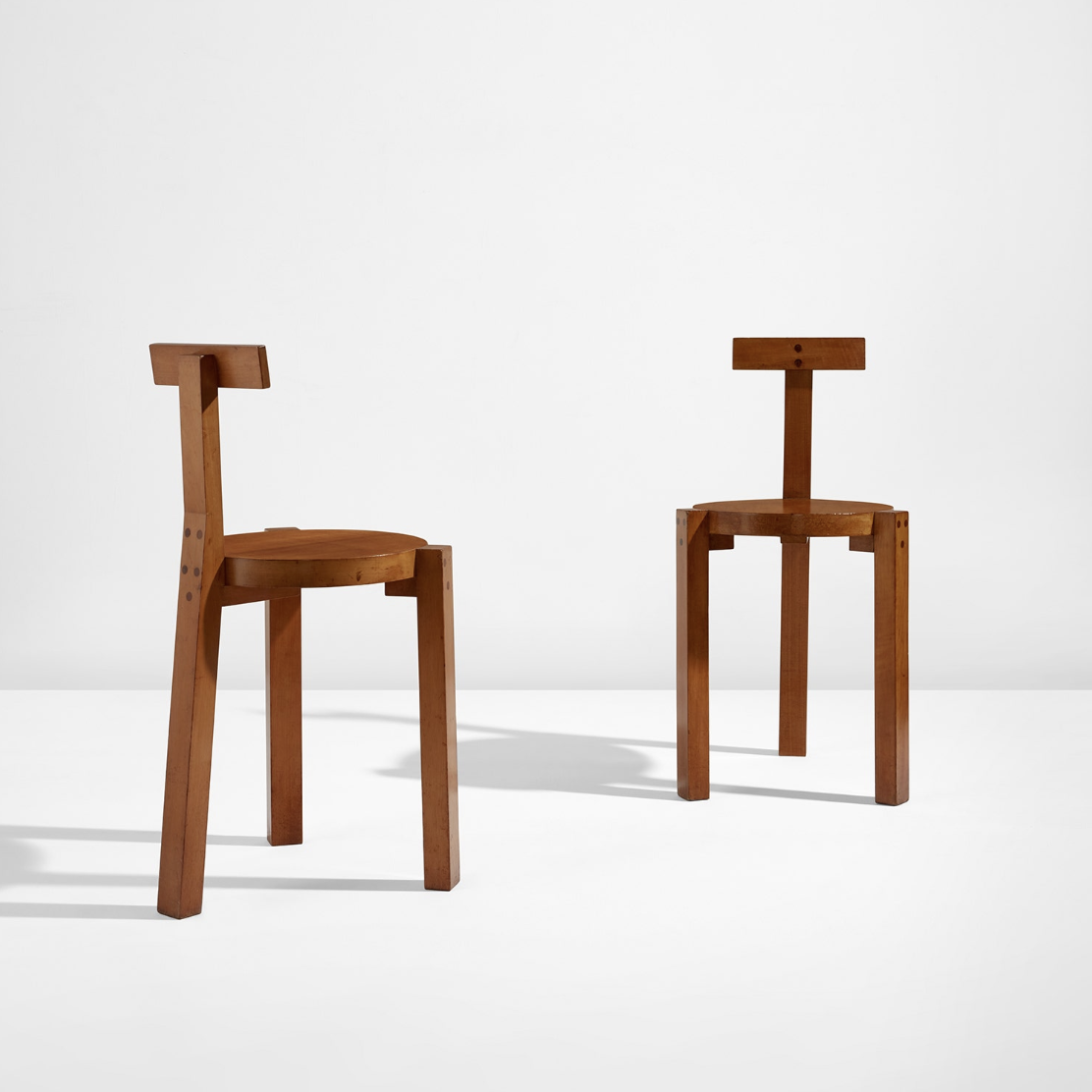
Pair of “Girafa” chairs by Lina Bo Bardi, Marcelo Ferraz and Marcelo Suzuki. Image from Bonhams.com.
5. Oscar Niemeyer & Anna Maria Niemeyer
No discussion of Brazilian modernism can avoid Oscar Niemeyer. His sweeping concrete structures helped define the architectural identity of twentieth-century Brazil. Less widely known is the furniture he developed in collaboration with his daughter Anna Maria Niemeyer from the 1970s onwards. Their furniture translates many of the ideas found in Niemeyer’s architecture into domestic objects: continuous curves, cantilevered structures and sensuous silhouettes replace conventional straight-legged furniture.
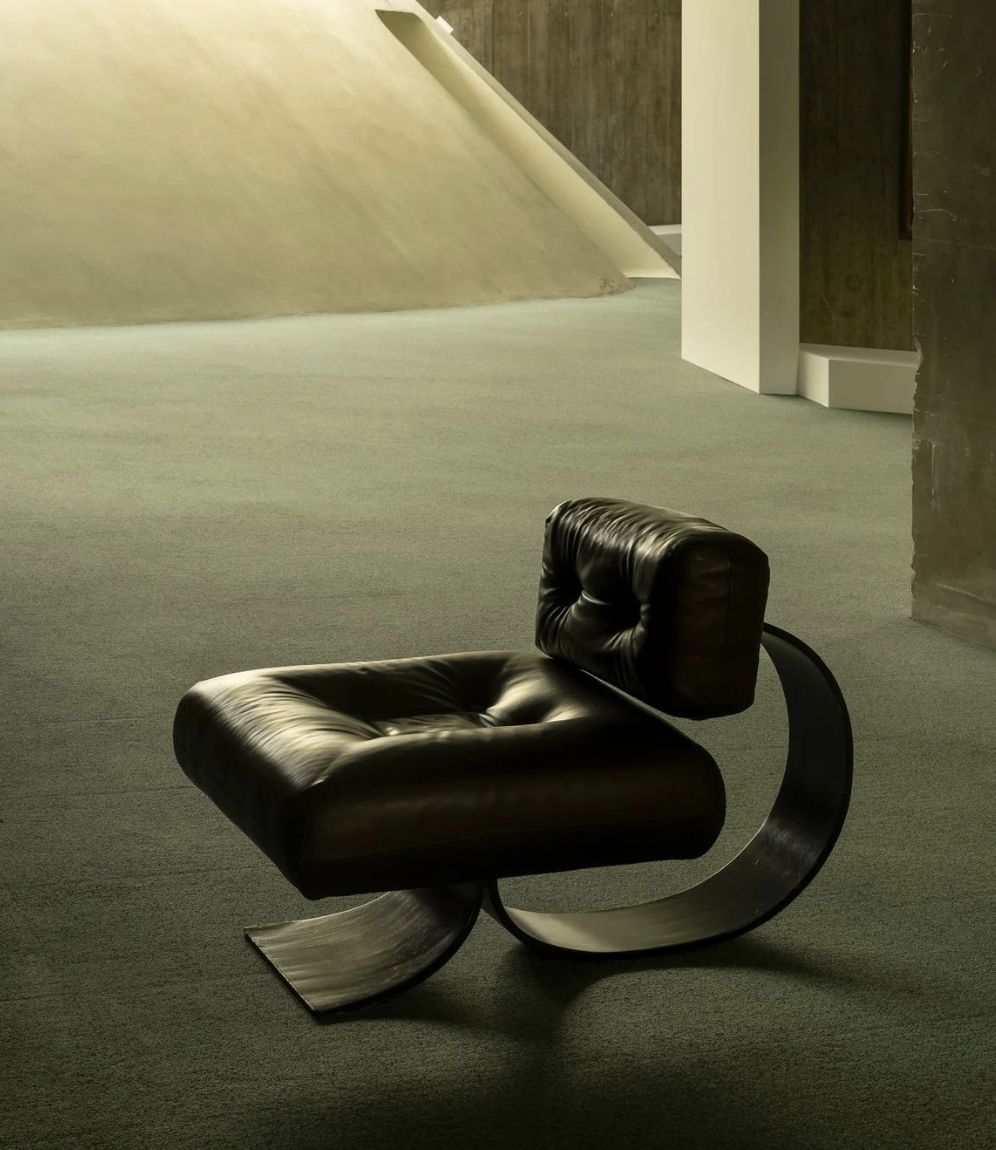
The Alta chair, created by Oscar and Anna Maria Niemeyer in 1971, is perhaps the clearest expression of this relationship between architecture and furniture. Its upholstered seat appears to float above a dramatically curved supporting structure. Rather than relying on four conventional legs, the base sweeps beneath the sitter in a continuous line, while the matching footstool echoes the same floating form. The result feels almost like a miniature Niemeyer building: structural, curvaceous and seemingly defiant of gravity.
6. Martin Eisler & Carlo Hauner
Martin Eisler and Carlo Hauner brought a distinctly cosmopolitan perspective to Brazilian modernism. Although both developed their own designs, their careers became closely intertwined through Forma, the São Paulo furniture company founded by Hauner in 1950 and later joined by Eisler.
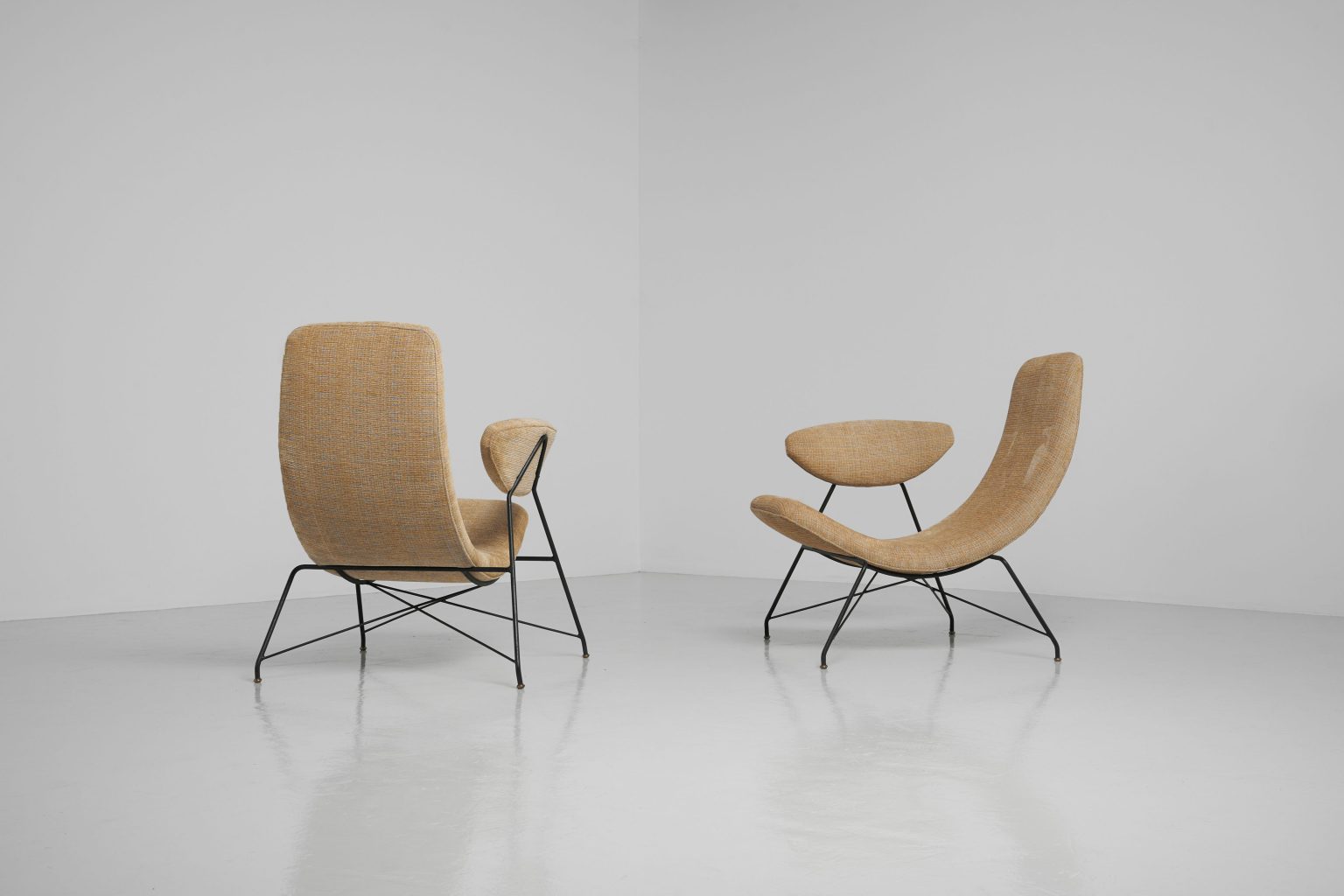
Austrian-born Martin Eisler fled Europe for Argentina in 1938. His furniture often feels more glamorous and cosmopolitan than that of his contemporaries, combining slender metal structures with upholstery, cane and curved forms. The Reversível chair is one of Eisler’s most iconic designs. Its extremely thin metal frame almost disappears beneath the suspended upholstered seat, creating a dramatic, butterfly-like silhouette. Its adjustable construction combines visual experimentation with practical function.
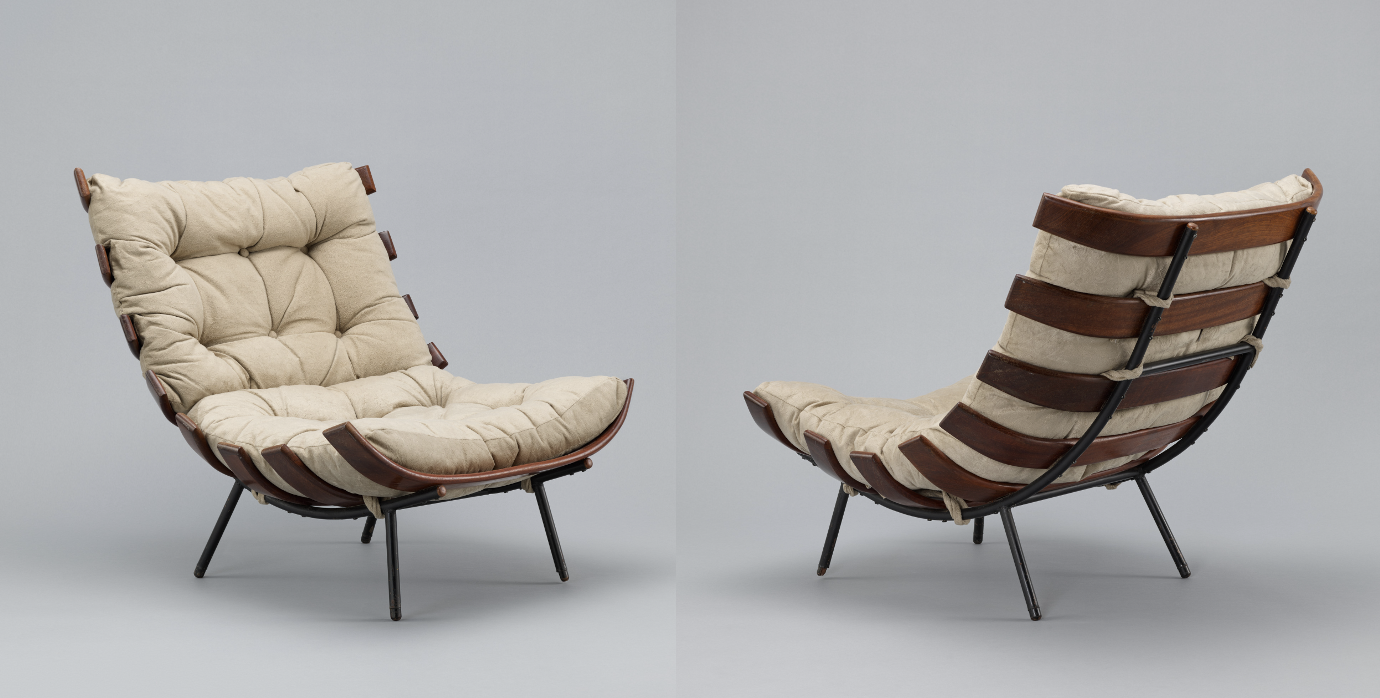
Carlo Hauner moved from Italy to Brazil in 1949, settling in São Paulo. Forma, which he founded there in 1950, became an important force in Brazilian modern furniture. Hauner later invited Eisler to join the company, marking the beginning of a collaboration that would produce some of the most recognisable designs of Brazilian modernism. The Costela chair is among the most recognisable designs associated with Forma. Costela means “rib” in Portuguese, referring to the curved wooden slats that form its exposed structure. Soft cushions rest against this wooden skeleton, bringing together natural materials and industrial structure, softness and rigidity, craftsmanship and modern production.
7. José Zanine Caldas
Self-taught designer and architect José Zanine Caldas approached wood almost as a sculptor. After initially producing affordable plywood furniture, he moved to Nova Viçosa in Bahia, where he began creating monumental pieces from large sections of timber, often using discarded logs from the logging industry. Cracks, knots and natural grain were deliberately left visible, allowing the material itself to determine the final form. His later work, known as Móveis Denúncia or “protest furniture”, celebrated the beauty of Brazil’s forests while drawing attention to their destruction.
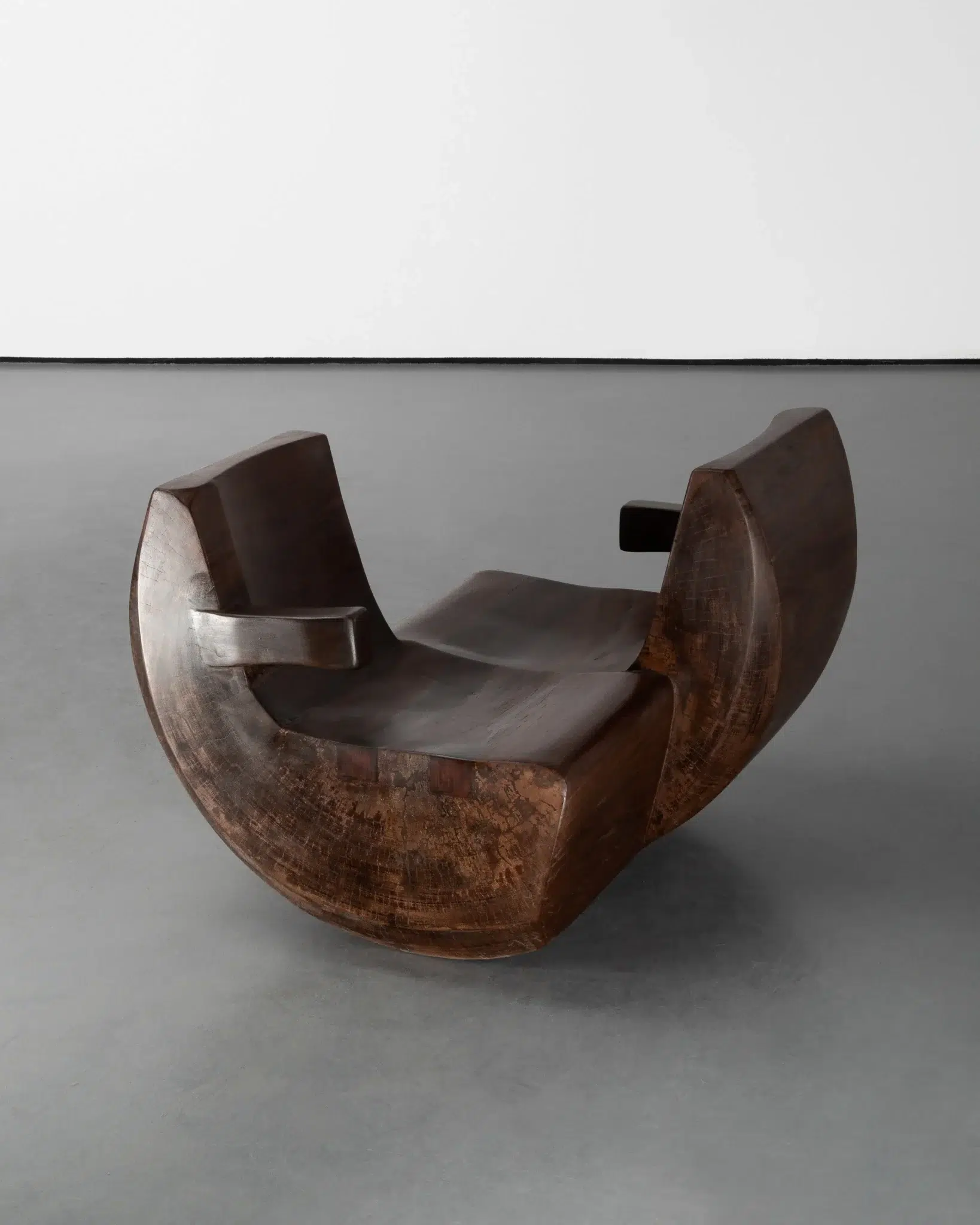
The Namoradeira is one of the clearest expressions of this approach. Carved from an enormous mass of wood, the tête-à-tête seat positions two people facing one another. Rather than appearing assembled from separate components, it looks as though the seats have simply been discovered within the tree itself, blurring the boundary between furniture and sculpture.
What unites these designers is not a single aesthetic, but a shared ability to reinterpret modernism through the particular materials, traditions and ways of living found in Brazil. From Tenreiro’s delicately worked hardwoods and Rodrigues’s relaxed leather seating to Niemeyer’s sweeping curves and Zanine Caldas’s monumental carved forms, each developed a distinctly individual language. Together, they transformed the principles of European modernism into something warmer, more tactile and sculptural, establishing a design identity that was unmistakably Brazilian.
LVH Art’s List: What to See in London This October