Still Standing: Minimalism and its Legends

In 1965, the British philosopher Richard Wollheim published a short essay in Arts Magazine that gave an emerging and still-unnamed artistic tendency its most consequential, and least generous, description. The “new work,” he argued, possessed “minimal art-content”: it existed at the outermost threshold of what could still be called art. Wollheim intended this as a philosophical provocation rather than a dismissal, a way of pressing hard on questions about what art actually requires of an object. Critics with less patience found in his language exactly the contempt they were looking for. The label that stuck, Minimalism, captured everything its critics disliked in one word: “not enough, barely there, withheld.” Clement Greenberg, who had championed Abstract Expressionism and then Colour Field painting as the progressive logic of modernism, saw in the new tendency nothing more than “novelty art,” driven by shock and gimmick rather than genuine artistic progression. Michael Fried, in his celebrated 1967 essay, went further: the new work was a fundamental “betrayal” of what art should be, replacing painting’s sustained internal logic with what he famously called theatricality – an object openly meeting its viewer in the same space and time. Barbara Rose, writing in Art in America that same year, saw the situation differently. The new sculpture was, she argued, at its most powerful when it was difficult, hostile and oversize: not appealing to the viewer but confronting them, restructuring the terms of encounter entirely.
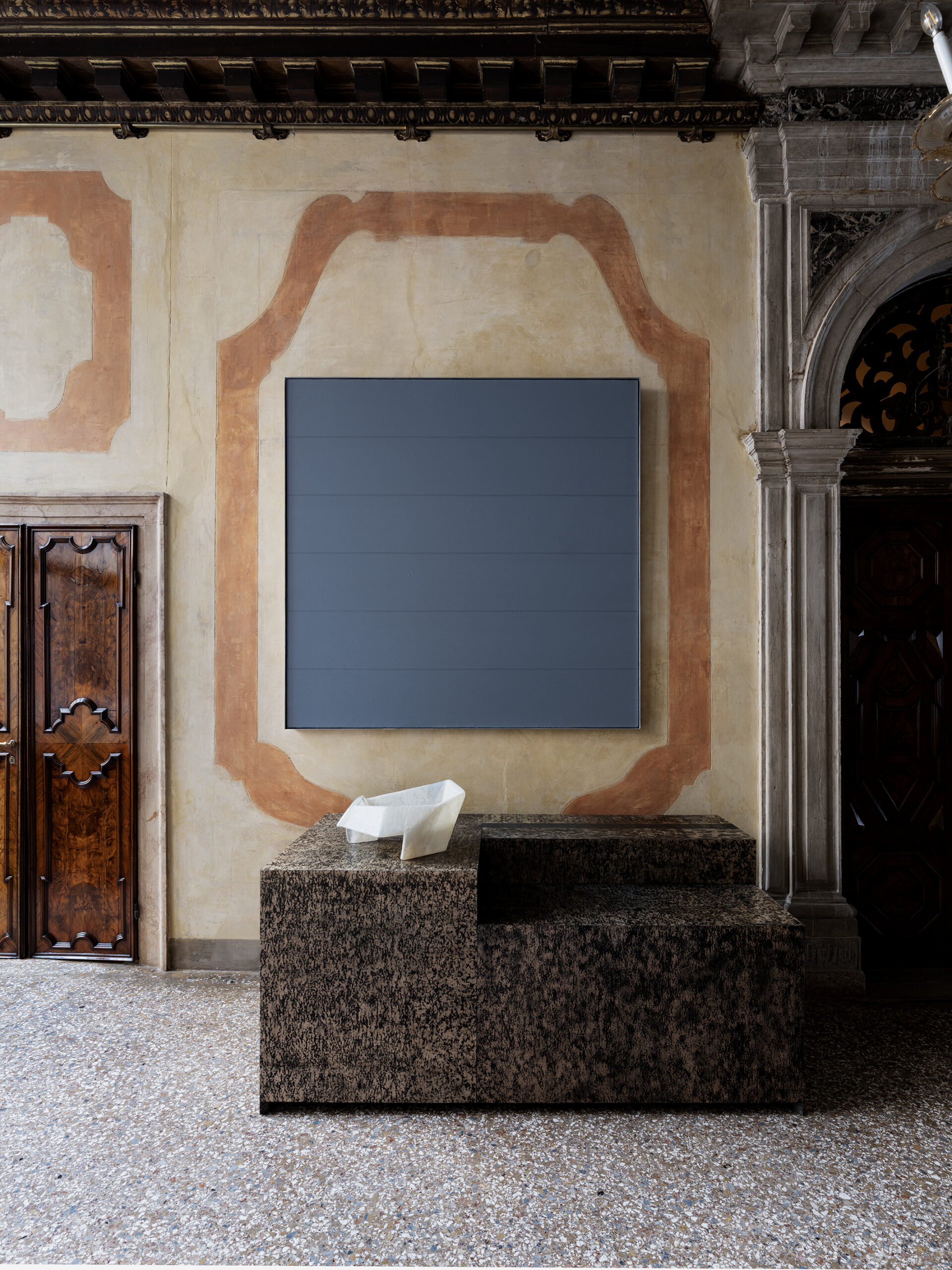
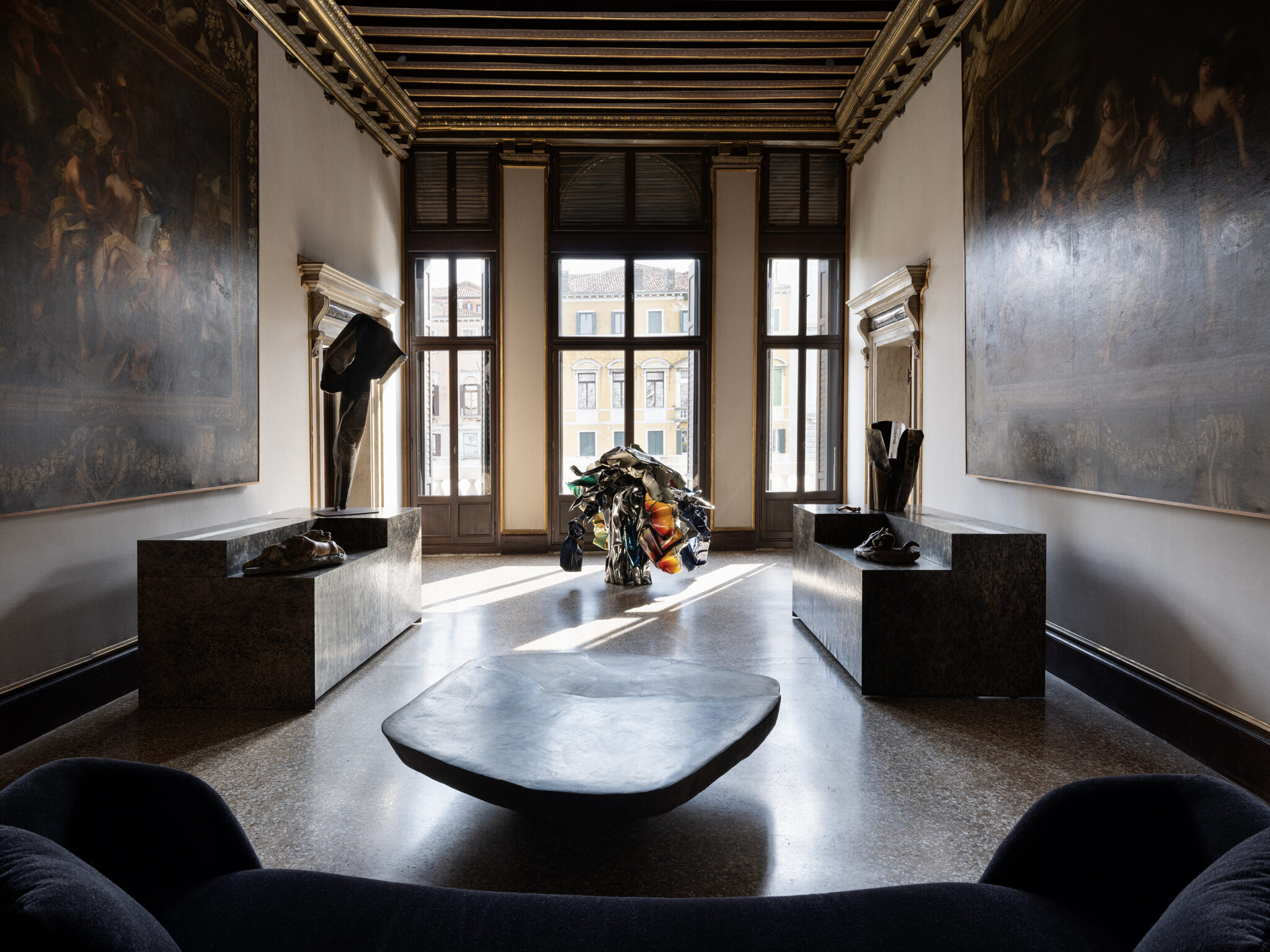
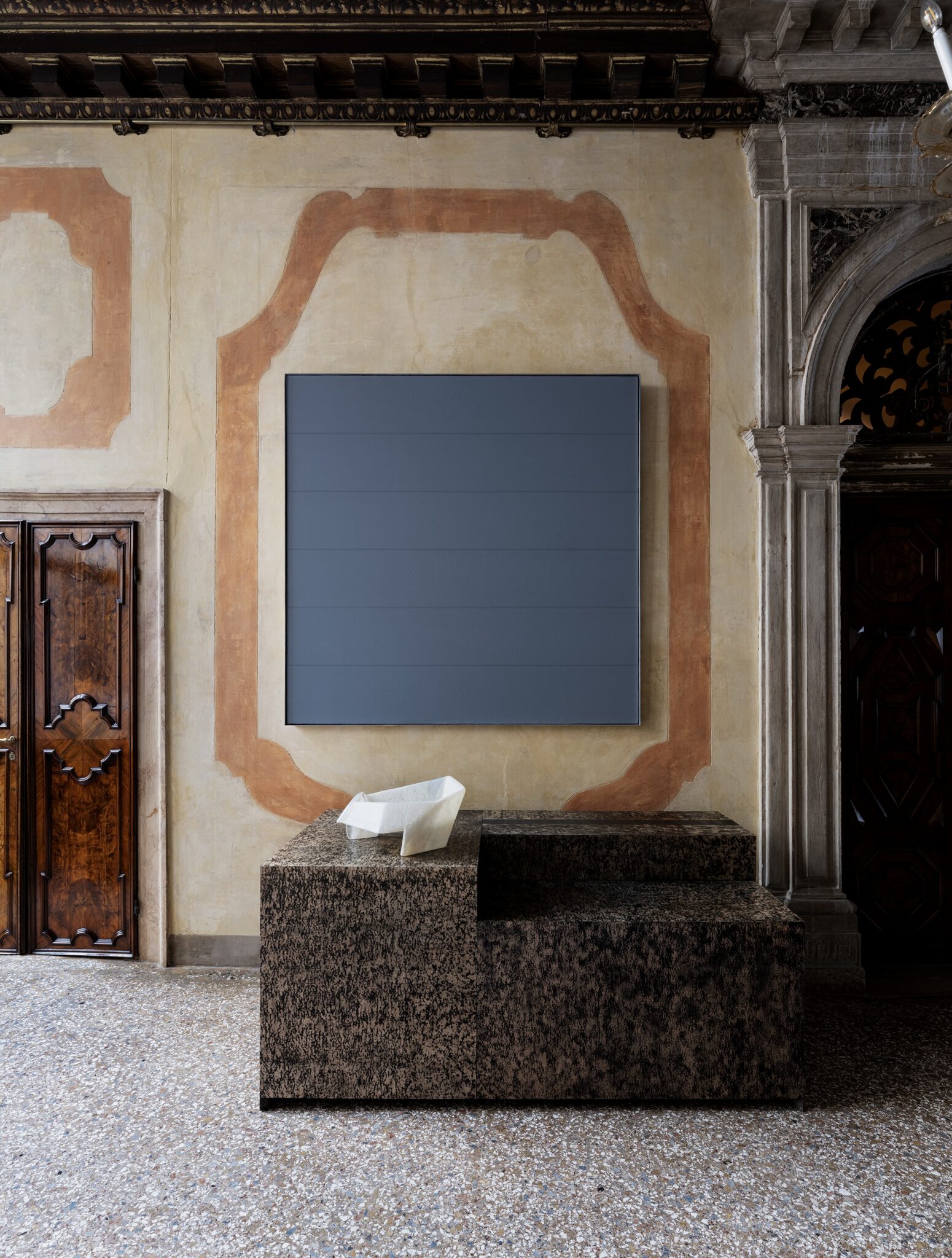
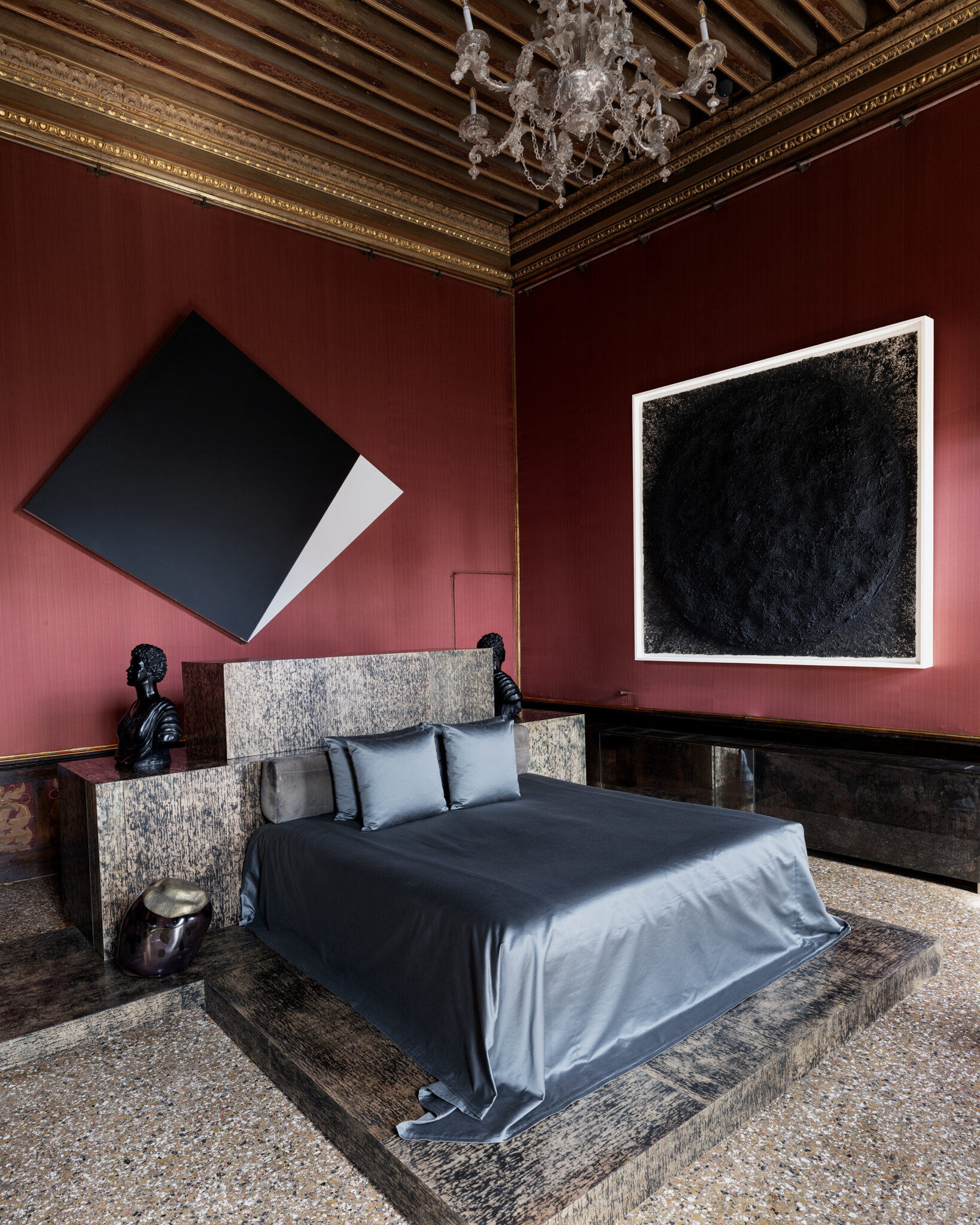
That argument, between Minimalism as failure and as a radical restructuring of perceptual experience, remains the most productive open question in postwar art history – and it is precisely that refusal to settle which makes it worth staging again, now, in Venice. Minimal Legends, co-curated by Claudia Rose De Cotiis and Lawrence Van Hagen across the interior spaces of Palazzo Giustinian Lolin, does not attempt to arbitrate. It places seventeen works by the movement’s defining figures and their closest satellites into direct dialogue with the contemporary practice of Vincenzo De Cotiis, an artist and architect whose language of stratified, recovered materials continues that tradition into the present. That tension – between Mimimalism’s object stripped of history and De Cotiis’s space and surface saturated with it – is the exhibition’s central argument.
What You See Is What You See
The conventional starting point is Frank Stella, and a room at MoMA in 1959. His Black Paintings stopped viewers in their tracks: not because they were beautiful in any received sense, but because they were so deliberately flat. “What you see is what you see.” It was both a description and a provocation, a refusal of the psychological depth and gestural urgency that Abstract Expressionism had built its entire authority upon. No hidden meanings and no emotion smuggled in under the guise of form. The American art world, accustomed to reading surfaces for evidence of inner states, found itself with nothing to read.
As the historian James Meyer has argued, Minimalism was not a coherent movement but a field of overlapping and sometimes opposed practices: artists who became equated through a series of exhibitions and critical texts before any of them had agreed to share a label, or a programme. What they shared, rather, was a social and physical proximity. The Museum of Modern Art, in the early 1960s, employed several of the figures who would go on to define the decade: Sol LeWitt at the front desk, Robert Ryman as a security guard, Robert Mangold as a summer page in the library, Dan Flavin alongside them all. That intimacy, social, intellectual, occasionally antagonistic, is inseparable from the work itself. The movement that would be named from outside had already been formed, in large part, from within a single institution.
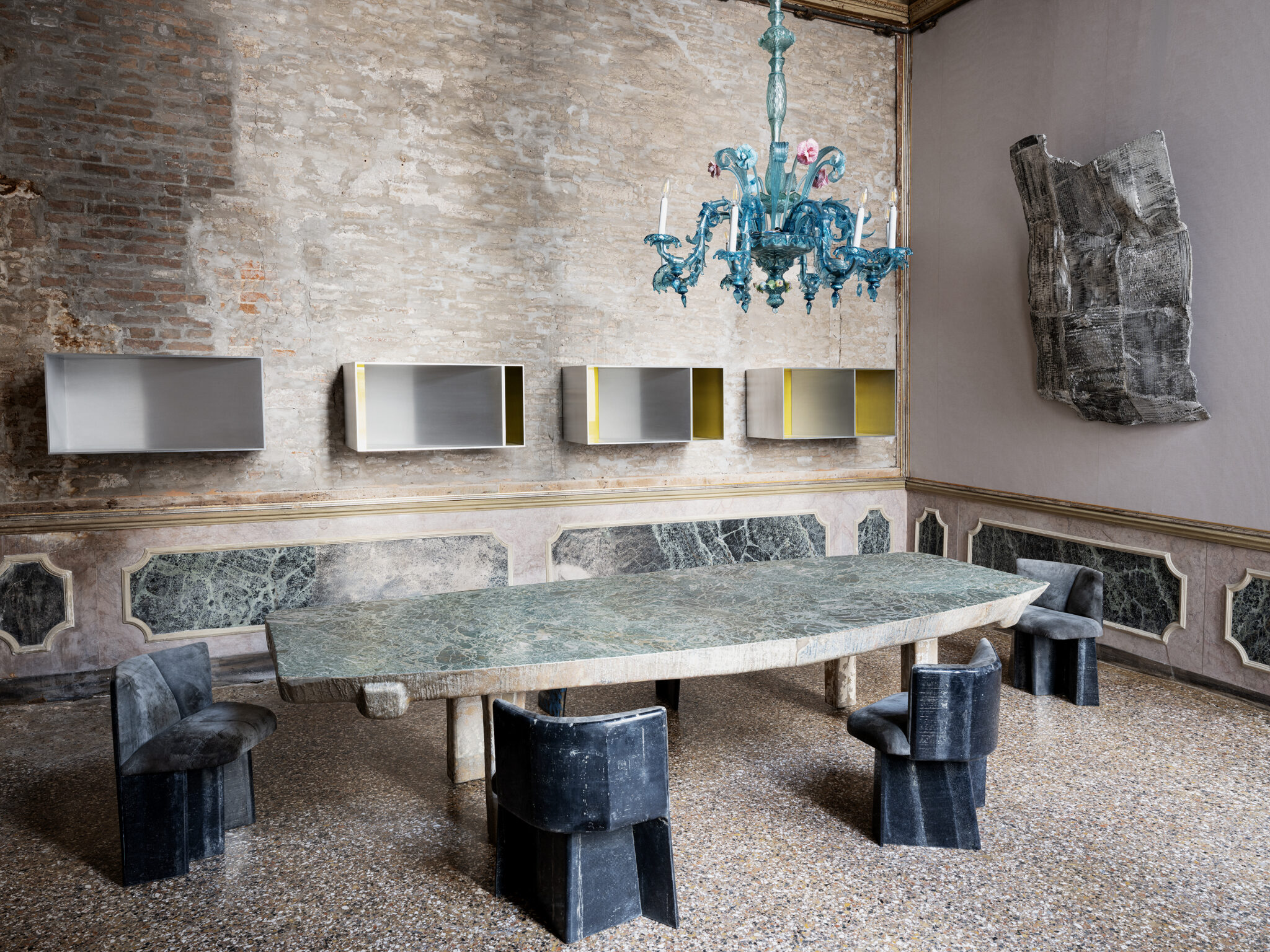
The philosophical centre of this emerging practice was Donald Judd, whose 1965 essay Specific Objects remains among postwar art history’s most consequential critical texts. Judd described a new category of work, “Specific Objects”, which were neither painting nor sculpture, characterised by wholeness, simplicity of shape, and a refusal of compositional hierarchy. In his own fabricated stacks and progressions in anodised aluminium and coloured plexiglass, that position was embodied with mathematical rigour. The work was not to be interpreted, but to be encountered in real space by a real body.
Friends and Rivals
The works gathered across Palazzo Giustinian Lolin trace this moment’s full complexity, and the exhibition is at its most compelling where it refuses to smooth out the differences – connections that are personal, historical, sometimes openly contentious, not merely stylistic.
Judd himself, in Specific Objects, identified Mark Rothko’s expansive colour fields as a direct precedent for the literal, object-based work he, Stella, and Chamberlain were each pursuing by different means. Rothko’s dissolution of figure into pure chromatic atmosphere had opened the door: for Stella’s shaped canvases, for Chamberlain’s compressed volumes of chromium-plated steel, for Judd’s own specific objects. That Rothko took his own life in 1970 before the movement that owed so much to his example could fully reckon with that debt gives his Untitled (Red, Yellow, Blue, Black and White) of 1950, shown here alongside works made decades later by his inheritors, a particular gravity. A Rothko is never only what you see.
Flavin and Judd, meanwhile, were among the tightest personal ties in the movement’s social fabric. Flavin’s Untitled (to Sabine and Holger) (1966-71), the red fluorescent tubes carry its dedication in its title: a couple who were close friends of both men. Flavin’s insight was that the commercially produced fluorescent tube, available off the shelf in standard lengths and a fixed palette of colours, could become sculpture by the decisive act of being chosen. He did not create his red. He selected it. That selection, and the spatial and chromatic events it set in motion, was the work.
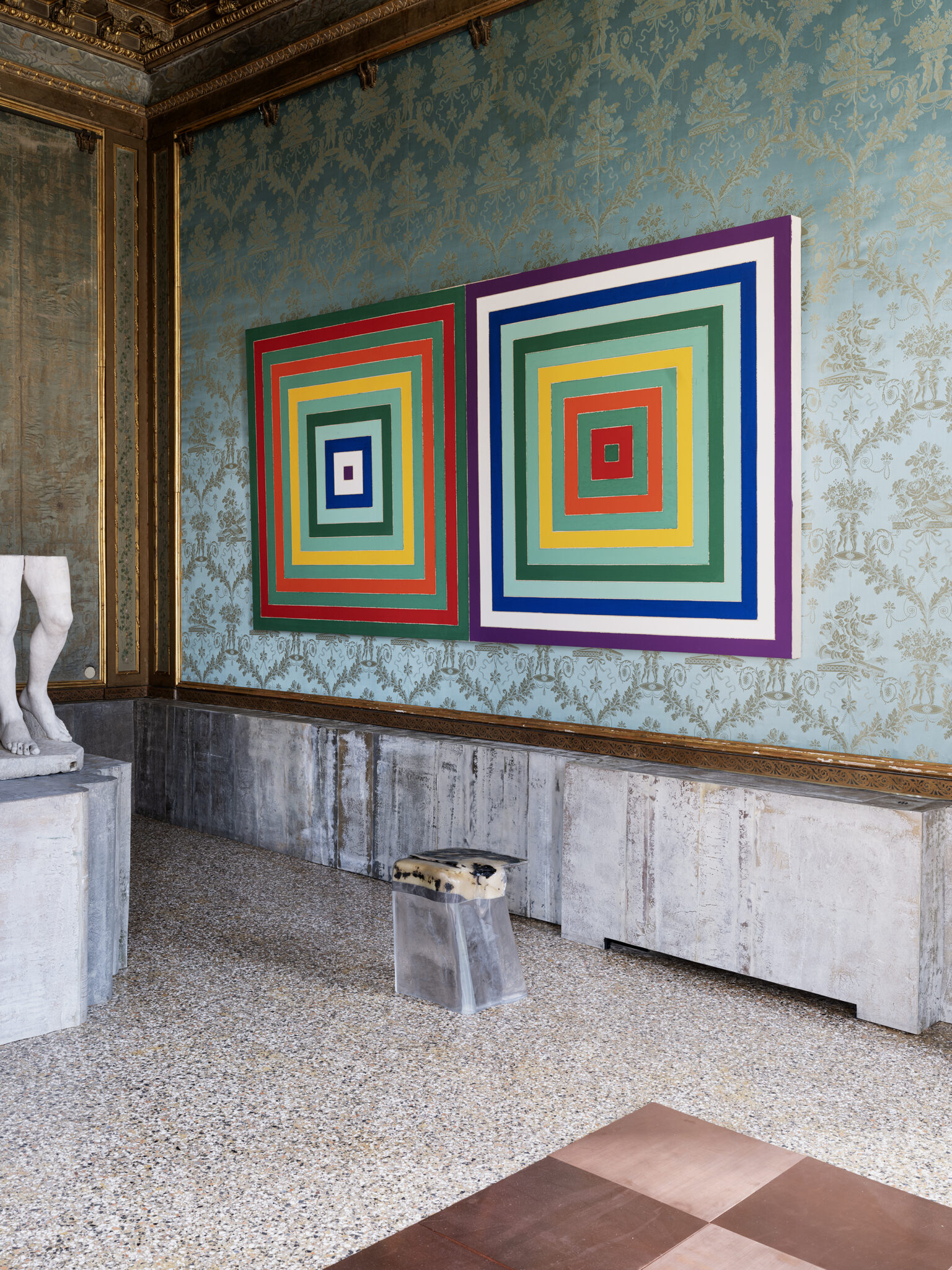
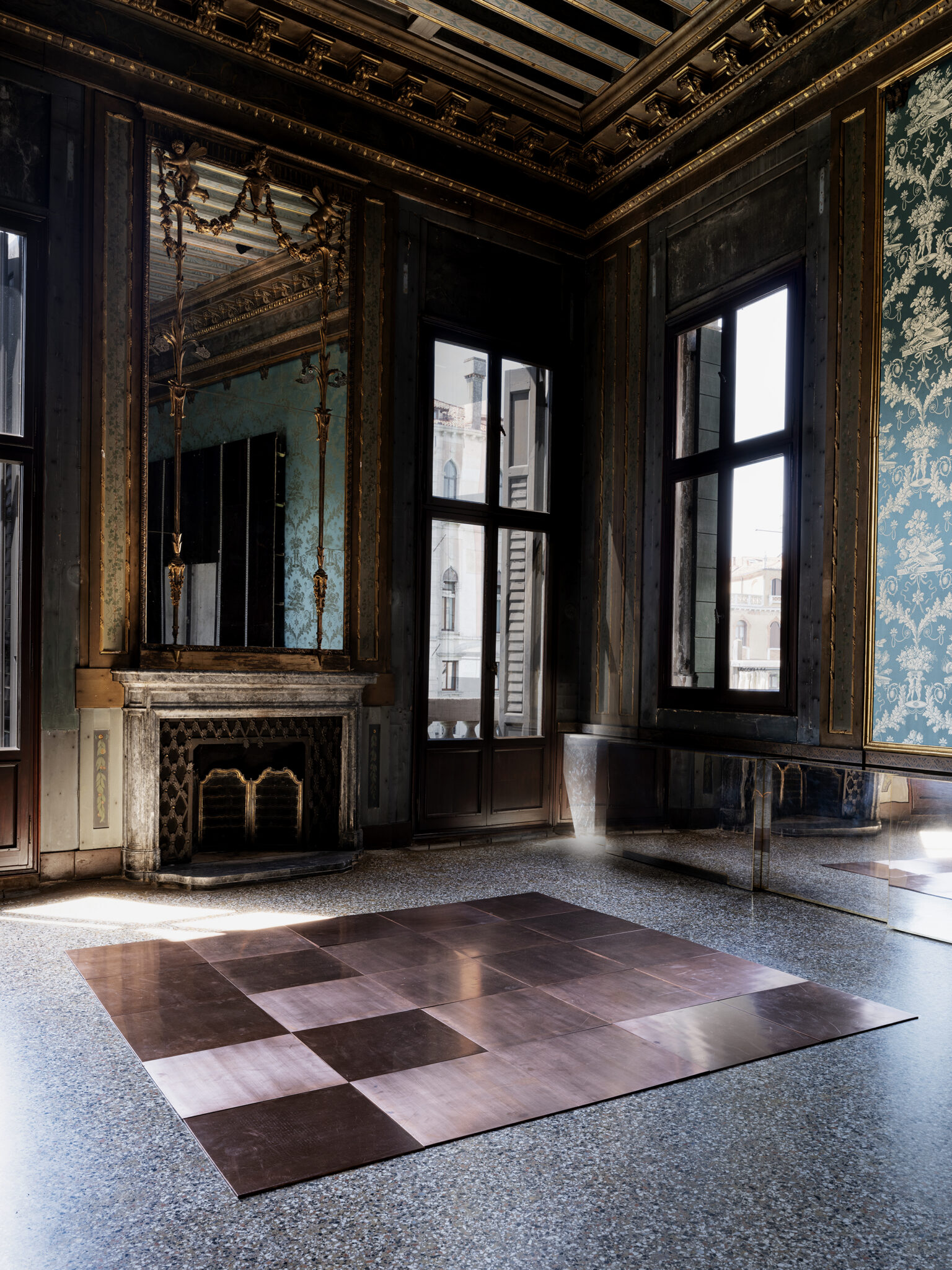
Carl Andre, who acknowledged Stella’s Black Paintings and early Stripe series as a direct influence on his own rejection of compositional hierarchy, extended Minimalism into its most radical spatial proposition. His Fifth Copper Square (2007), twenty-five copper plates laid edge to edge on the floor of the palazzo and designed to be walked on, relocates sculpture from the vertical axis of viewing into the horizontal plane of lived movement. There are no ideas hidden under those plates, Andre observed: just metal, sitting on the floor, “minding its own business.”
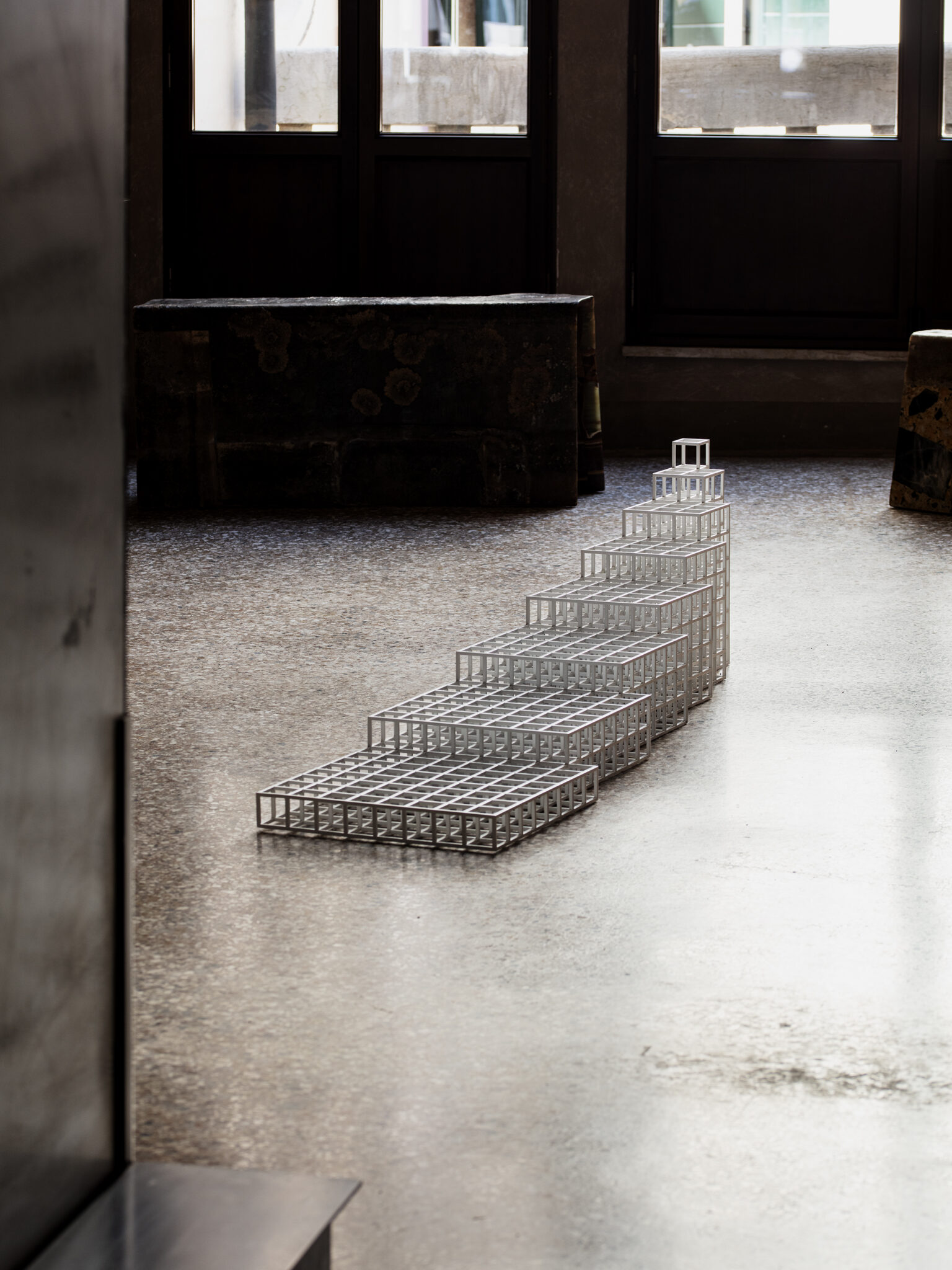
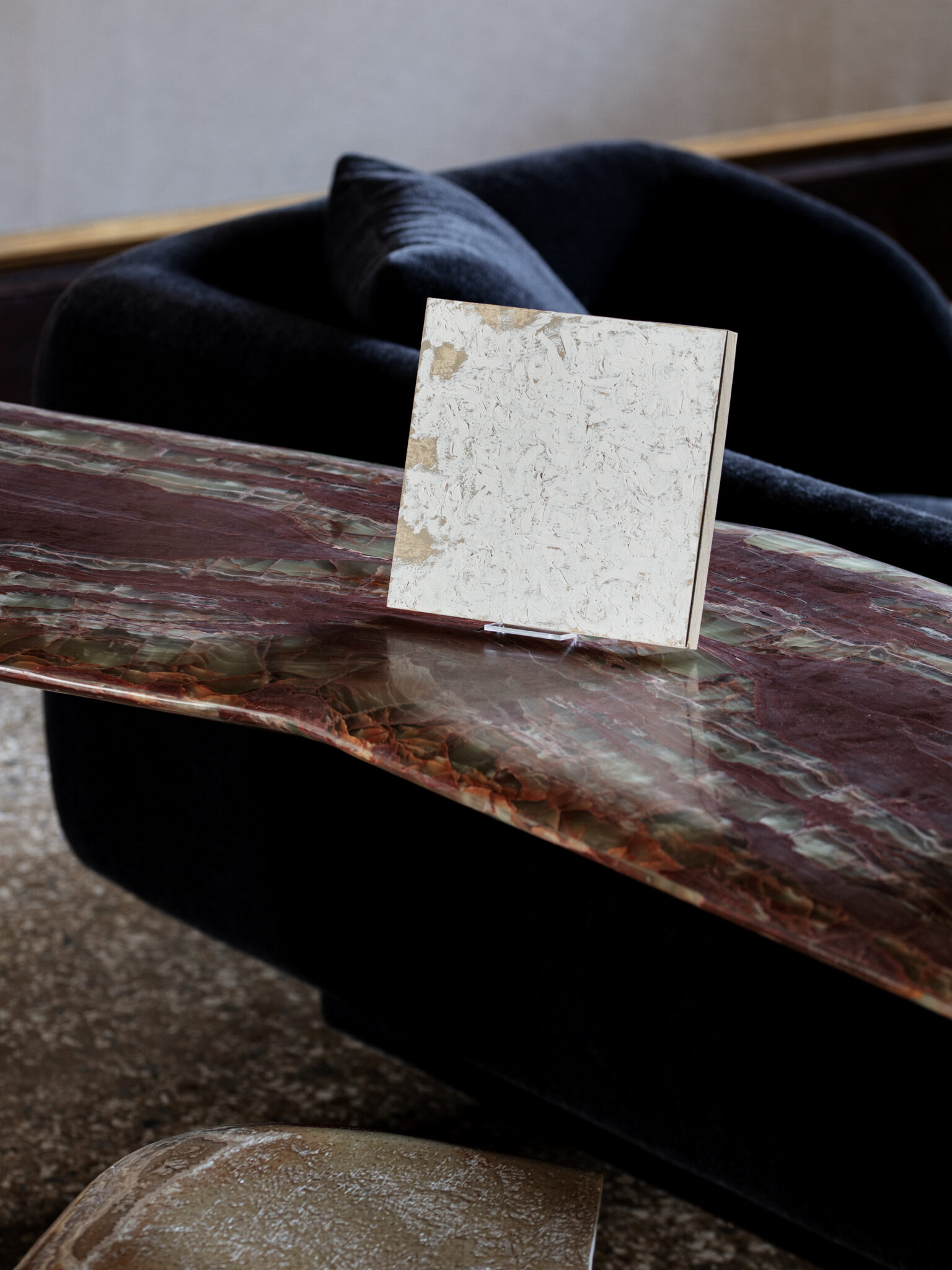
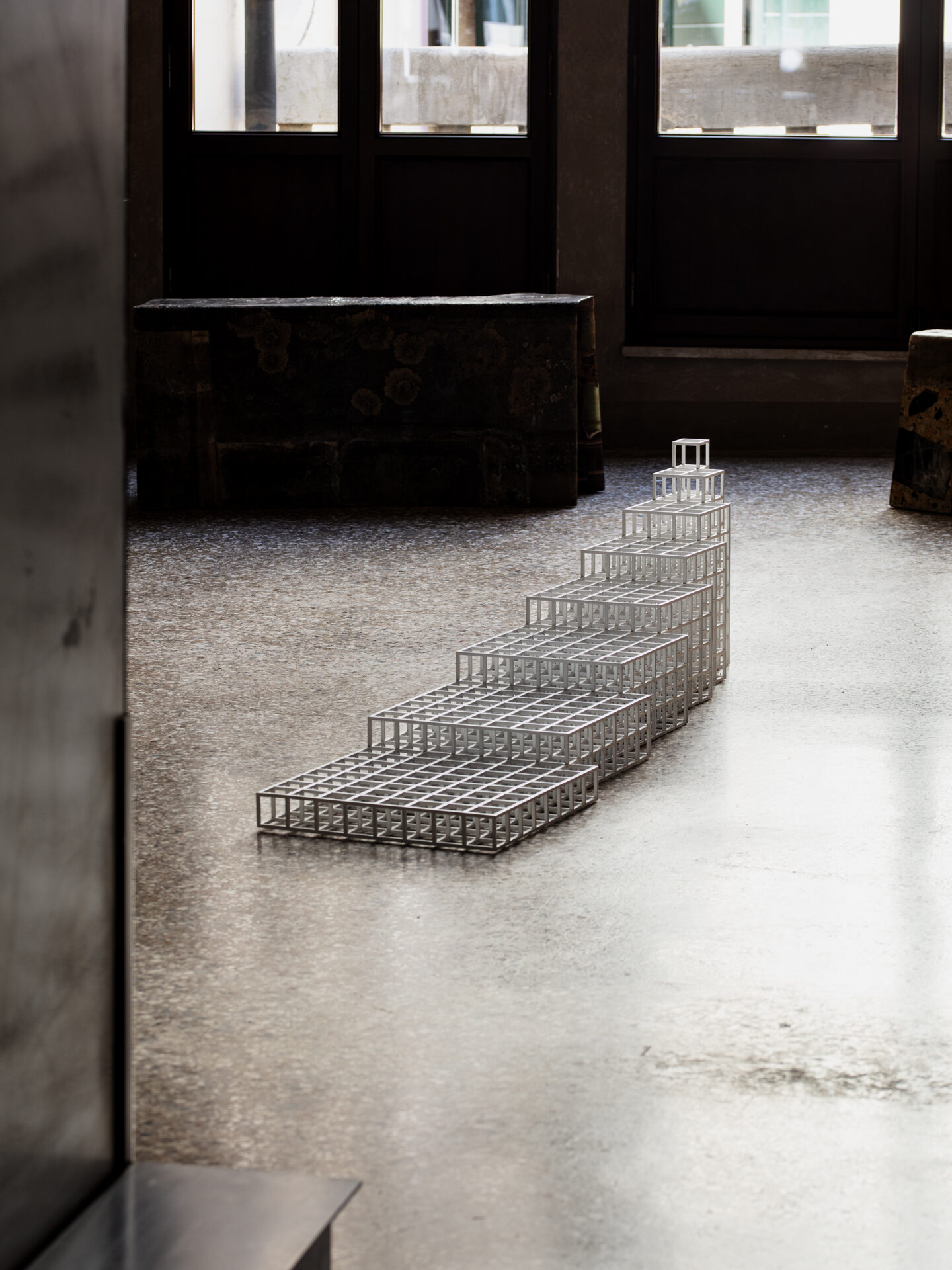
Sol LeWitt, who worked alongside Ryman, Flavin, and Mangold at MoMA in those early formative years, occupies a position at once central and resistant. He always refused the Minimalist label, arguing that such designations limit the artist; his position was more philosophically stringent – the idea, he wrote, “is the machine that generates the art.” The work, merely its execution. His Horizontal Progression #7 (1991), a white aluminium structure built from serial logic as precise as a mathematical proof, enacts that conviction. Beside it, his MoMA colleague Robert Ryman spent a career of equal discipline working entirely in white paint, the colour with the least colour, in the square format, on varying supports, probing endlessly the physical conditions of painting itself: its surface, its edge, its relationship to the wall. Two artists working from the same intellectual formation, converging on white from entirely different directions.
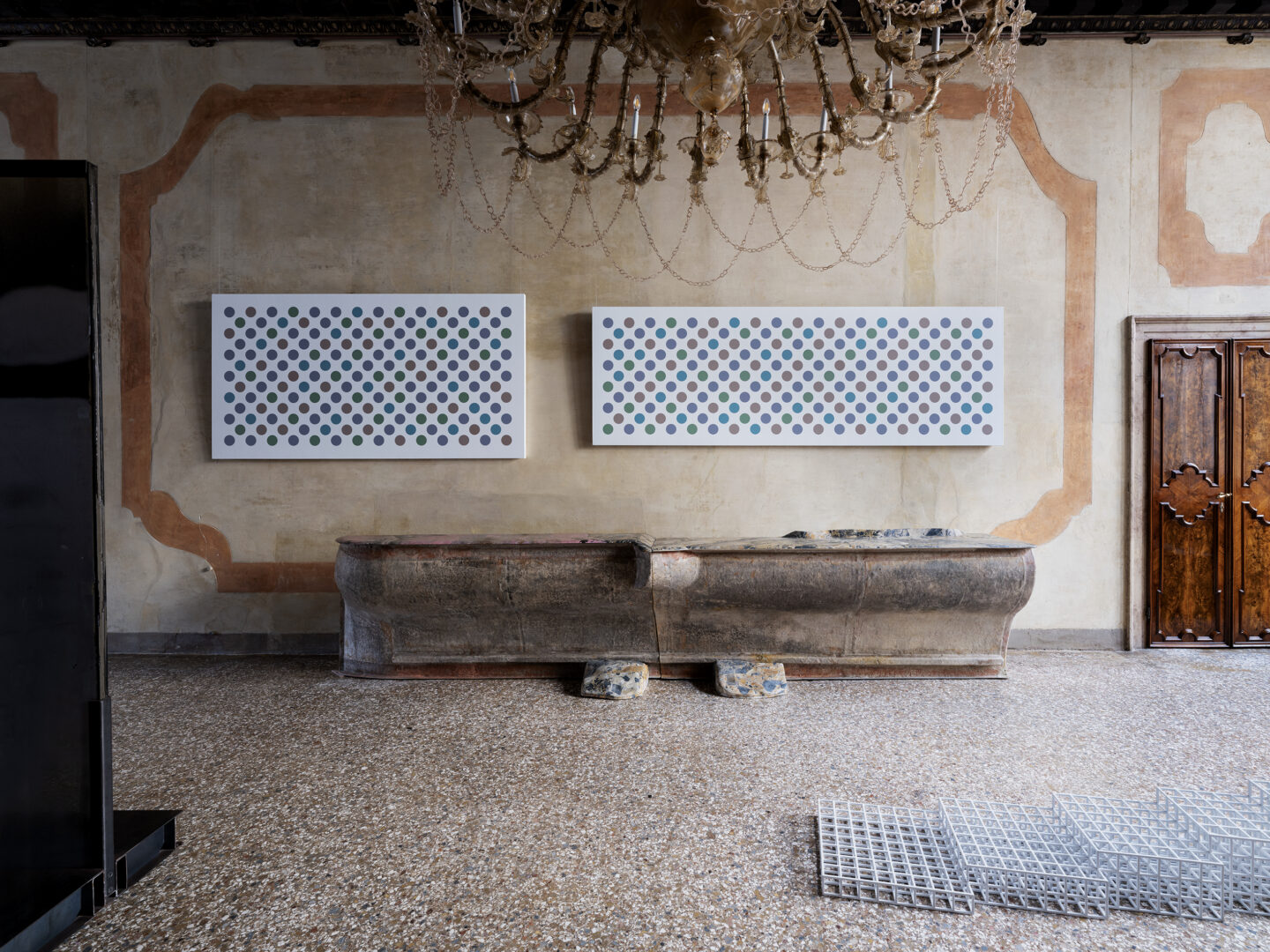
The exhibition opens, deliberately, with its two most significant female voices of the movement: Agnes Martin and Bridget Riley. Martin’s Untitled #5 (1989), its faint graphite grid laid over a field of soft acrylic wash, operates at the very edge of perceptibility. She described the experience of standing before her work as something like the feeling of waking in the morning, before the world has imposed itself. Riley’s two Measure for Measure works (2020), their optically unstable sequences of colour and interval turning the eye back on its own mechanisms, work as analytic as it is pleasurable. Both artists insist, in very different registers, that perception itself is a subject worthy of sustained inquiry. Their placement at the threshold of this exhibition is also corrective: to the mythology of Minimalism as a cold and masculine programme, and to the history that marginalised them even as their practices were doing some of its most exacting work.
The remaining artists extend the conversation into contradictory territory. Larry Bell’s Untitled (1967), a glass cube coated through vacuum deposition, reflects, transmits, and absorbs light simultaneously, earning Bell the description “the Monet of Minimalism” for his absolute preoccupation with variable light conditions. His practice belongs to the Light and Space vocabulary the Los Angeles scene was building even as New York built its own. John McCracken’s Zoom (1988-92), a polyester and fibreglass plank leaning against the wall, connects the realm of imagination and the physical realm of the floor, transcending both through the architectural negotiation between the horizontal and vertical surfaces. McCracken worked in Los Angeles, where the polish-fetish, the bright colours of cars and surf culture shaped his palette. Imi Knoebel’s Weiss Schwarz 17 (2012) brings the Constructivist inheritance of European geometric abstraction into contact with American Minimalist discipline. Robert Mangold’s Four Colour Frame Painting #13 (1985) destabilizes the focal point of attention by cutting out the center of the canvas. Richard Serra’s Borges (2009), a monumental drawing in paint stick on handmade paper, shows how the weight and material of his massive steel installations survive compression into two dimensions. Frank Stella’s Scramble: Green Double / Left N, Right 8 (1977) returns us, finally, to the shaped canvas and the systematic organisation of colour, and to the artist whose flat black stripe and eleven-word statement set the terms for everything that followed.
Minimalism Today
What any serious presentation of Minimalist work in 2026 must eventually address is the question of stakes. The architecture of attention that governs cultural consumption today is built on the opposite of what Minimalism demands: quick recognition, immediate satisfaction, where the Minimalist object offers only the sustained perceptual engagement our current condition makes almost structurally impossible. Meyer has also argued that Minimalism was never truly settled: its rapid canonisation in the late 1960s, and the fierce critical backlash, attempted to foreclose questions the work had raised but never answered. The exhibition does not reopen those questions in the spirit of nostalgia. It reopens them because they remain genuinely unfinished.
The Minimalists, as Barbara Rose understood in 1965, were at their most powerful when they were difficult. Sixty years on, that difficulty has not resolved. Stand before one of these works long enough and you will discover not what the artist intended, but what your own capacity for sustained attention can produce in the presence of an object that refuses to do your thinking for you. That is the radical proposition Minimalism placed on the table in the early 1960s. Sixty years of impatience have failed to clear it away – which is, in the end, the strongest argument anyone has made for it.
For all exhibition images and the full exhibition text, please click HERE.
Please note this exhibition is by appointment only. Kindly request an appointment at minimallegends@decotiis.it