The Top Contemporary Artists Reimagining Textile Traditions

For much of modern art history, material determined status. Painting and sculpture were positioned at the summit of cultural value, while textiles and craft-based practices were relegated to the margins, associated with decoration, domesticity, or utility rather than intellectual ambition. Yet this hierarchy has never been as stable as it appeared. Across generations and geographies, artists have steadily unravelled these assumptions, revealing that textile art is just as powerful as any other medium.
From the woven metal tapestries of El Anatsui to the intricate textile environments of Klára Hosnedlová, to the immersive installations of Chiharu Shiota, artists are redefining what these materials can do. We look at how established artists such as Tracey Emin and Sonia Gomez use reclaimed fabrics that hold personal and collective histories, and how younger artists like Wang Ye extend the medium into new conceptual territory. This group of nine artists, whether emerging or established, demonstrates that textile art is not peripheral to contemporary art but firmly at its centre.
Klára Hosnedlová
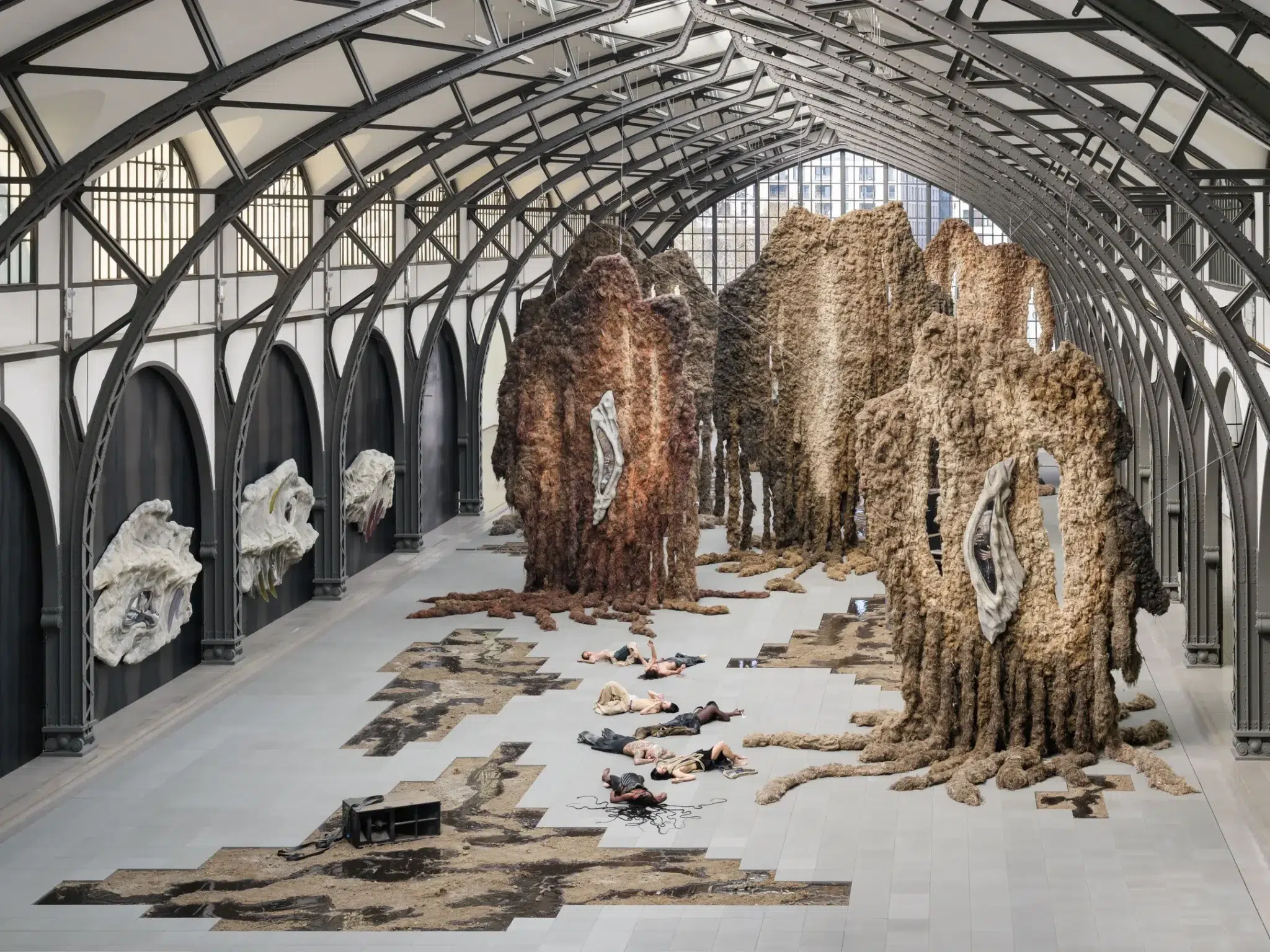
Klára Hosnedlová (b.1990) is a Czech contemporary artist whose work spans installation, sculpture, painting, and performance. Rooted in the histories of craft, folklore, and the architecture of post-socialist Central and Eastern Europe, her practice transforms textile and embroidery into expansive spatial experiences. Through large-scale environments and live actions, she creates immersive worlds that blur disciplinary boundaries and draw viewers into atmospheres that are intimate and uncanny at the same time.
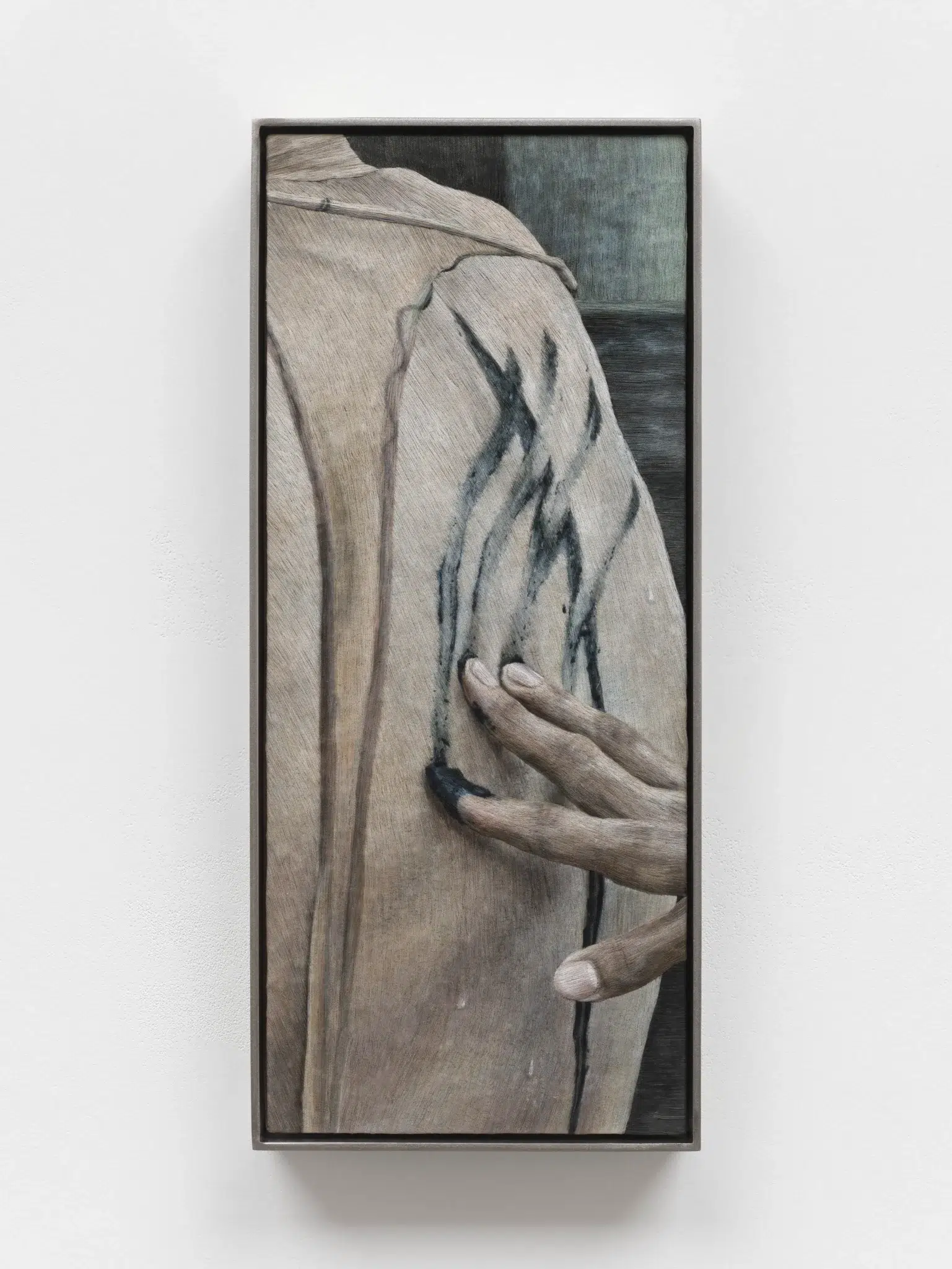
Last summer at Berlin’s Hamburger Bahnhof, Hosnedlová created an exhibition commissioned by Chanel that received widespread critical acclaim. She constructed monumental forms from meticulously arranged fabric, metal, and other materials, shaping spaces that felt at once architectural and ethereal. Alongside these imposing structures, her smaller works offer a more intimate yet equally compelling experience. At first glance, they resemble traditional canvases; only upon closer inspection does their true nature emerge. Composed of fabric, they introduce an unexpected fragility that contrasts with the grandeur of the larger installations, while reinforcing her sustained exploration of material presence.
She currently has an exhibition on view at White Cube in Bermondsey, London, through 29 March 2026. The presentation brings together an immersive installation, live performance, and a series of smaller works. Together, these elements form a cohesive environment that feels almost spiritual in atmosphere, while also demonstrating her ability to work powerfully across vastly different scales. In her hands, fabric moves beyond its physical properties and takes on a metaphysical presence at every scale and for every purpose, whether in an intimate canvas, garments for a performer, or a monumental installation.
Tracey Emin
Tracey Emin (b. 1963) has consistently returned to textile as one of the most intimate and direct mediums within her practice. Long before her large-scale paintings and bronzes came to define her practice, fabric functioned as a primary vehicle for confession, memory, and autobiography. Whereas quilts were traditionally valued primarily for their aesthetic qualities, often featuring geometric designs, throughout the 1990s Emin transformed quilts, blankets, and upholstered furniture into carriers of language. Hand-cut letters in felt and cotton are stitched directly onto fabric grounds, forming fragmented statements, names, dates, and private reflections. The stitching remains visible. The seams are uneven. The surface retains the trace of labour. In these works, sewing becomes analogous to drawing. Thread operates as a line, marking experience directly onto cloth.
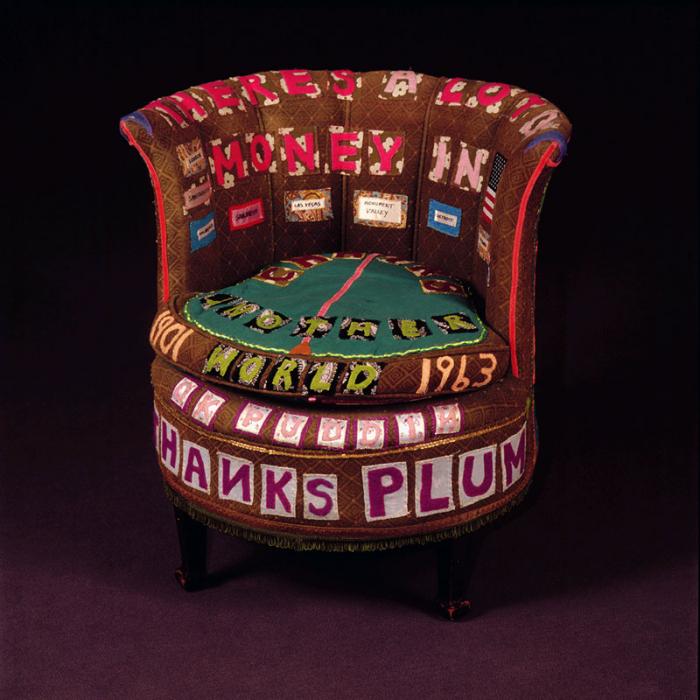
In There’s a Lot of Money in Old Chairs (1994), Emin covers a traditional upholstered armchair with appliquéd phrases. The padded back and rounded seat remain intact, but the object is overlaid with brightly coloured text that wraps around its curved form. Words follow the structure of the chair, encircling its base and rising across the backrest. Language becomes inseparable from the object’s physical presence. By stitching personal phrases into its surface, Emin transforms furniture into a surrogate figure.
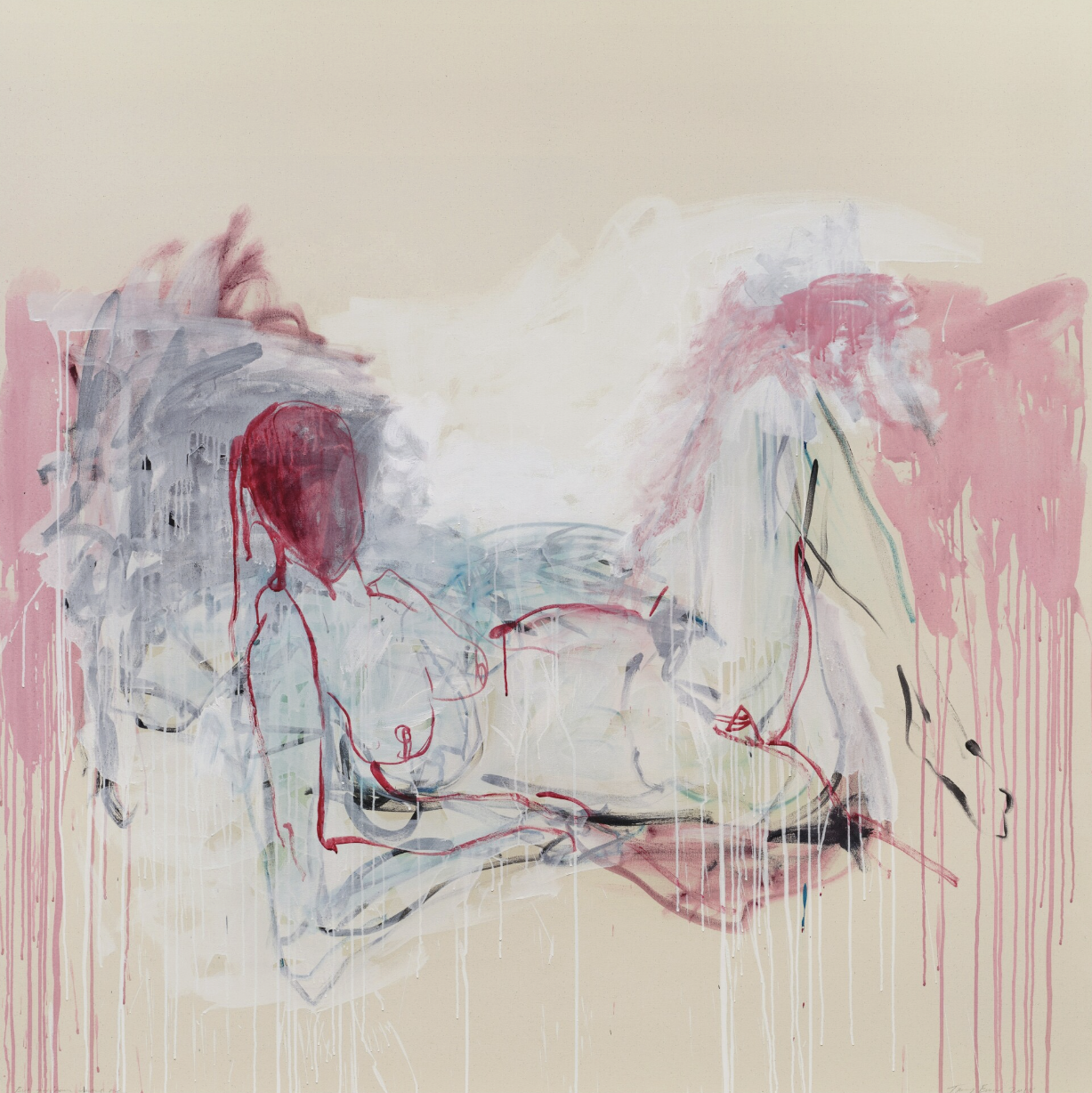
As highlighted in our article on Tracey Emin’s career, in honour of her current Tate retrospective, textiles occupy a central place in her artistic practice. She often selects fabrics loaded with personal meaning to express her experiences. Some pieces come from a sofa her family had since her childhood, while others are made from her own clothing, weaving memory and autobiography directly into the material of the work.
Nour Jaouda
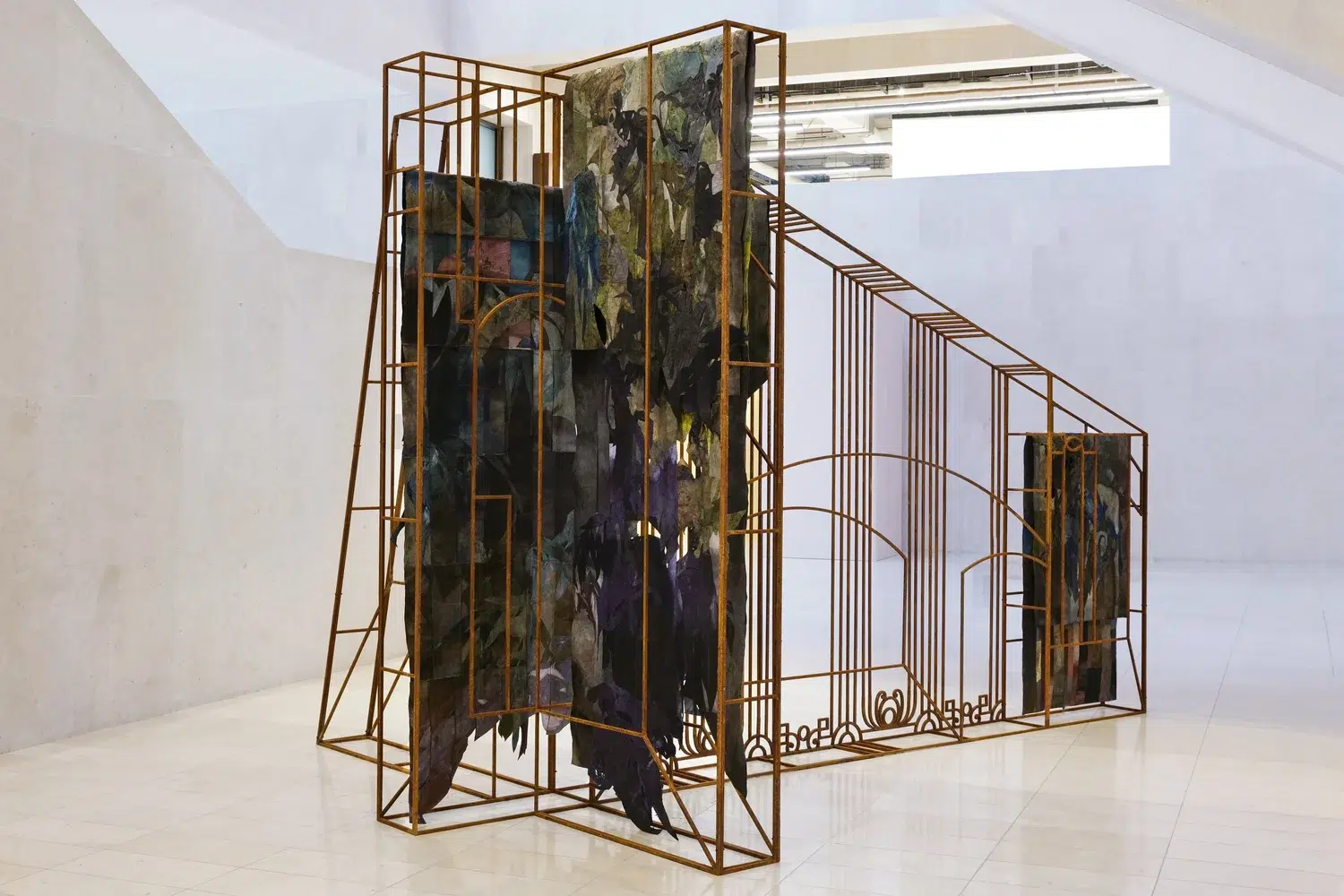
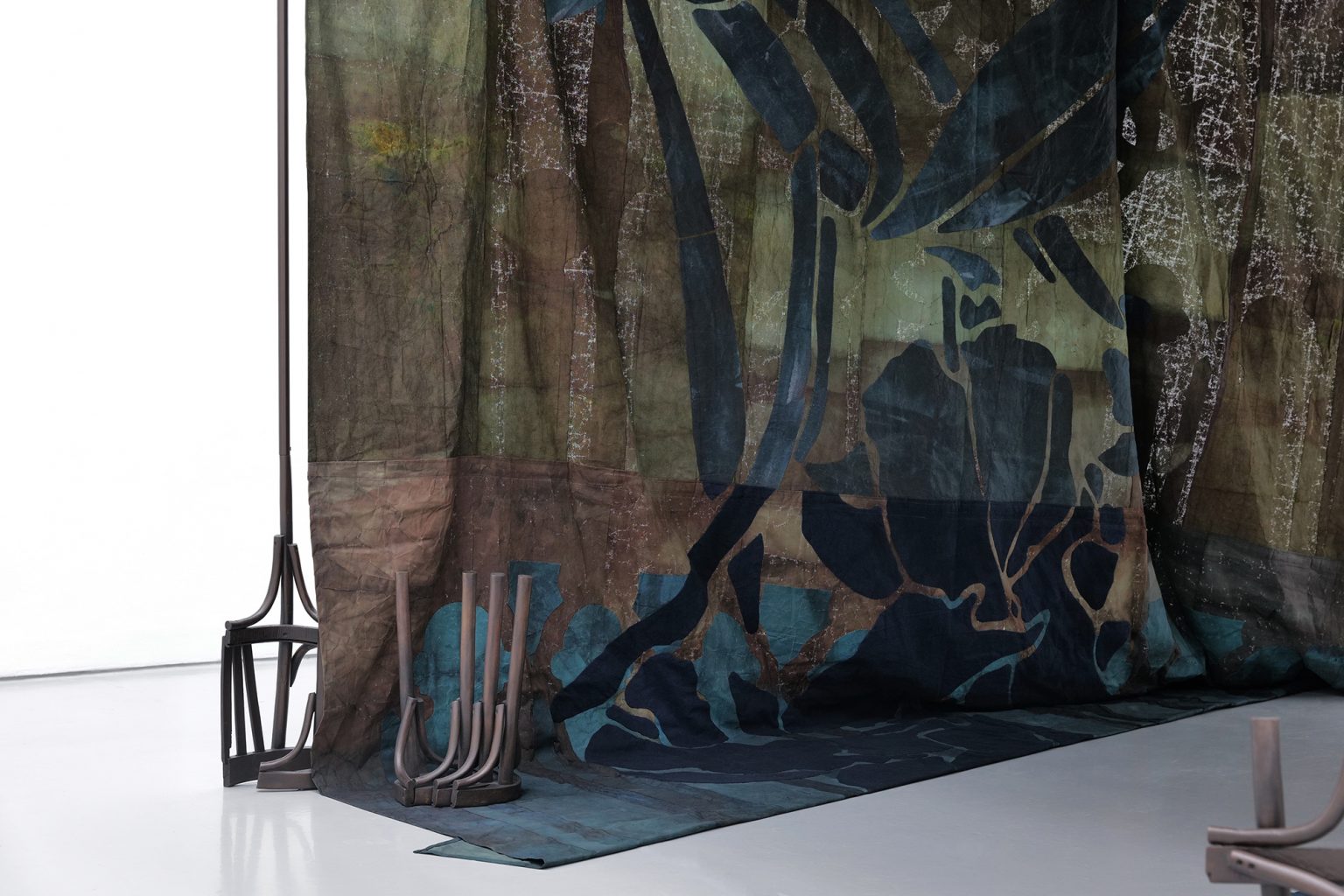
Nour Jaouda (b. 1997) is an artist working between London and Cairo, whose practice blends painting, textiles, and installation to probe memory, migration, and the landscapes of cultural identity. Her work navigates the tension between attachment and dislocation, often drawing on the emotional dimensions of movement and impermanence. Central to her works are hand-dyed textiles, enriched with vegetal pigments and layered textures, which act as repositories of memory and instruments of transformation.
The fabrics that make up her work are repeatedly soaked, folded, stained, and layered with pigment over time. She then employs a process of décollage, cutting and removing parts of the fabric, which she describes as “a radical and poetic strategy that is as much destructive as it is constructive; where the act of undoing and unbuilding becomes an addition rather than a negation to the work.” These fragments are then reassembled into sculptural tapestries that often hang freely in space, their raw edges and visible seams emphasizing their materiality. Gravity shapes the final form, and light passing through thinner sections reveals subtle variations in tone, lending the works both weight and permeability.
From 27 September 2025 to 11 January 2026, Jaouda presented her first institutional solo exhibition, Matters of Time, at Spike Island. The installation draws inspiration from the Khayamiya, intricately patterned appliqué textiles traditionally used to line tents in Cairo, functioning as both ornament and shelter for communal gatherings such as funerals, Ramadan rituals, and Eid celebrations. Within Spike Island, Jaouda creates an intimate, tent-like environment that doubles as a memorial space, inviting visitors to sit, reflect, and mourn. Botanical landscapes are referenced through deconstructed shapes of indigenous plants and trees, recalling those uprooted or lost. In this sheltered space, memory, landscape, and material converge, offering a contemplative encounter with absence and transformation.
Wang Ye
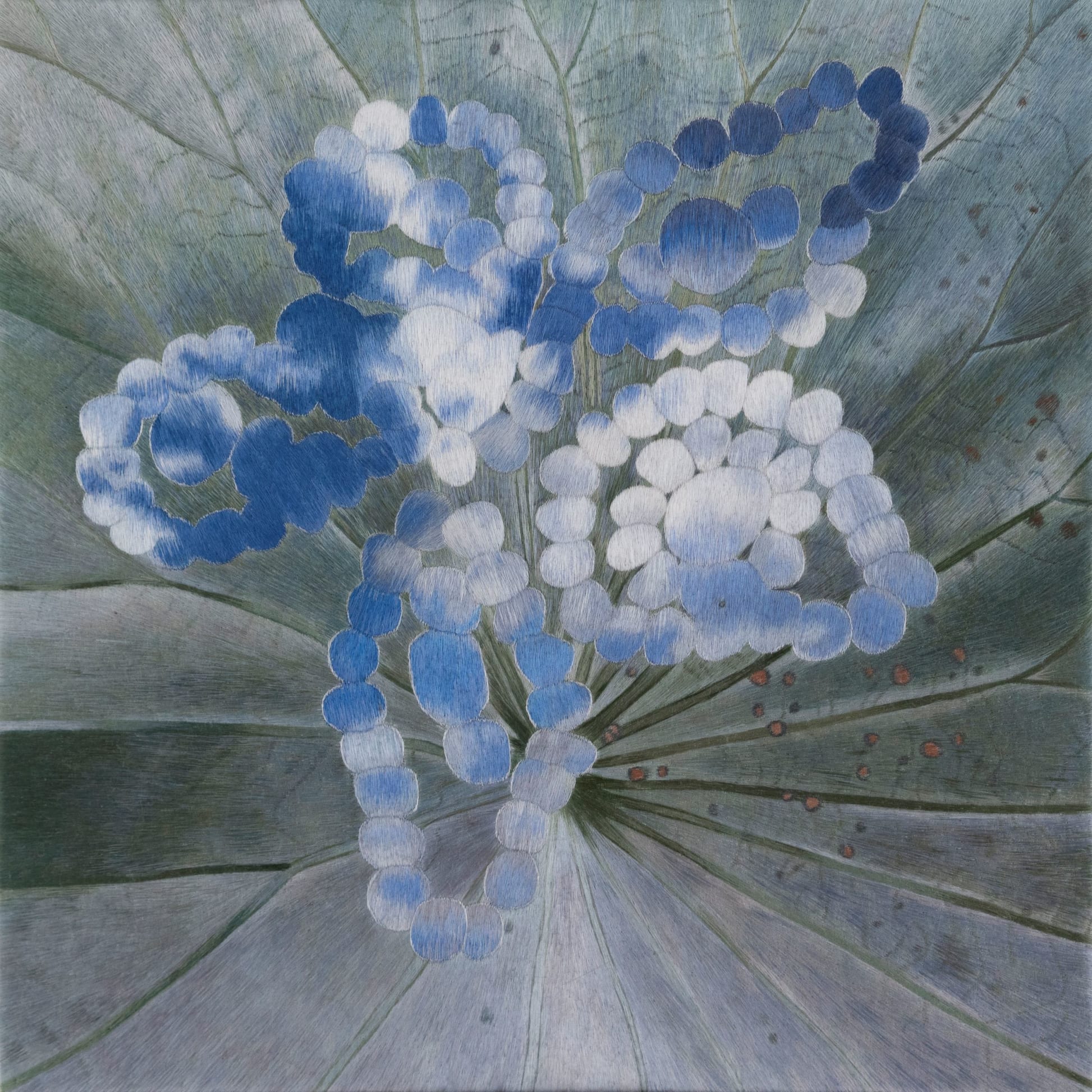
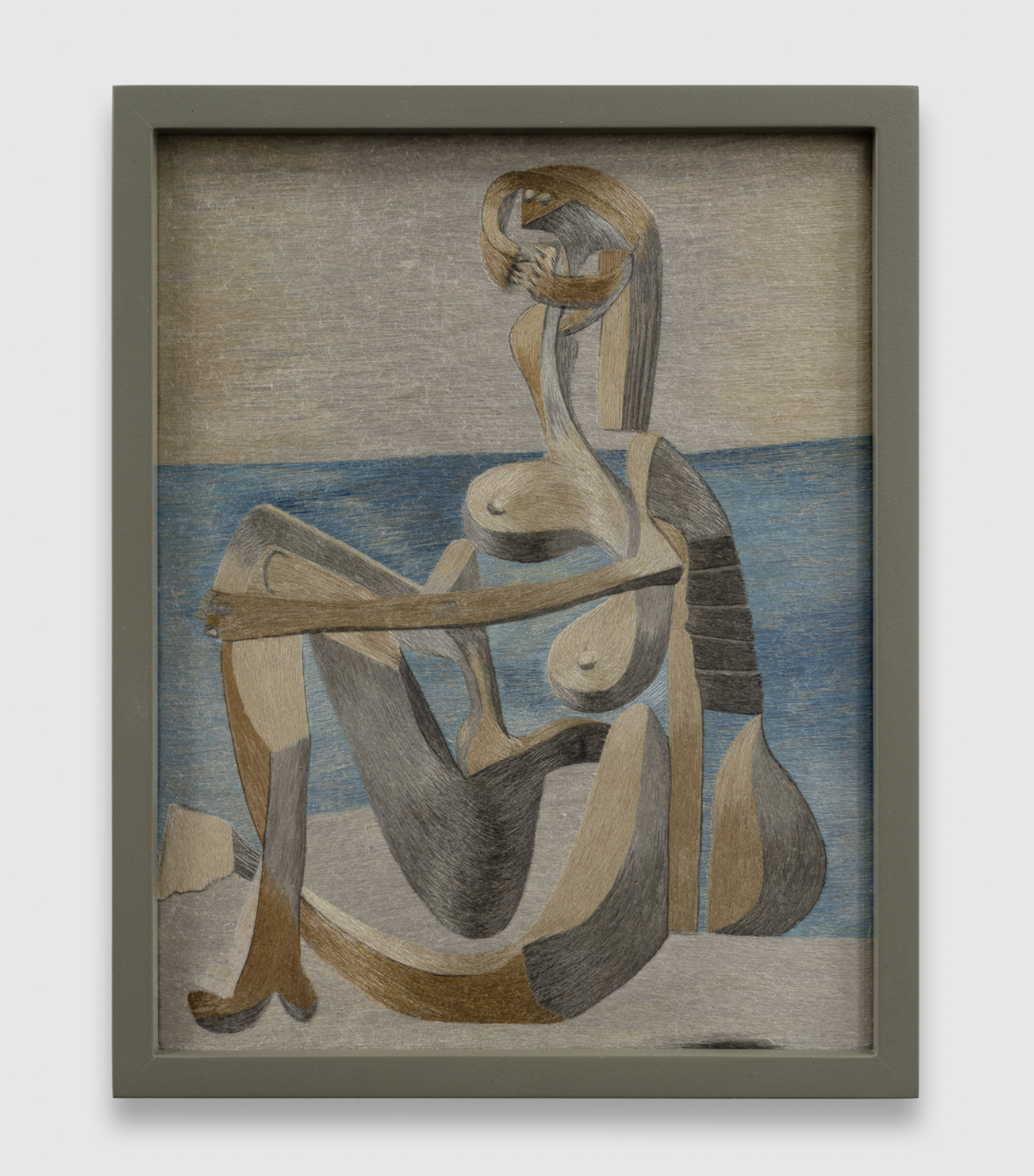
Wang Ye (b. 1990) is a Chinese artist who transforms textile into a medium that is both structural and painterly. Working with woven and hand-constructed fabrics, he creates wall-based compositions that emerge through stitching, layering, and cutting. Colour is subtle and carefully modulated, achieved through layered textiles and woven patterns rather than illusionistic effects, allowing the material’s physical presence to remain central.His work draws on traditional weaving while engaging contemporary abstraction, treating cloth as both surface and structure. Wang also collaborates with local Hunan embroiderers in Changsha, translating motifs from Western Modernist works into intricate silk embroidery. The gestures and daily lives of the artisans, down to small details like hair ornaments, also often inform his works, blending personal memory, craft, and cultural heritage. As the artist noted, “‘I absorb stories as feelings and weave them into my work.” Through this approach, Wang bridges folk traditions and contemporary art, highlighting the ongoing dialogue between labor, material, and formal expression.
El Anatsui
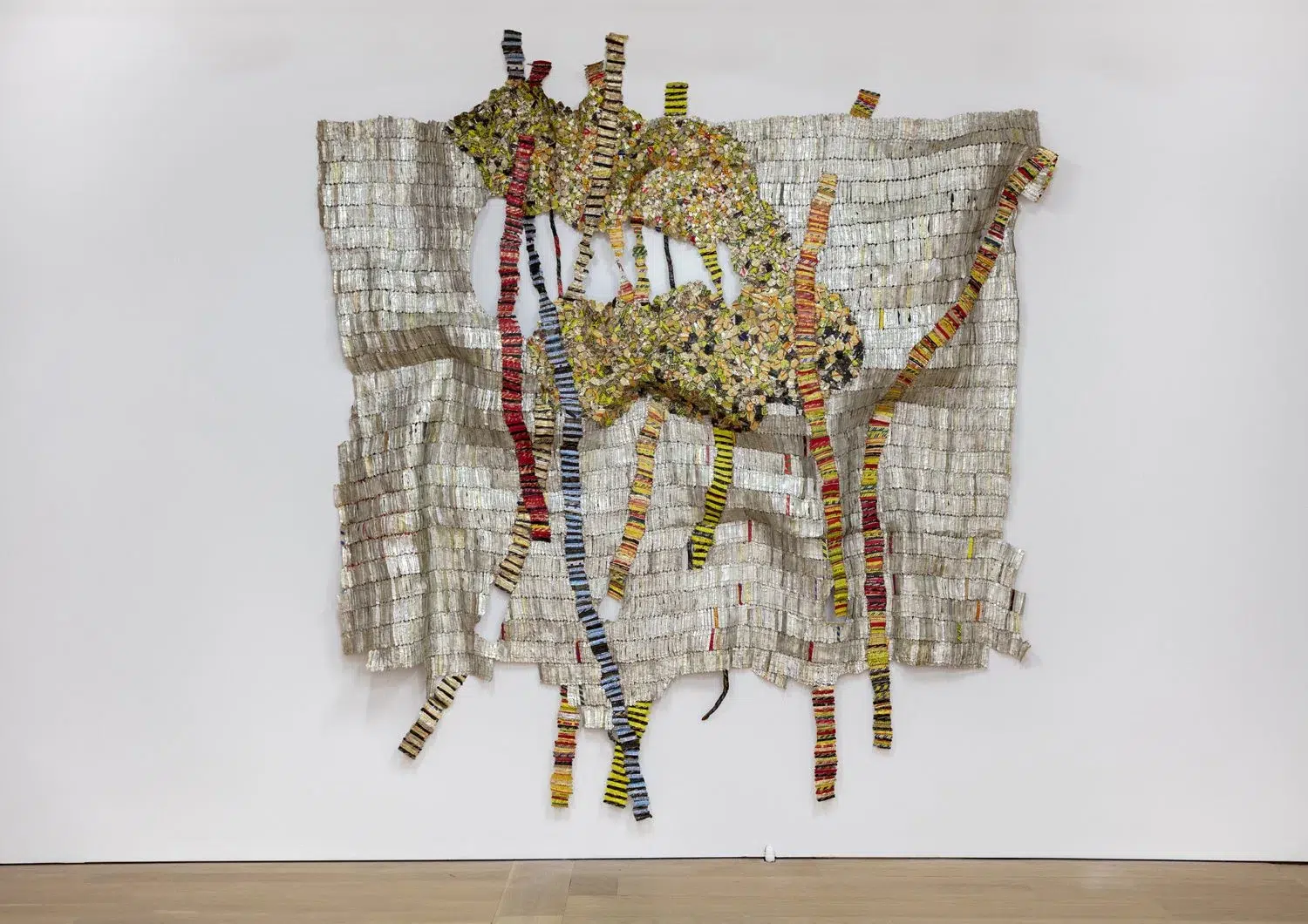
El Anatsui (b. 1944), born in Ghana and based in Nigeria for much of his career, is best known for monumental wall-based works composed of thousands of discarded aluminum bottle caps and metal fragments. These elements are flattened, cut, and stitched together with copper wire to create vast, flexible surfaces that hang like tapestries while retaining the weight and presence of sculpture. “The process of stitching, especially the repetitive aspect, slows down action and I believe makes thinking deeper,” says Anatsui. “It’s like the effect of a good mantra on the mind.”
While it might appear that he is simply recycling materials, Anatsui frames his practice differently, describing it as a “transformation” of the objects he uses. The bottle caps, for example, carry both personal and historical resonance: “To me, the bottle tops encapsulate the essence of the alcoholic drinks which were brought to Africa by Europeans as trade items at the time of the earliest contact between the two peoples.” By using materials associated with consumption and trade, he reflects on histories of colonial exchange, global commerce, and the movement of goods and people. In his hands, these discarded items become luminous, abstract fields of color and texture. His work shows that textile-inspired techniques do not have to be soft or delicate; he takes the tradition of stitching and modernizes it with unconventional materials, effectively revolutionizing what might be called “textile art.”
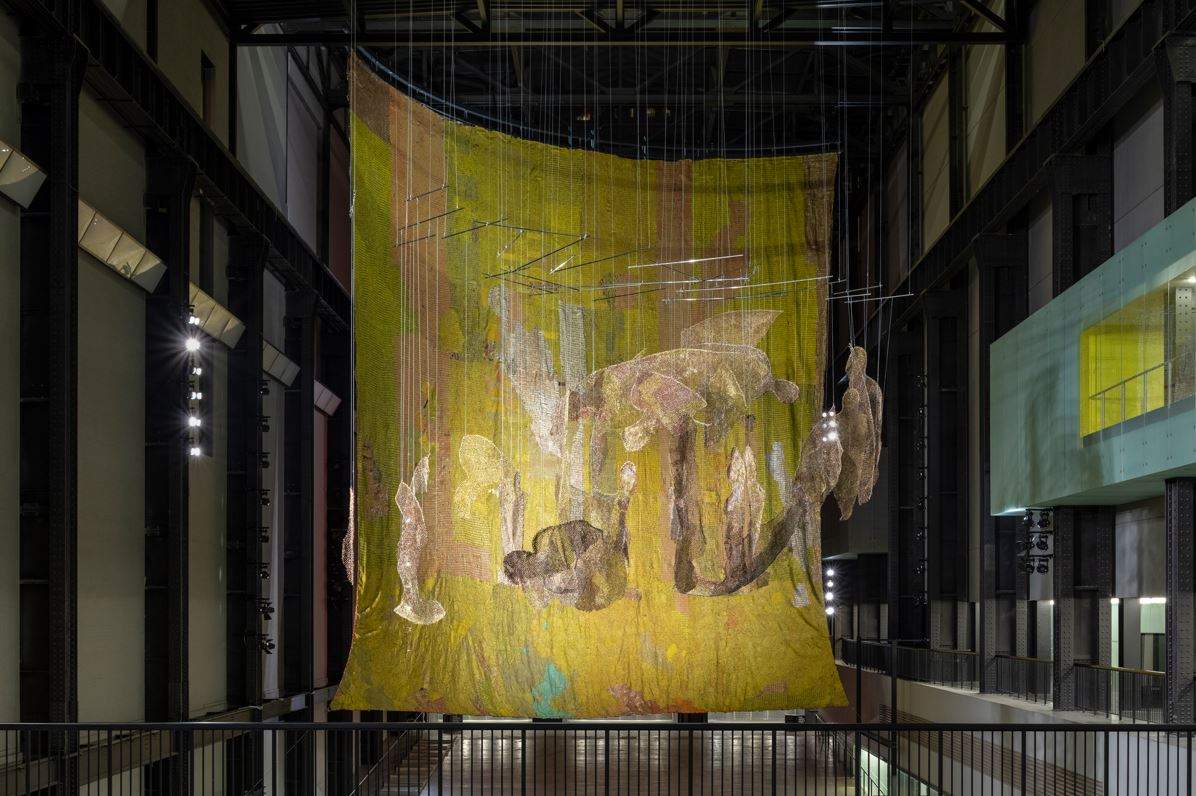
Anatsui embraces collaboration, acknowledging the contributions of his assistants: “The variety which is needed at this scale comes from the style and the feel of each individual hand.” Working with a team allows him to realize works of immense scale while preserving subtle variations in texture and rhythm. His installation Behind the Red Moon in the Turbine Hall at Tate Modern, from 10 October 2023 until 14 April 2024, exemplifies this approach. Suspended within the vast industrial space, the work cascaded downward in folds and ripples, responding to gravity and architecture alike. The metallic surface captured and reflected light, shifting as viewers moved beneath it. What might initially appear as rigid metal revealed a surprising softness and fluidity from a distance, reinforcing Anatsui’s belief that artistic forms are not fixed, but dynamic and change over time. “Each material has its properties, physical and even spiritual,” he explained. Through scale, repetition, and collaborative labor, Anatsui elevates humble, discarded materials rich in history into works of extraordinary presence that shift and transform in front of ones eyes.
Olga de Amaral
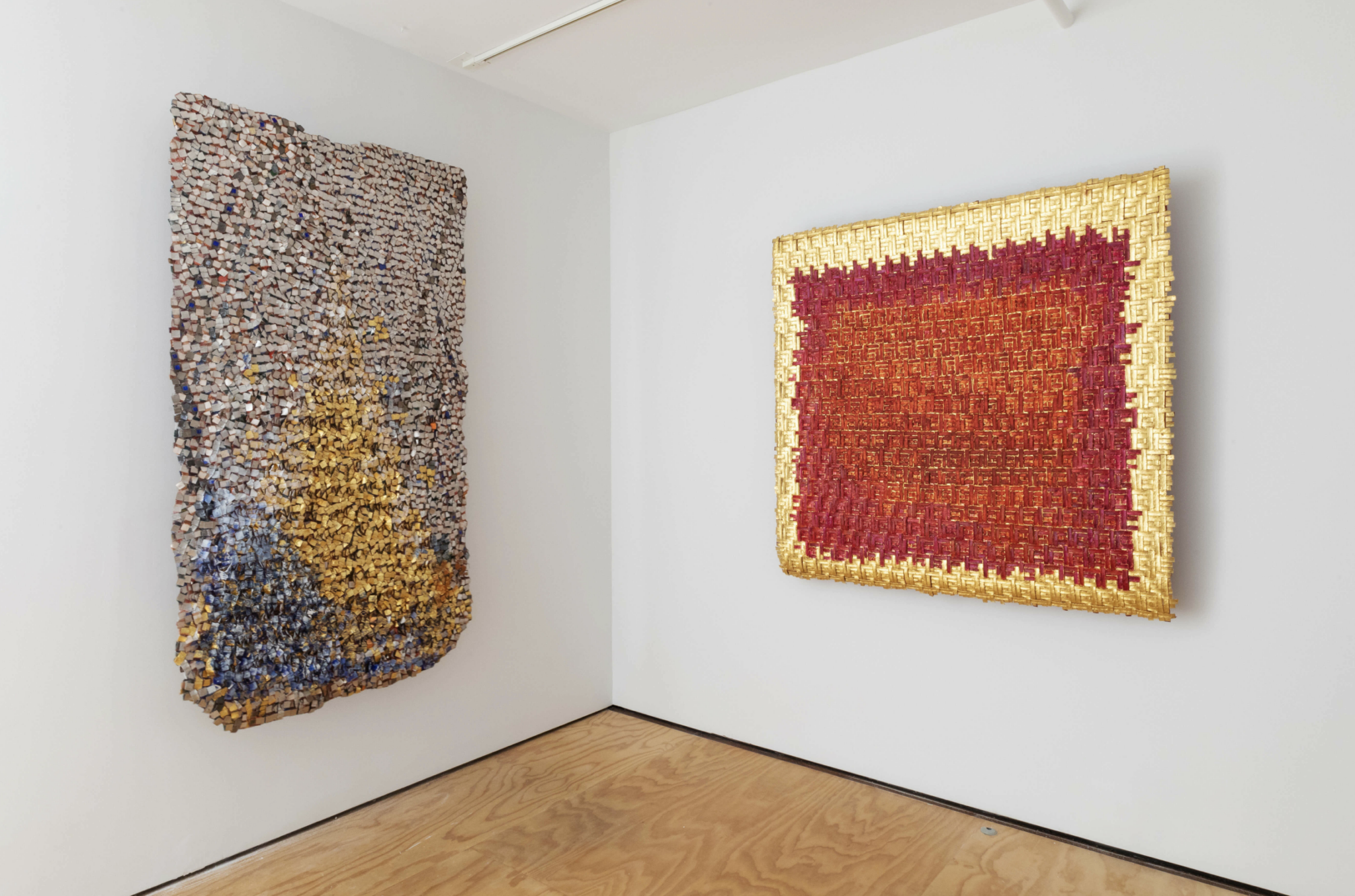
Olga de Amaral (b. 1932) is a pioneering figure in transforming textile into a sculptural and conceptual medium. Based in Colombia, she trained in weaving during the 1950s and studied textile design in both Colombia and the United States, but soon developed a singular visual language that merges fiber with painting, relief, and architectural installation. Early in her career, she experimented with linen, cotton, and horsehair, pushing the limits of traditional weaving, and gradually introduced gesso and gold leaf to create layered surfaces that oscillate between softness and solidity. Her works often begin with conventional weaving techniques but transcend tapestry, producing modular panels and suspended forms that inhabit space as autonomous, sculptural objects rather than decorative textiles.
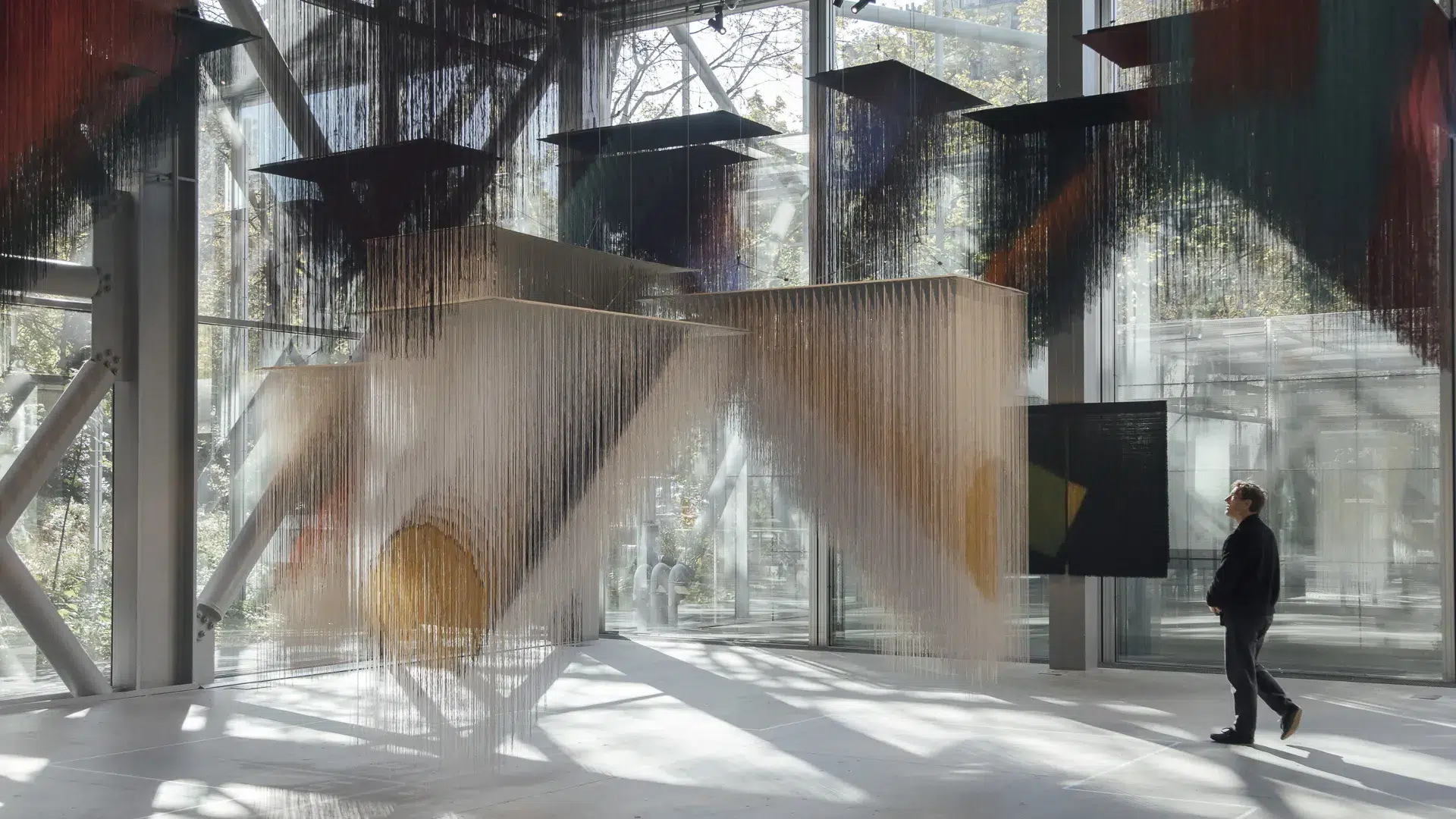
Gold is central to de Amaral’s practice, not as ornament but as a structural and luminous element. Its reflective qualities introduce depth, subtle tonal shifts, and a dynamic interplay with light, transforming fiber into radiant, monumental surfaces. While the reference to pre-Columbian gold traditions informs her aesthetic, her compositions remain firmly abstract, emphasizing repetition, seriality, and the tension between tactile softness and architectural rigidity. Throughout her long career, de Amaral has exhibited internationally, with landmark shows in Bogotá, New York, and Paris, earning recognition for pushing the boundaries of textile beyond craft into contemporary art. Her recent exhibition at Fondation Cartier in Paris from 12 October 2025 to 16 March 2025, featured large-scale suspended installations that filled the galleries with luminous, modular forms, inviting viewers to experience works that hover between curtain, wall, and sculpture, emphasizing her lifelong commitment to exploring the spatial, material, and conceptual possibilities of fiber.
Chiharu Shiota
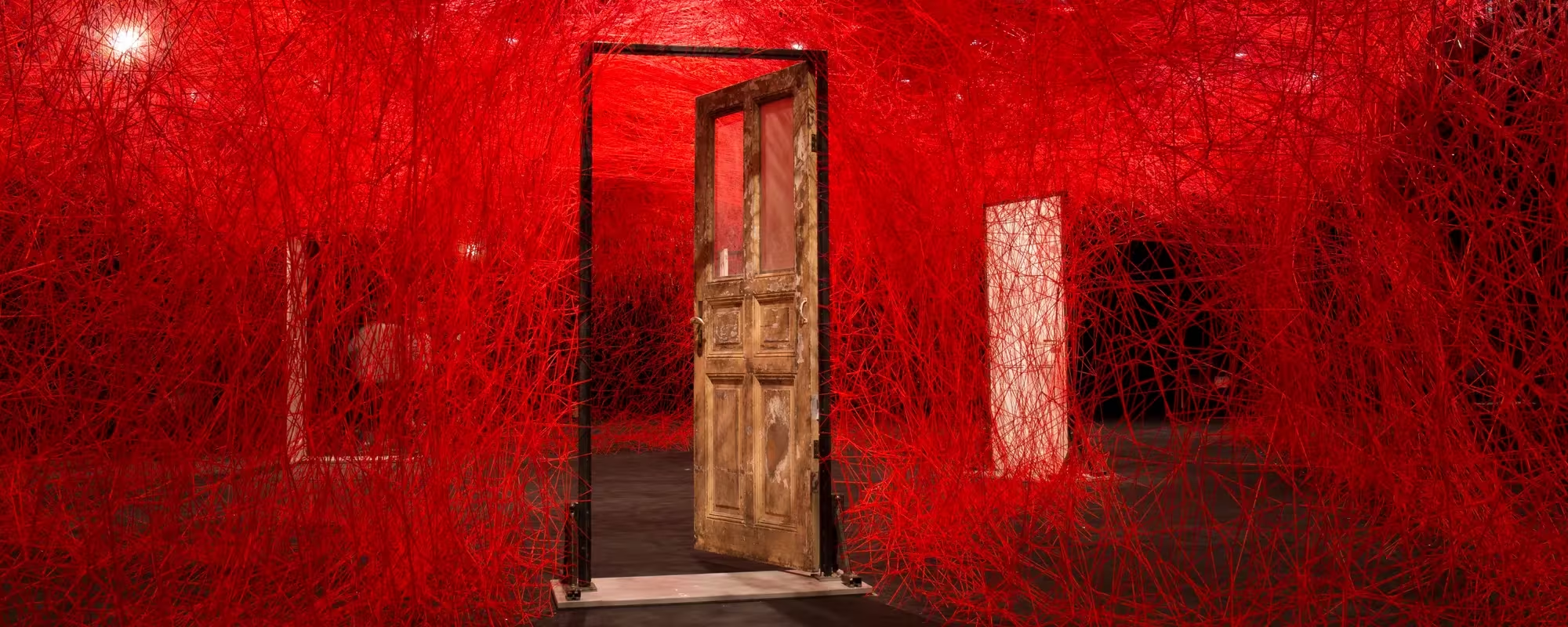
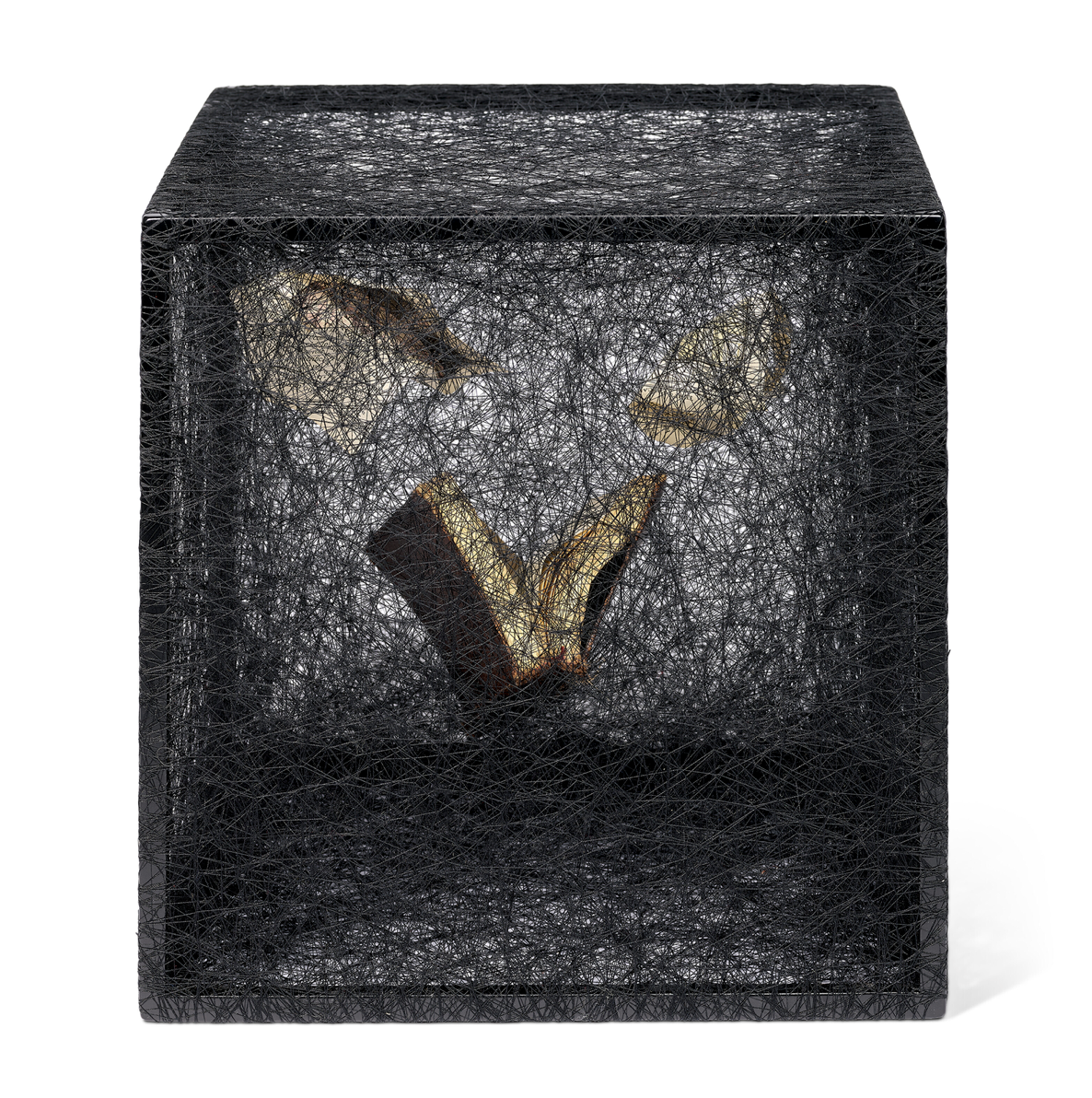
Chiharu Shiota (b. 1972) has developed a practice centred on immersive installations constructed from vast accumulations of thread. Born in Osaka and based in Berlin, she stretches thousands of metres of red or black yarn across architectural interiors, creating dense, interwoven structures that envelop objects and fundamentally alter spatial perception. Her installations frequently incorporate everyday items such as keys, boats, chairs, dresses, or suitcases. These objects act as vessels of memory, absence, migration, and personal history. The production of these works requires meticulous planning and close collaboration with a team of assistants. Each thread is hand-stretched and layered to build a complex spatial matrix. The resulting environments guide the viewer’s movement, creating corridors, thresholds, compressed zones, and voids that heighten physical and psychological awareness.
Alongside these monumental installations, Shiota maintains a sustained practice in smaller-scale works, including intimate thread sculptures, framed compositions, works on paper, and delicate drawings. In these pieces, thread is often contained within wooden frames or glass vitrines, where it forms compact, tangled constellations around single objects such as letters, shoes, or fragments of fabric. She also produces watercolours and sketch-like drawings that map the conceptual foundations of her installations, revealing her sensitivity to line, gesture, and spatial rhythm. These quieter works condense the emotional intensity of her environments into concentrated forms, demonstrating that her exploration of memory and connection does not depend on scale alone.
A major current presentation in the United Kingdom is Threads of Life at the Hayward Gallery in London, on view from 17 February to 3 May 2026. The exhibition brings together large-scale installations alongside drawings, photographs, and early performance documentation, tracing the evolution of Shiota’s practice and her enduring investigation into the unseen ties that bind individuals across time and place.
Do Ho Suh
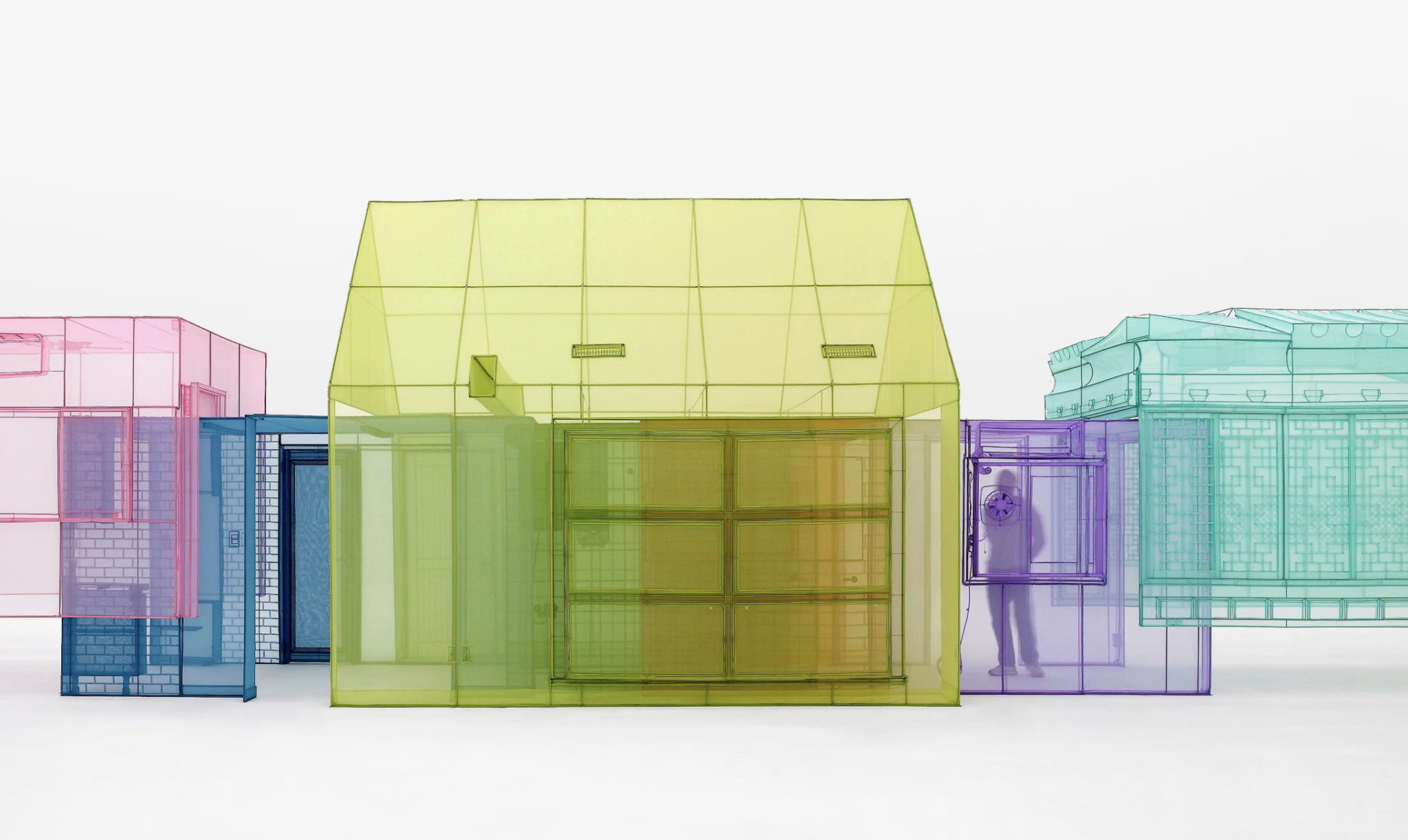
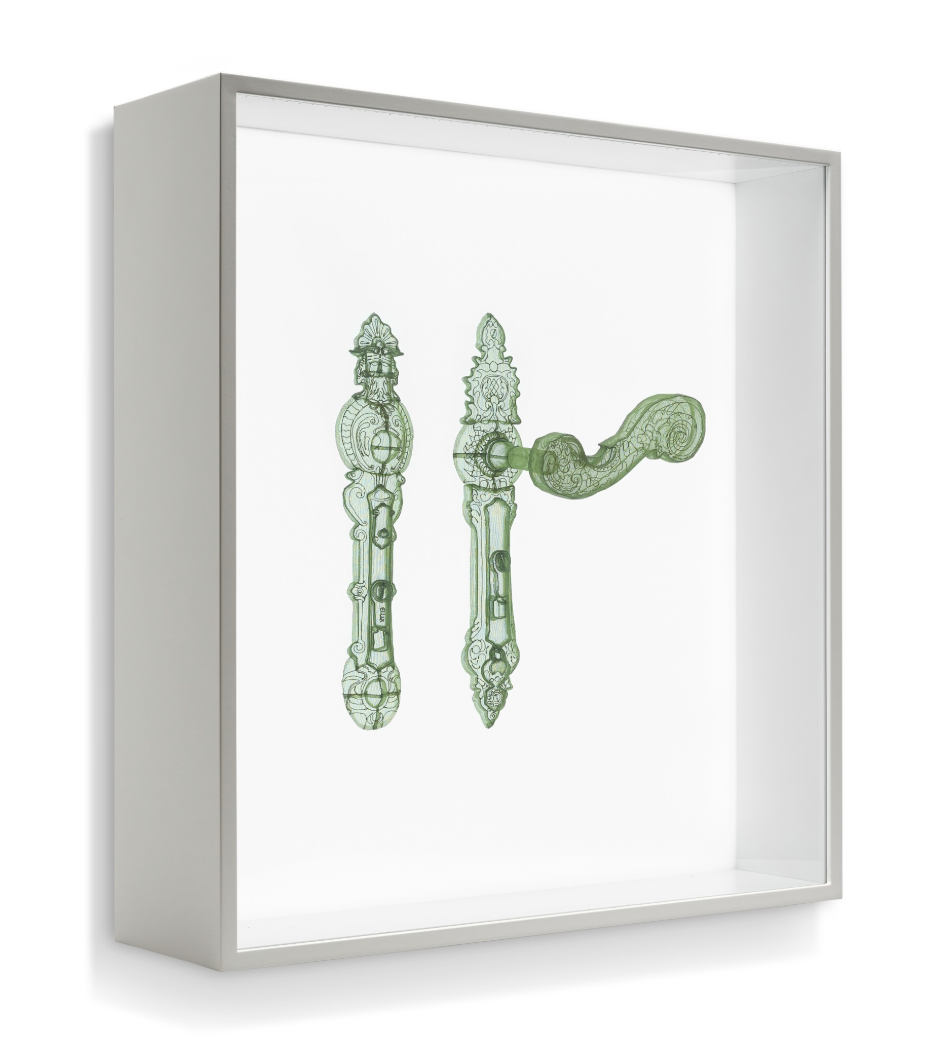
Do Ho Suh (b. 1962) was born in Seoul, South Korea, and is based between London and Seoul. His practice centres on architecture, memory, and the experience of displacement. Working primarily with translucent polyester fabric, he creates full-scale replicas of domestic interiors, corridors, staircases, and architectural thresholds drawn from places he has lived. Meticulously measured and reconstructed in sewn fabric, often in vivid monochromatic hues, these structures include electrical fixtures, door handles, light switches, and even the smallest architectural details rendered in textile. Lightweight and portable, they reproduce spaces that once signified permanence and belonging, creating a tension between fragility and structure that lies at the core of his work.
Suh’s use of fabric is both conceptual and material. Textile enables him to translate solid architecture into something permeable and translucent, transforming walls into semi-transparent membranes through which overlapping rooms and corridors remain visible. In many installations, architectural spaces from different countries are connected into a continuous sequence, forming composite structures that mirror the layered nature of memory and migration. Through fabric, Suh reimagines architecture as intimate and transportable, expanding textile beyond surface and decoration into a medium capable of carrying psychological, cultural, and spatial meaning.
Sonia Gomes
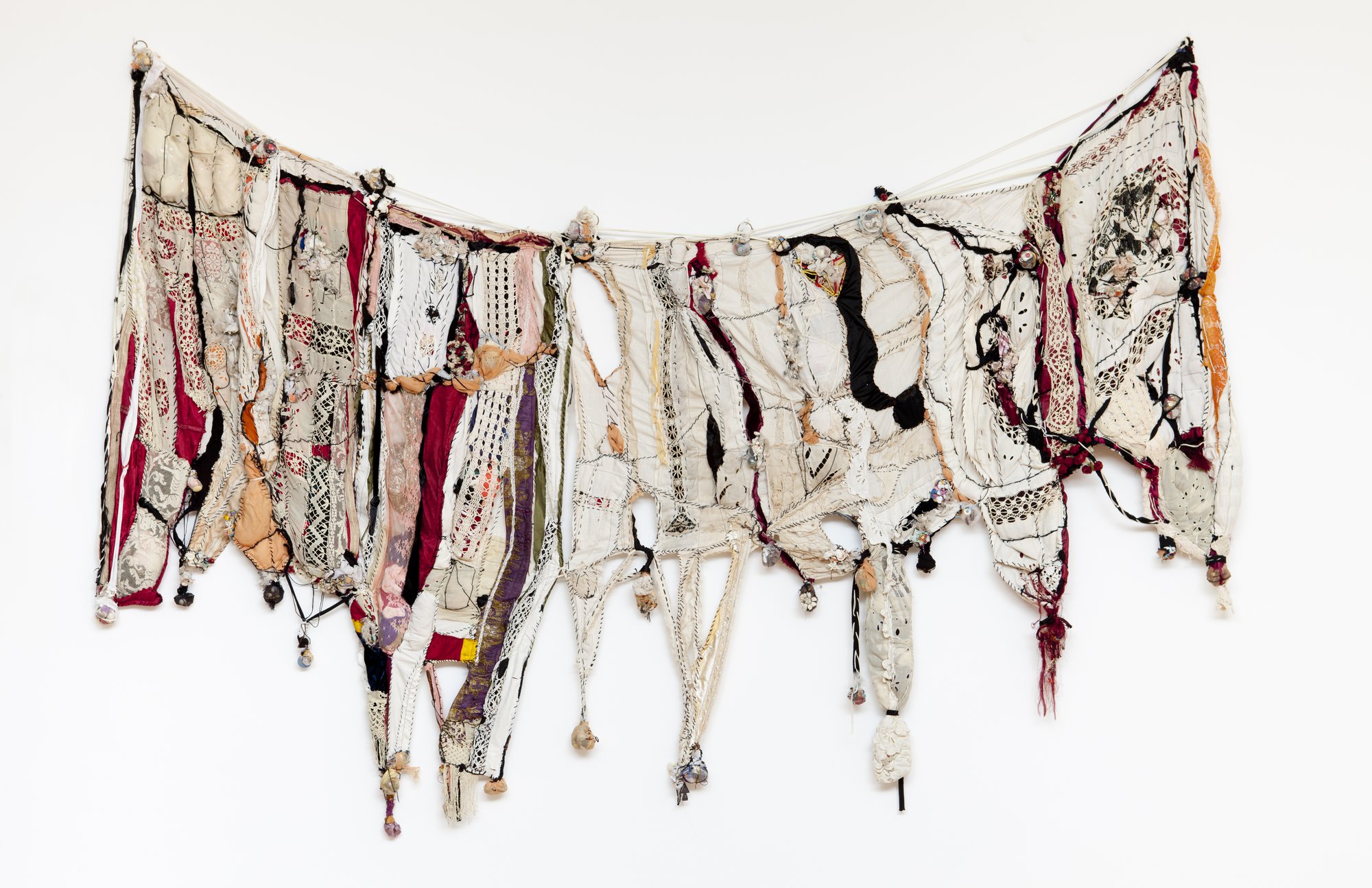
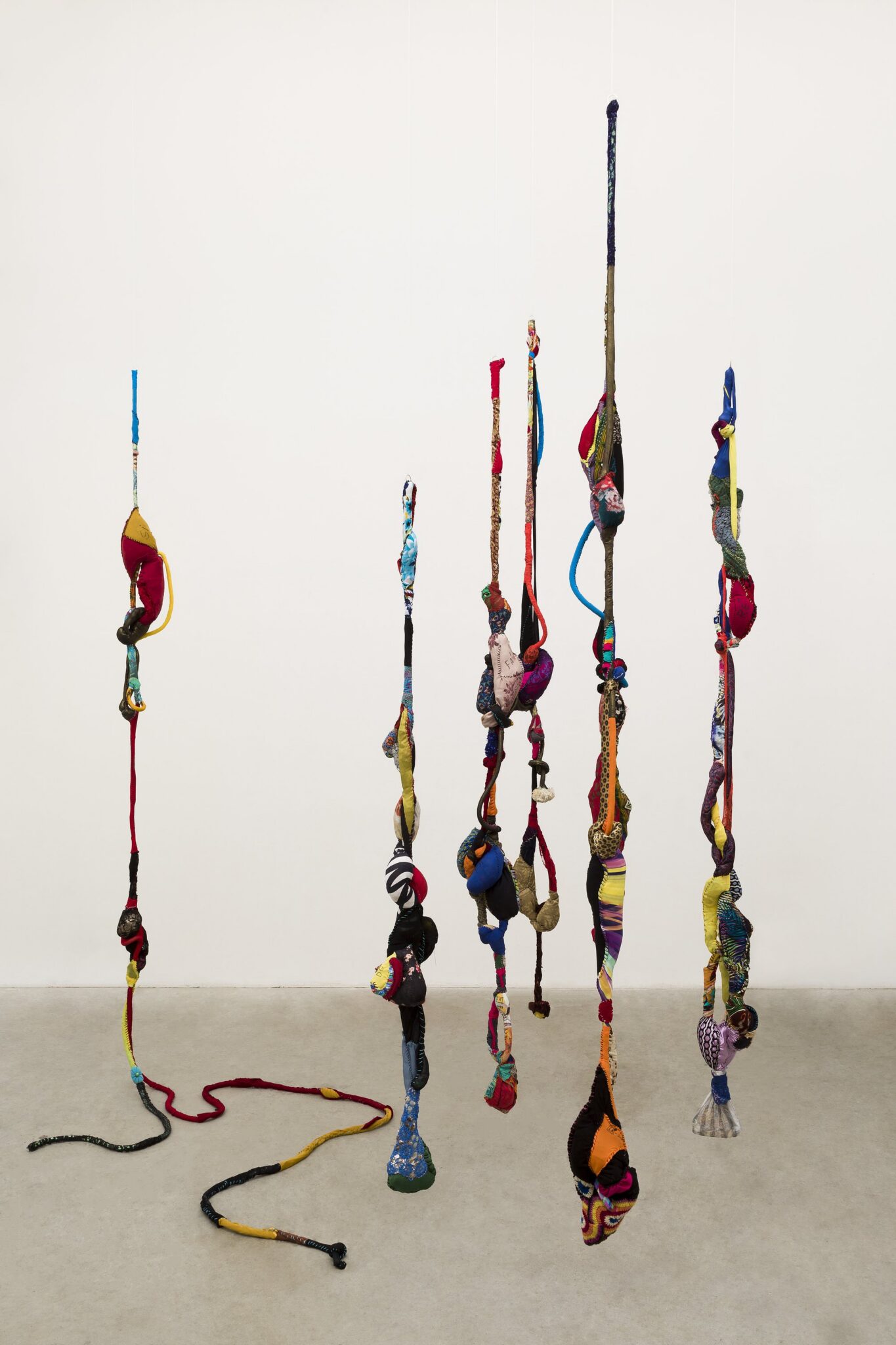
Sonia Gomes (b. 1948) is a Brazilian contemporary artist known for her sculptural works made from reclaimed fabrics, ropes, and textiles. She collects used materials such as clothing, lace, embroidery, and other domestic fabrics, transforming them into complex three-dimensional forms. By knotting, twisting, and wrapping the materials together, she creates organic sculptures that appear to grow, hang, or stretch through space. Her process is intuitive and guided by the textures, colours, and histories of the fabrics themselves.
Her work often explores ideas of memory, identity, and cultural heritage. The reused fabrics carry traces of personal and collective histories, which Gomes brings into the context of contemporary art. Her sculptures can suggest bodies, landscapes, or symbolic objects, connecting traditional craft practices with modern artistic expression. As the artist has said, “My work is black, it is feminine, and it is marginal. I am a rebel. I never worried about masking or stifling anything that might or might not fit standards of what is called art.”
From her Iconic Paintings Back to the Origin: Retracing Tracey Emin’s Journey
From her Iconic Paintings Back to the Origin: Retracing Tracey Emin’s Journey
The Top Contemporary Artists Reimagining Textile Traditions