In Conversation with Sophie Birch

For our upcoming exhibition Urban Dwellers, LVH Art sat down with London-based artist Sophie Birch to discuss how spatial awareness, emotional resonance, and organic forms shape her practice.
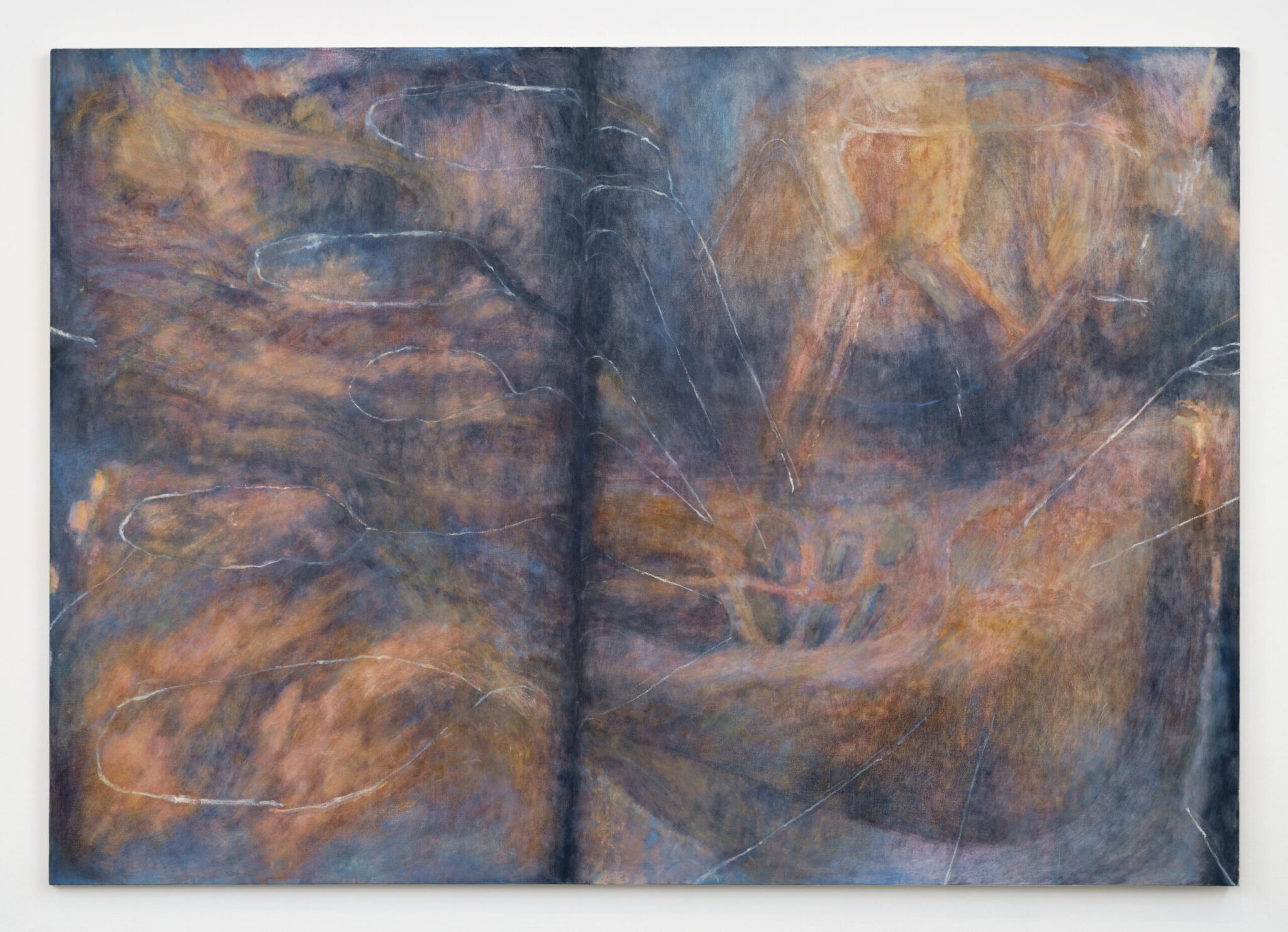
Sophie Birch (b. 1992) is a London-based painter whose layered compositions explore moments of change and perception. Beginning with drawing to capture her observations and memories, Birch then develops abstract paintings where enigmatic forms gradually emerge, seeming to float just beneath the surface. Using brushes, cloths, palette knives, and sandpaper, she applies and removes paint across multiple layers. The result is a translucent and layered composition, resembling shifting membranes between inner and outer realms. Her work draws from a broad range of sources, including natural elements, medical imaging, science textbooks, cinema, and art history. She often reinterprets existing compositions, softening or destabilising their structure until new shapes arise. Overlapping transparent layers dissolve into one another, evoking feelings of flux and uncertainty. Colour also contributes to this effect, as many of her hues are pale and muted, suggesting processes such as corrosion, bruising, or bleaching. Birch’s practice investigates fragility, impermanence, and time, inviting viewers to consider the fleeting nature of experience, perception, and memory.
LVH Art: Drawing is often your starting point. How do you see the relationship between drawing and painting in your practice? Are they in dialogue with one another, or do you approach them as distinct practices?
Sophie Birch: I find it quite difficult to draw a clear line between drawing and painting; they feel like part of the same process to me. When I studied at the Royal Drawing School, there was this constant debate about what counts as a drawing or a painting, but I’ve always seen them as employing the same ideas. I start by drawing mainly because it’s portable and immediate. I carry a sketchbook everywhere, using pencil or charcoal almost like note-taking. I tend to draw when something feels slightly beyond recognition, when a subject is in flux, transforming, or feels unfamiliar, like a reflection on a car or a fleeting gesture from a friend. Painting then becomes a way to expand on that feeling of estrangement. I use my drawings alongside other references such as science images or photos I’ve taken to build on my observations and make connections. Because for me painting is slower, I can re-approach the subject repeatedly, trying to rediscover it each time. So, the two are very much in dialogue to me.
LVH Art: Do you see your paintings as completely abstract compositions, or as works that carry traces of recognisable forms?
Sophie Birch: I’m often drawn to subjects that sit just outside recognition, forms that feel familiar yet slightly beyond grasp. So, while my paintings may appear abstract, they do carry traces of recognisable shapes that hover in that in-between space. One recurring form, for instance, is an open book or a double-page spread. I’m drawn to it because it plays with the tension between image and surface, it’s both a pictorial space and a flat plane, suggesting depth while reminding you that you’re looking at paint on canvas. There’s a text by Sargy Mann that I often think about; he describes two kinds of artists who work with recognisable imagery: those who want to show you things you know but in ways you’ve never seen them before, and those who want to show you things you see every day, but as they appear through their own eyes. I relate to the latter. I think I’m always trying to describe an ordinary experience that’s at once both familiar yet just beyond grasp, something about perception itself, and the strangeness of seeing.

LVH Art: How do you approach colour in your work, and what role does it play in shaping the atmosphere of your paintings?
Sophie Birch: I think about colour mostly in terms of light and how it creates movement on a still surface. I often look to the Impressionists, using colours of similar value but different temperatures, layering warm and cool tones so they almost vibrate beside one another. It creates this liminal, transformative kind of light that feels like it’s shifting or alive. I’m also really drawn to the physical qualities of paint, how certain pigments feel, their texture or stickiness, and how they interact on the surface. Those physical qualities often guide my colour choices. Through layering and washes, I try to build a diffused, glowing atmosphere, like those moments of the day when light is just coming up or fading away. In terms of materials, I use a range of tools such as brushes, sandpaper, and rags to shape the surface and bring out different sensations within the painting.
LVH Art: You work with an expansive range of tools (from brushes to sandpaper). What draws you to this variety, and how do these different materials shape the surface and feel of your paintings?
Sophie Birch: I use tools that both add and take away, brushes, sandpaper, or even techniques like lift-off, where excess medium on a semi-dry surface scuffs what’s underneath. I like that push and pull, making an image and then scrubbing back into it, flattening and building it up again. It’s a constant back-and-forth where the painting feels like it’s forming in front of me. That process brings out new associations I didn’t expect and gives the surface this sense of something emerging or growing.
LVH Art: Do you think about your works as part of a series, or as individual pieces that stand on their own?
Sophie Birch: Each painting could be viewed individually, though it’s very helpful to think in series. I’m always trying to do something new, even when I return to similar images or palettes. I might mine it differently or explore a new kind of mark or movement. I like the idea that we don’t really control how themes and motifs recur in our work; whether you work intuitively or not, you naturally loop back in unexpected ways. There’s a kind of remembering that happens through the body, through colour. I like to work with that sense of evolving rather than against it.
LVH Art: What challenges you most in the studio, and what part of the process do you enjoy the most?
Sophie Birch: I find it challenging when I have a clear idea for a painting, a strong image or intention, but I’m just not ready to make it. I’ll start, and it doesn’t work, so I have to let it go. I’m quite impatient, but that often leads to the moments I enjoy most, when I scrape something back, move on, and something unexpected happens. I usually have several paintings going at once, and I love when ideas start to cross between them. It’s often late in the evening, when I’ve moved things around in the studio, that I’ll suddenly see something in a painting I’d set aside, just a trace or impression left on the surface, and I know exactly what to do. Those surprising, intuitive moments feel almost external, like easing into something already happening.
LVH Art: Are there any artists, writers, or other creatives who have inspired or influenced your practice? If so, what about their practice or ideas resonates with you?
Sophie Birch: There are so many. In terms of artists, I’m most visibly influenced by those I can actually spend time with in person, seeing their work up close rather than on a screen. I often go back to Blake and Turner, partly because their works are accessible to me, but also because of their sensitivity to light and vision, and the sense of the numinous that runs through their work. There are also many contemporary painters I find exciting, though it’s hard to narrow them down. In terms of writers, I’m currently reading Clarice Lispector and Annie Erneaux. There’s something about their radical intimacy, the way they write about consciousness, memory, and the act of making, that feels very close to how I think about painting. Their language is both simple and destabilising, sentences
that feel confessional, thoughts that don’t resolve but flow. They make ordinary things strange and capture subtle emotional or perceptual shifts that really resonate with me.

LVH Art: Could you share more about your painting which will be part of the Urban Dwellers exhibition? We would love to hear about the inspiration or some of the references that you looked at for this work.
Sophie Birch: The work I’ve included is called The World’s Oldest Eye II. It’s based on an image from a book on light and vision, a diagram of a compound eye, which is almost identical to the oldest known structure for sight. It’s the same visual structure found in insects such as flies today, though it originally evolved underwater. In the painting, I wanted to suggest that sense of countless tiny, microscopic lenses vibrating across the surface. The format is quite stretched, about 105 by 180 centimetres, so there’s a physical tension in it. I wanted it to feel expansive, almost like a landscape you could move through, yet be about something miniscule. That contrast between scale and subject really interested me. I think there’s a similar tension within the painting itself, between structure and space, surface and depth. In relation to Urban Dwellers, I connected to the idea of sensory experience, how we perceive and belong to the environments we inhabit. The painting has a movement that reminds me of the hum of the city, but it also originates in something microscopic, which felt like a fitting parallel.
LVH Art’s List: What to See in Paris during Art Basel this Year
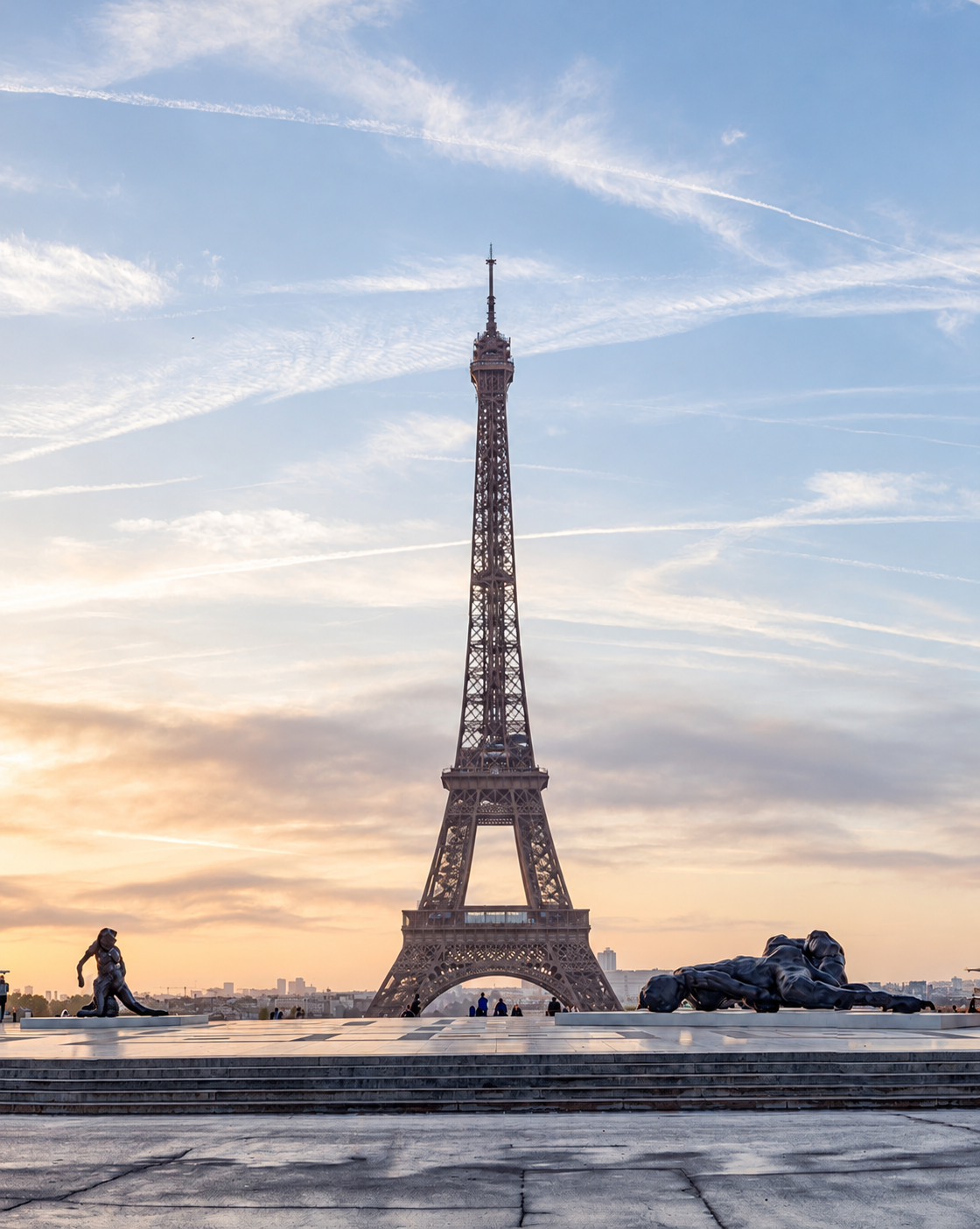
LVH Art’s List: What to See in Paris during Art Basel this Year
In Conversation with Isabelle and Christine d’Ornano