In Conversation with Samuel Haitz

For our upcoming exhibition Urban Dwellers, LVH Art sat down with artist Samuel Haitz to discuss how personal and collective memory shape his approach to found materials, and how art and literary history continue to inform his visual language.
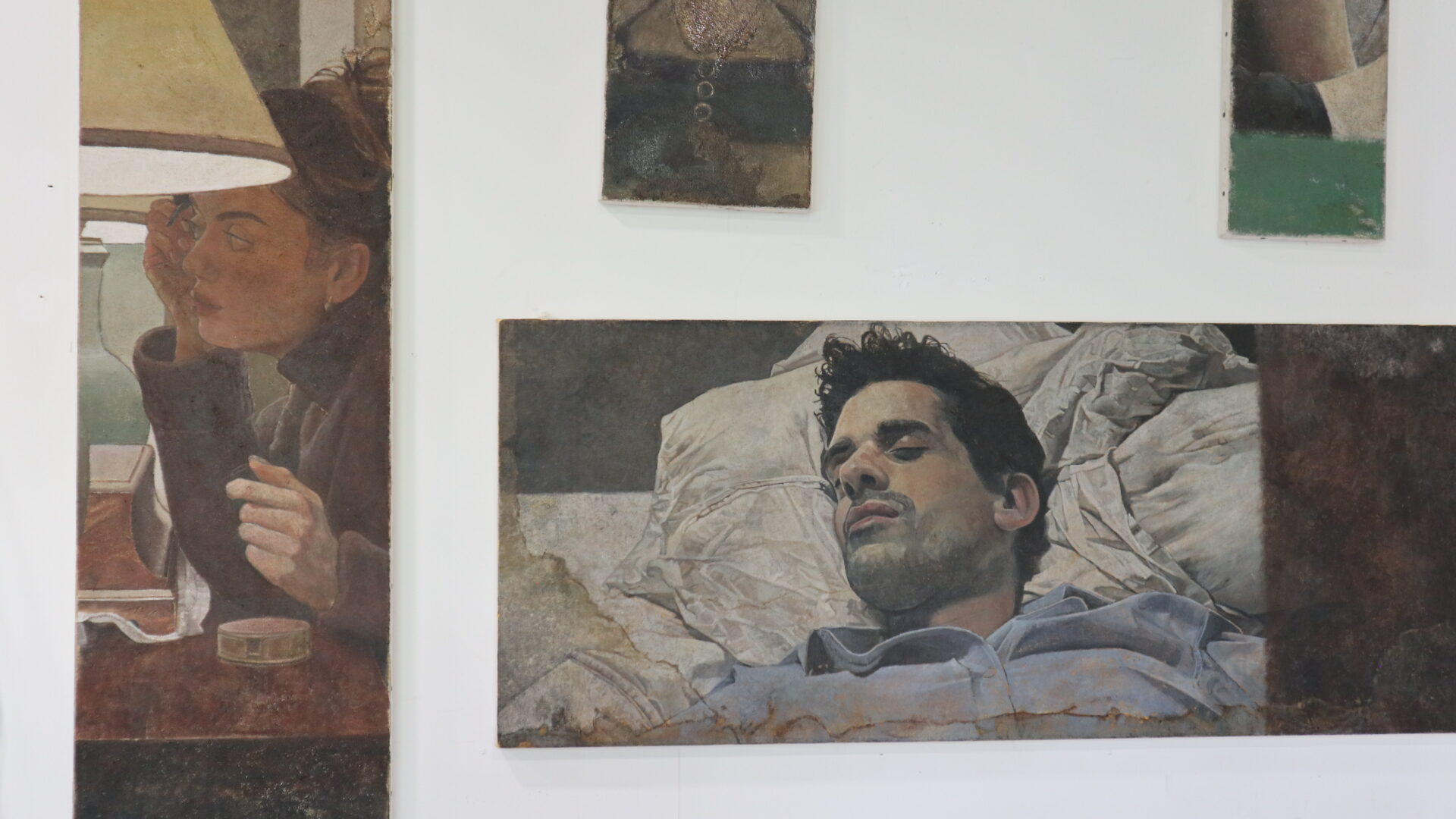
Samuel Haitz (b. 1997) is a Zurich-based artist whose work engages with the legacies of literature and queer history as a framework for thinking about desire, memory, and artistic production. Drawing on a variety of archives, printed matter, and cultural history, from classical poetry, to mid-century gay journals and overlooked ephemera, he reconfigures found material into paintings, prints, and assemblages. These works foreground both the persistence and fragility of cultural memory, asking how histories can be preserved, re-imagined, and made visible today. His practice reflects critically on questions of originality, reproduction, and authorship within contemporary art.
LVH Art: Your work engages deeply with literature and art history. What first drew you to these archives as a starting point for your practice?
Samuel Haitz: I think what draws me to literature and art history is what Roland Barthes describes in Death of the Author: the way something, for example a text, slips free from its origin and becomes available for projection, desire, misreading. My practice sits where the archive is not a fixed authority. I might recognise myself in these materials, even if only partial, fragmentary, or imagined. They were not made “for me” but become mine in the act of reception. That’s what an archive is for me: not something fixed, but unstable, re-readable, and re-writable.
LVH Art: You often work with printed matter such as magazines, books, and journals. How do you choose which sources to bring into your work?
Samuel Haitz: My choice is never purely conceptual; it emerges from a combination of affinity, serendipity, and the material’s capacity to be (re)contextualized. I often use texts and images created decades ago. By choosing to work with them, I assert their relevance for our time.
LVH Art: Desire is central to your work, not only as a theme but also as a way images and texts connect. How do you think about desire in relation to artistic production?
Samuel Haitz: I think that Pasolini got it completely right in his film Teorema: when the handsome, mysterious guest who has intimate encounters with the whole family leaves their house, they all go crazy. After his sudden departure, he leaves behind emptiness and mental chaos, which the mother, father, daughter, and son try to compensate for in diverse and sometimes absurd ways. The son, Pietro, begins abstract painting and develops conceptual ideas about painting and artistic technique.
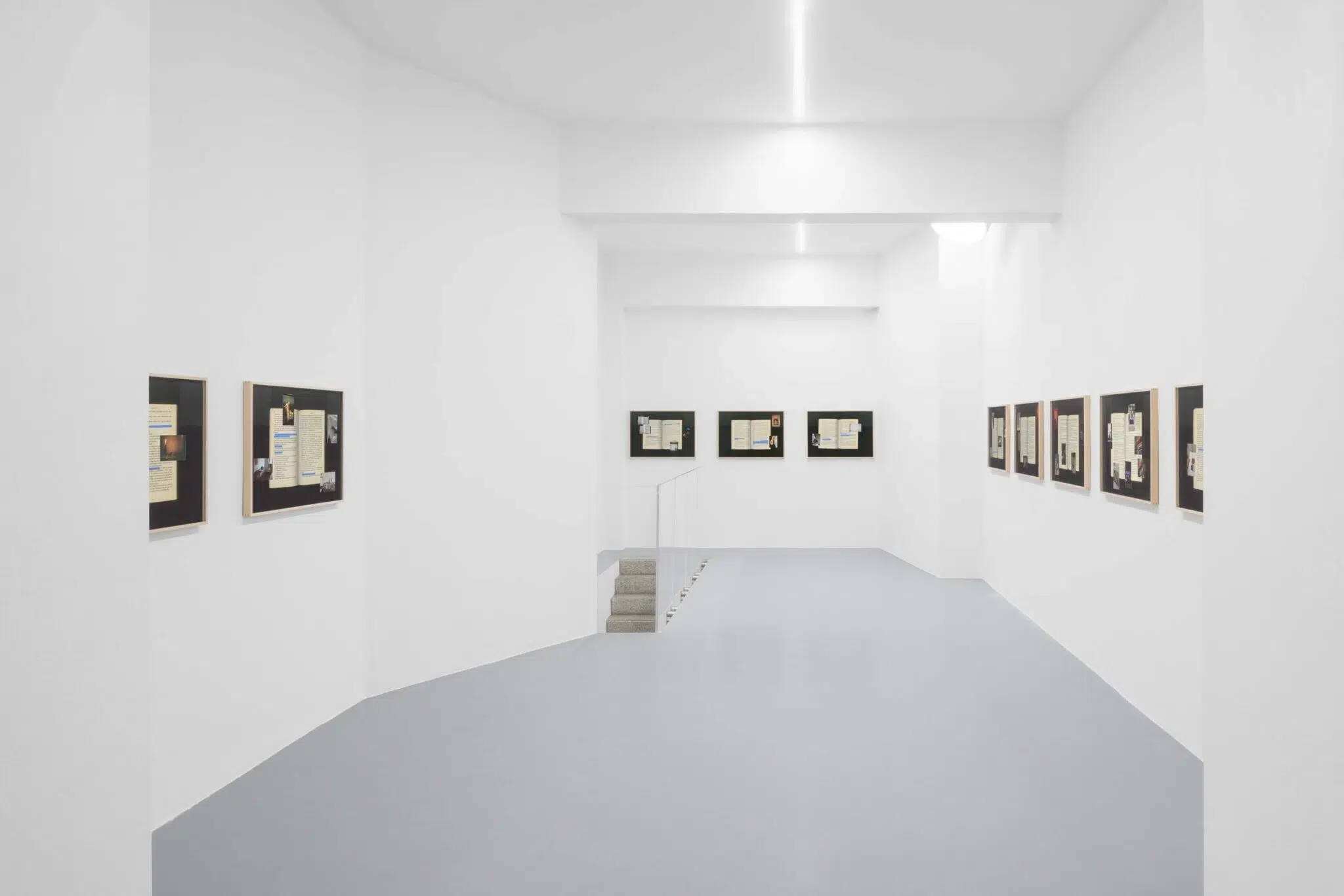
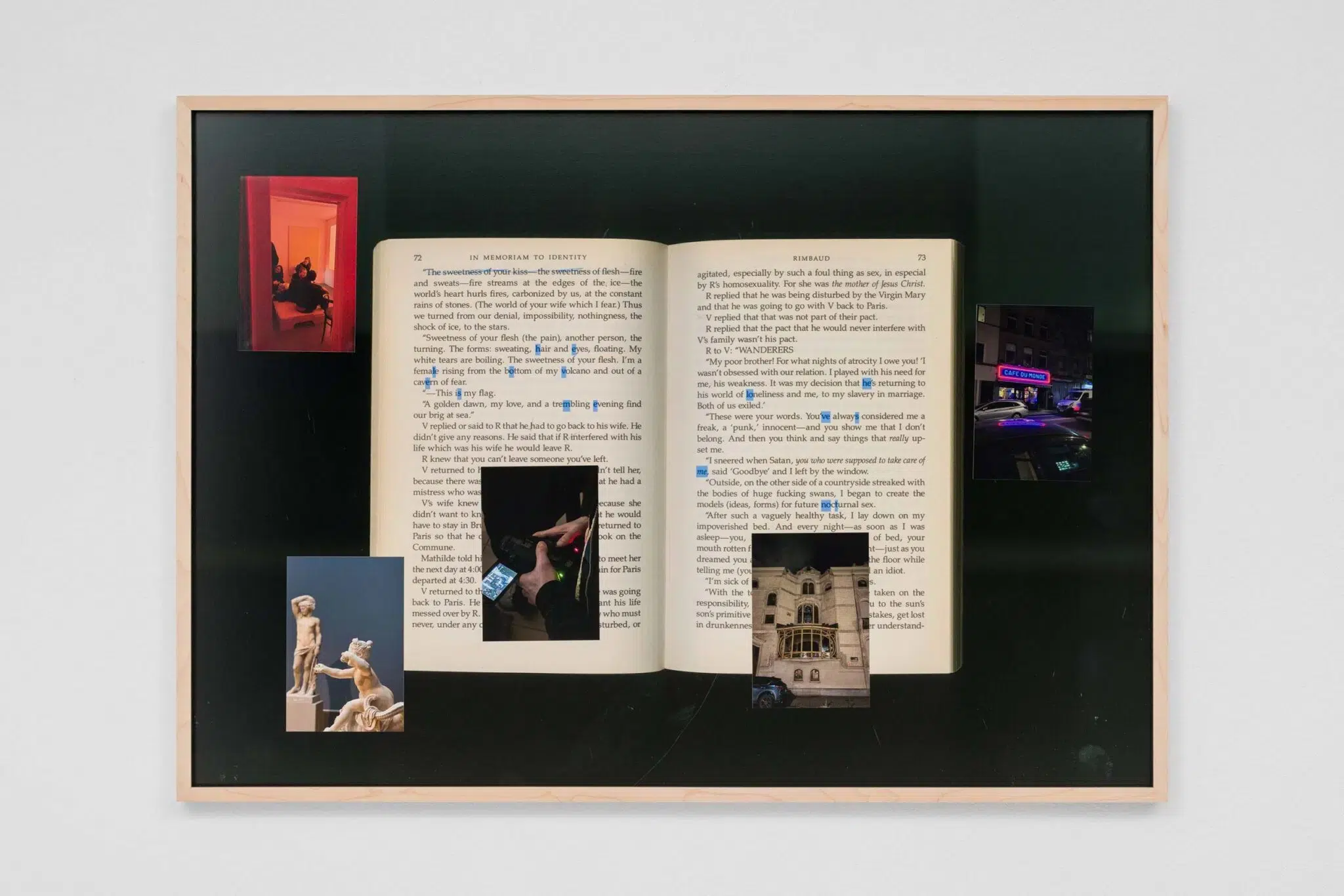
LVH Art: Could you share more about your work Anthology (Rimbaud, p. 78–79), 2024, which will be part of the Urban Dwellers exhibition? We would love to hear about the inspiration behind the work and what shaped its creation.
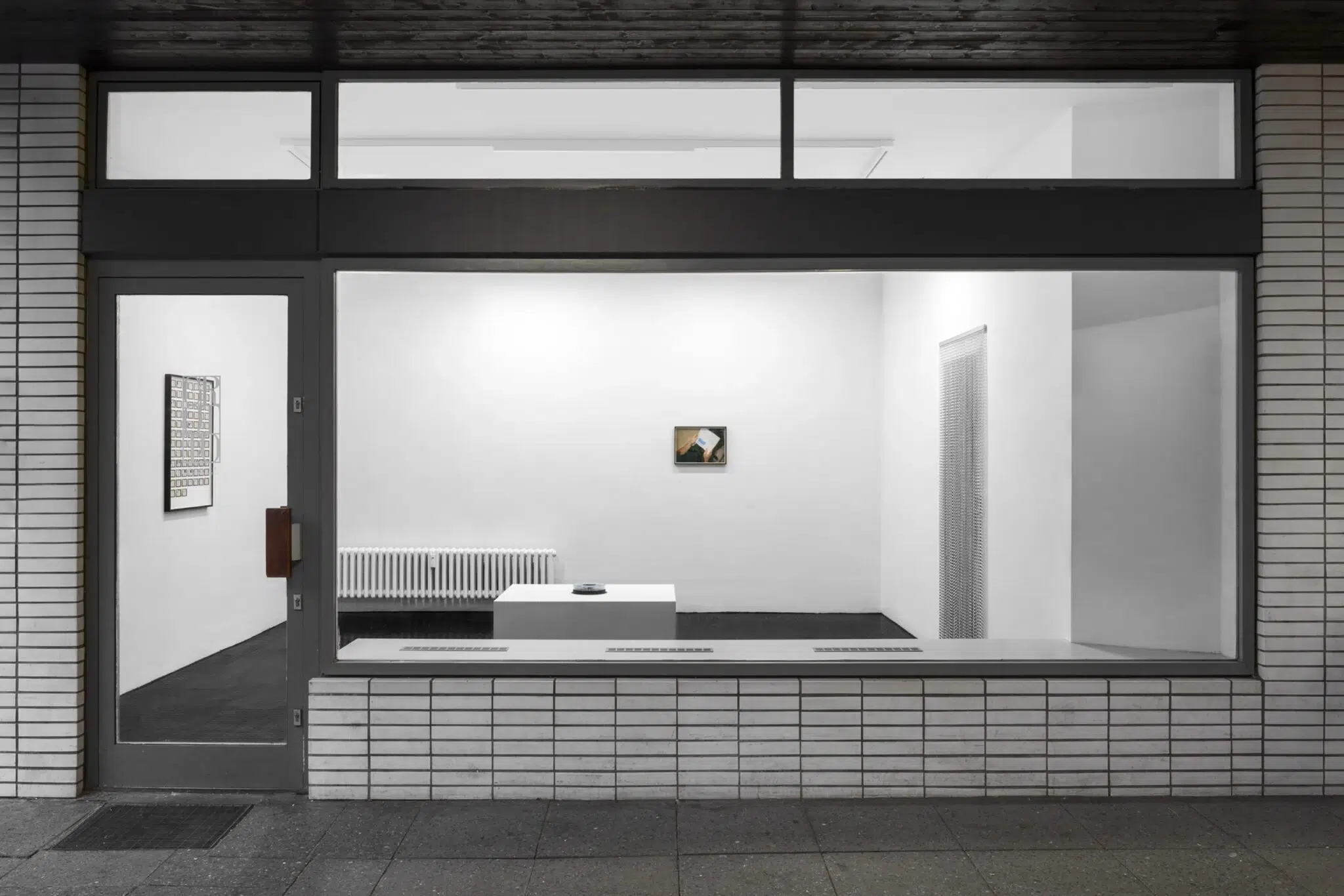
Samuel Haitz: This piece was part of my solo exhibition Hermeneutics at Triangolo, which consisted of 23 re-photographed page spreads in which Kathy Acker traces the romance between poets Rimbaud and Verlaine. Kathy Acker’s In Memoriam to Identity (1990) is an experimental novel that defies clear categorisation, merging fiction, autobiography, and literary critique. In her signature punk, postmodern style, Acker dismantles conventional narratives of identity, authorship, and desire, all themes that I address in my work. The work you selected is the first page of chapter two of Kathy Acker’s In Memoriam to Identity. On it, I digitally marked two lines and physically collaged four snapshots: a chapel in Berlin designed by James Turrell, a poem by Frank O’Hara, a bar in Brussels, and the view from a plane window.
LVH Art: What tells you that a work has reached its point of completion, and how do you recognise that moment in your process?
Samuel Haitz: Working with found materials, the media and devices I use set a framework of restrictions that shape the work. In the end, I hope it declares its own sufficiency: not polished into infinity, but held together by the right tension of intention and openness.
LVH Art’s List: What to See in Paris during Art Basel this Year
LVH Art’s List: What to See in Paris during Art Basel this Year
In Conversation with Isabelle and Christine d’Ornano