In Conversation with Jerónimo Rüedi

Jerónimo Rüedi is a contemporary artist known for his intellectually driven abstract paintings that explore perception and materiality. During the LVH Art Mexico City tour, we had the opportunity to visit Jerónimo Rüedi’s studio and experience his creative process firsthand. Inspired by this visit, we are excited to share an in-depth interview with him discussing his innovative techniques, current solo exhibition at Galerie Nordenhake in Stockholm, and more.
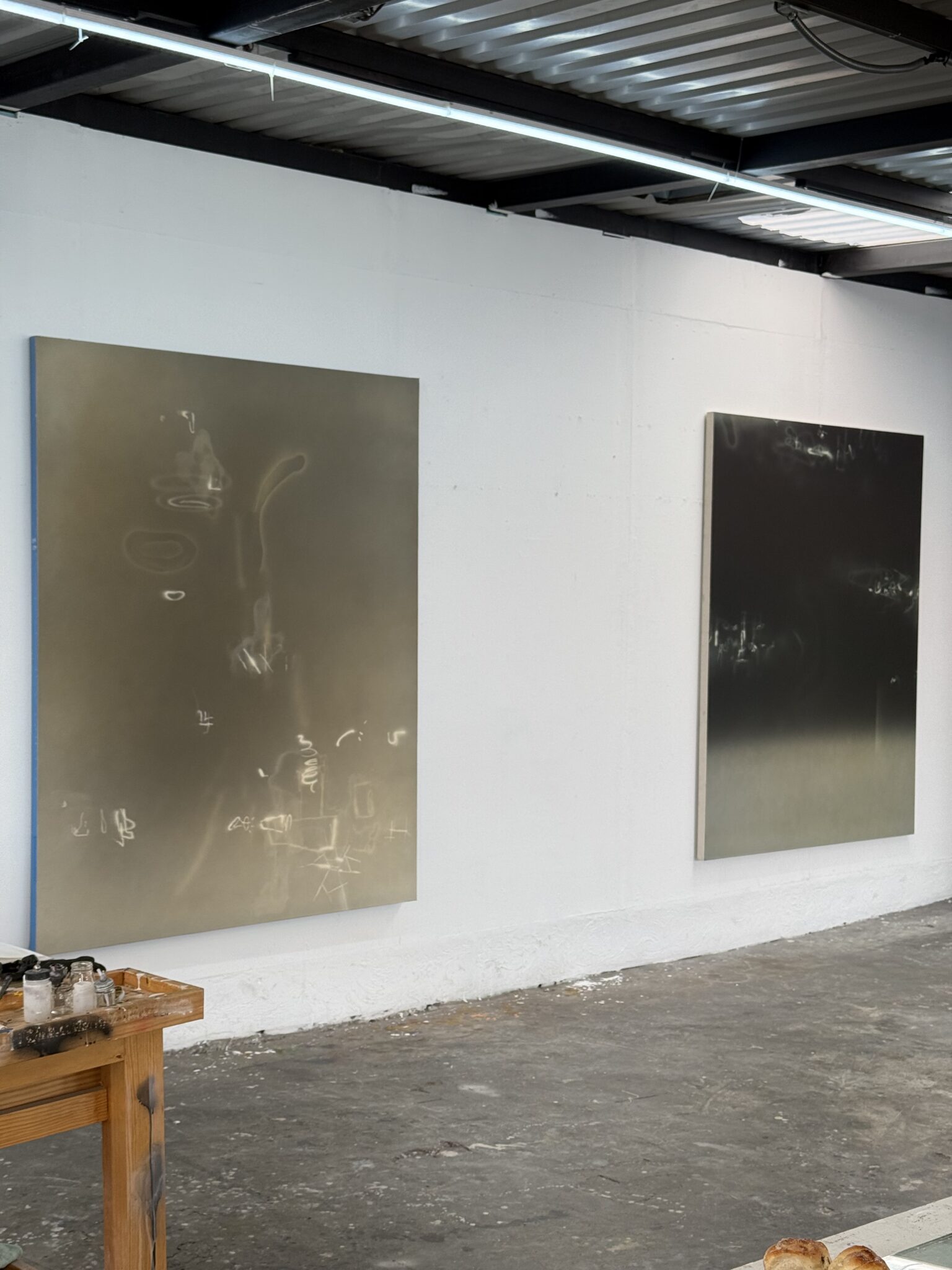
Born in Mendoza, Argentina in 1981 and now based in Mexico City, Rüedi builds his works through dozens of translucent layers, often using his own formulated primers and pigments. This technique creates surfaces that shift and evolve as viewers move around them, sometimes giving the sense that elements are encapsulated within the painting itself. The works possess a luminous aura that draws viewers into their layered complexity, inviting contemplation of both process and perception.
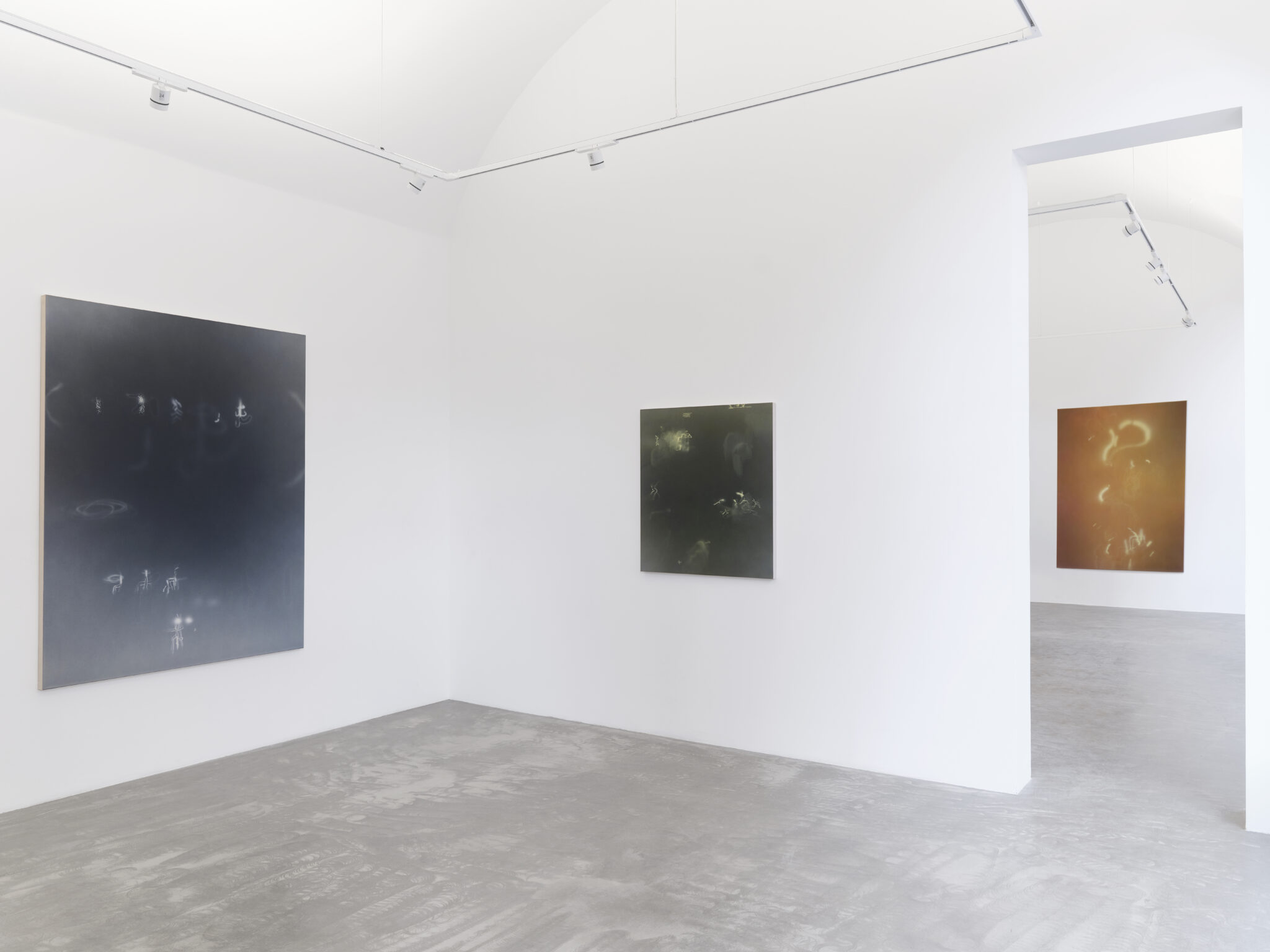
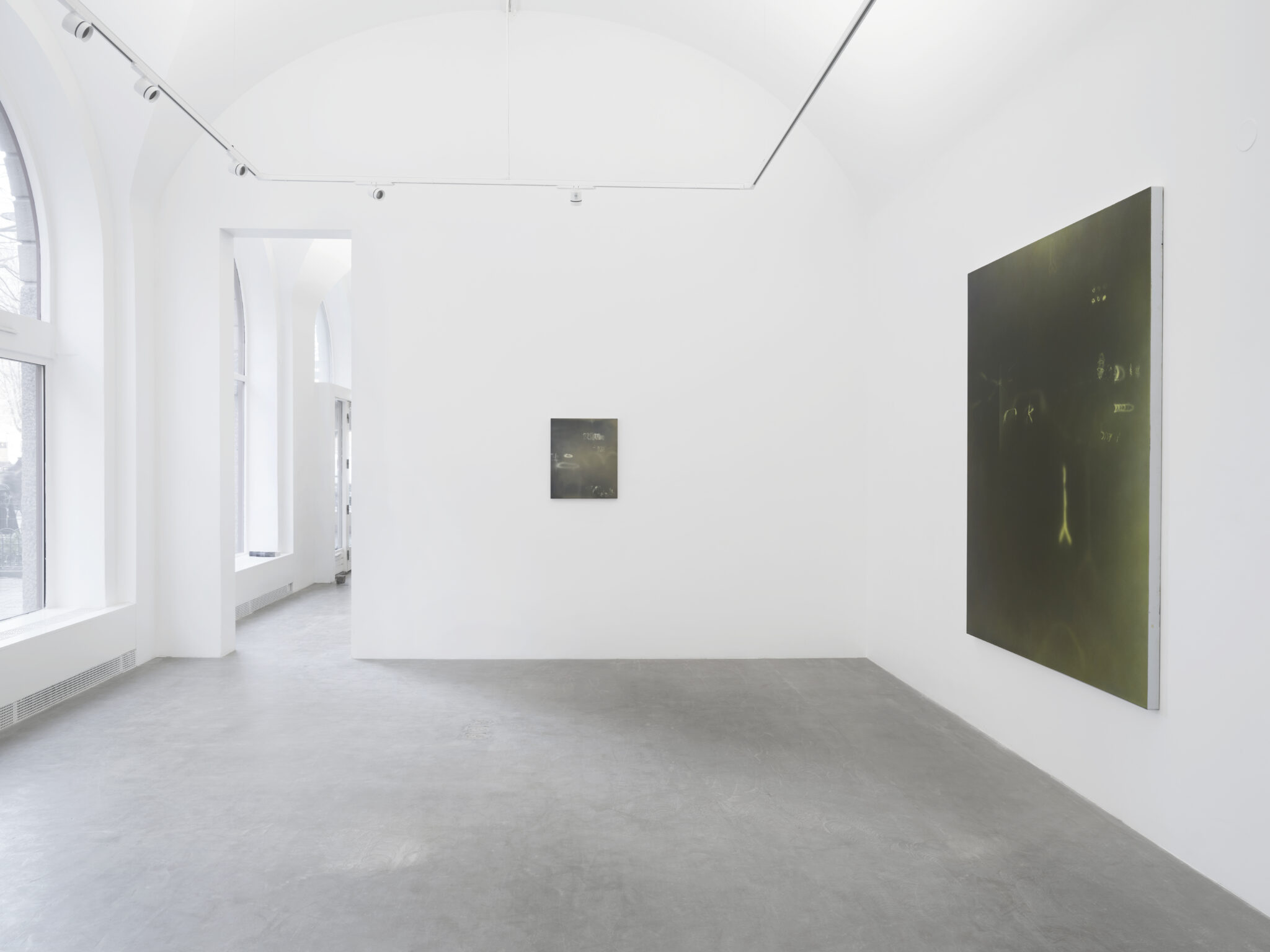
Jerónimo Rüedi, solo exhibition SCIÉANCE, at Galerie Nordenhake in Stockholm, 5 March 2026 – 11 April 2026. Image Courtesy of The Artist and Galerie Nordenhake Berlin/Stockholm/Mexico City. Photo: Viktor Sjödin.
Within these surfaces, small figures and shapes emerge in a space between abstraction, figuration, and written signs, forming a kind of pictorial code that resists easy interpretation. Influenced by writers such as Jorge Luis Borges and investigations into perception and color, Rüedi constructs visual systems that explore how meaning is formed, occupying a liminal space where abstraction, language, and philosophical inquiry intersect. Upcoming projects include his solo exhibition “Sciéance” at Galerie Nordenhake in Stockholm (March 5–April 11, 2026) and an exhibition at Museo Experimental El Eco in Mexico City (November 26, 2026–February 14, 2027).
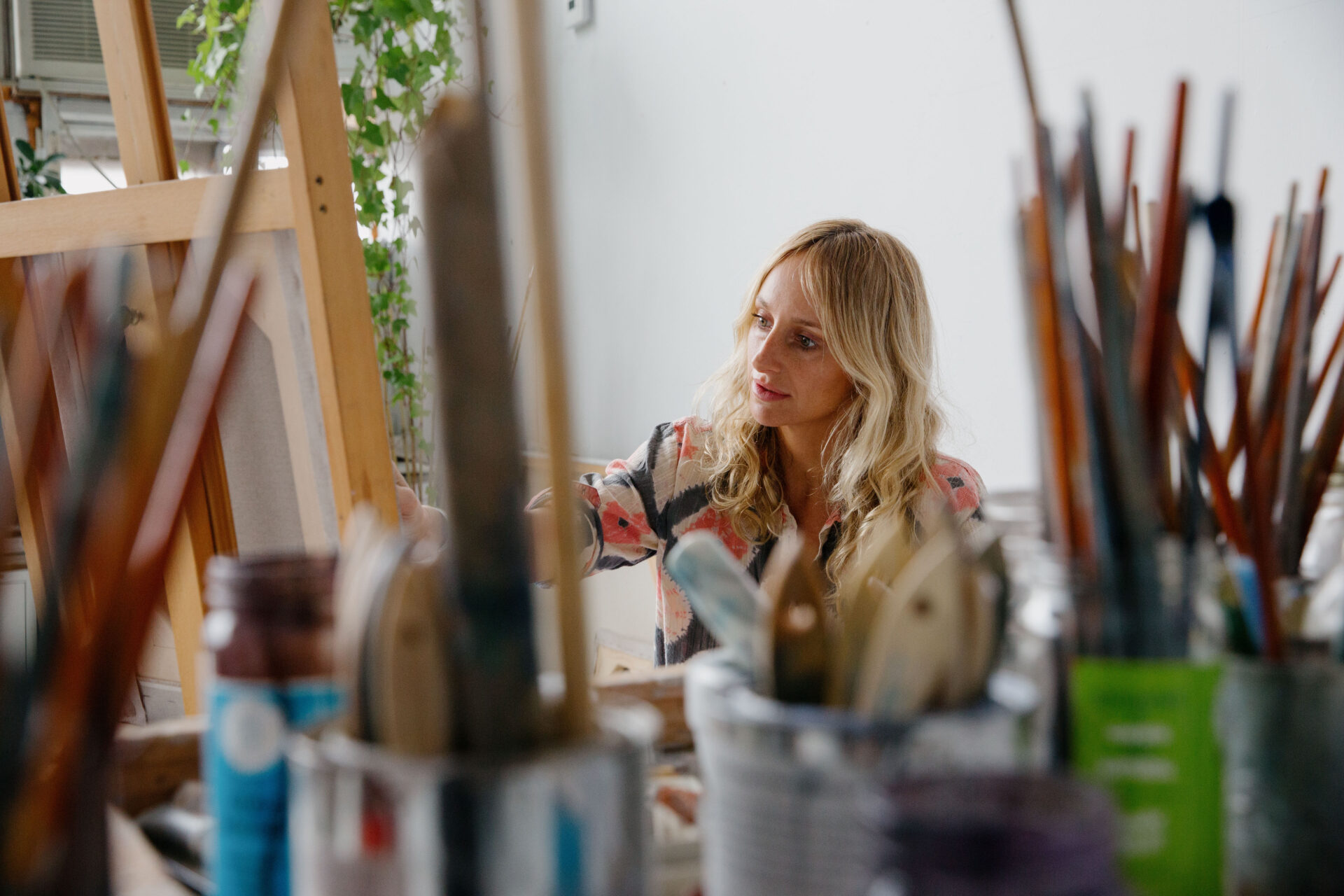
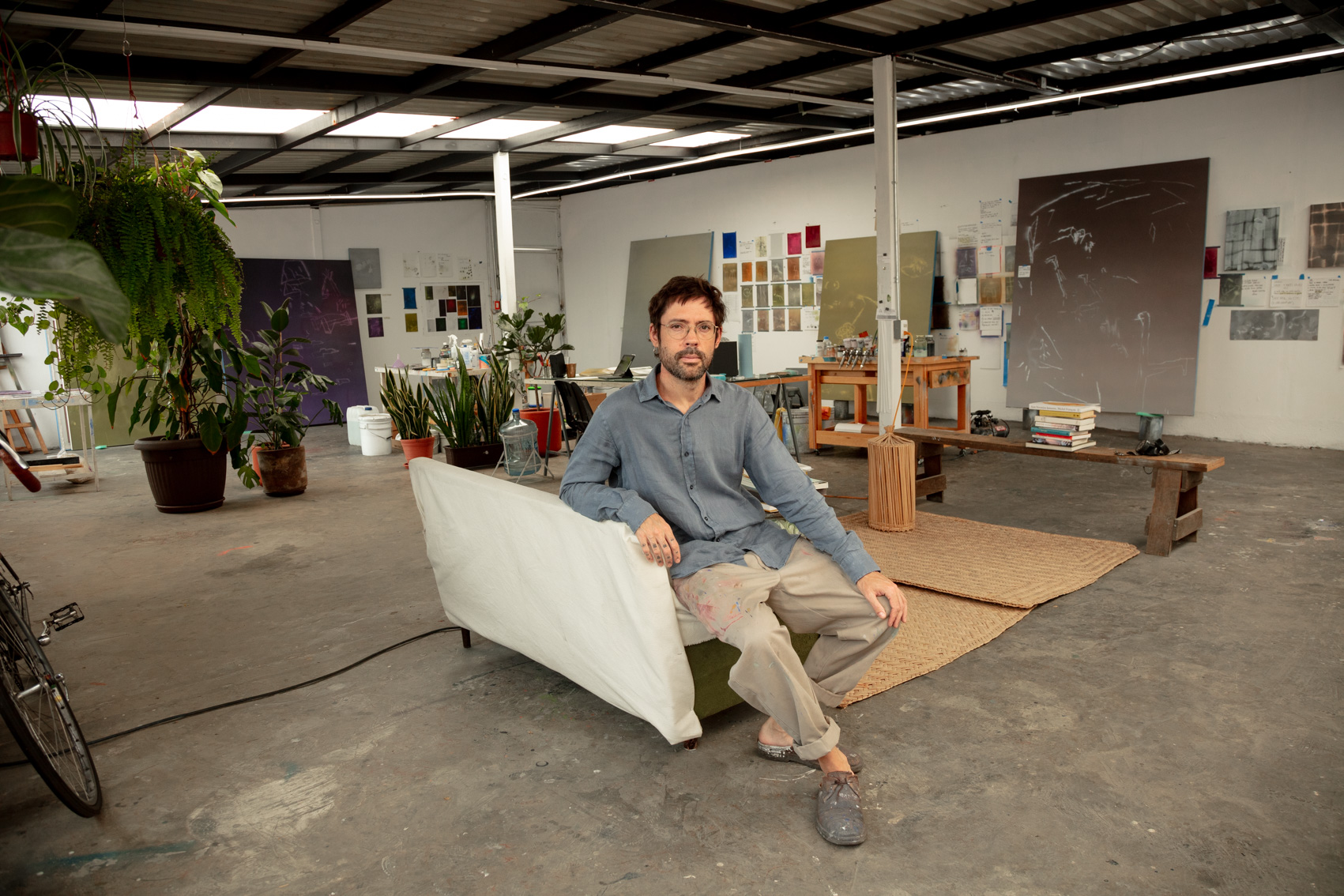
Cover image of the artist by Mauricio Alejo. Image courtesy of the artist.
LVH Art: How did you develop your unique technique of building up dozens of translucent layers? Was it a gradual experimentation, or did a specific idea or problem spark this process?
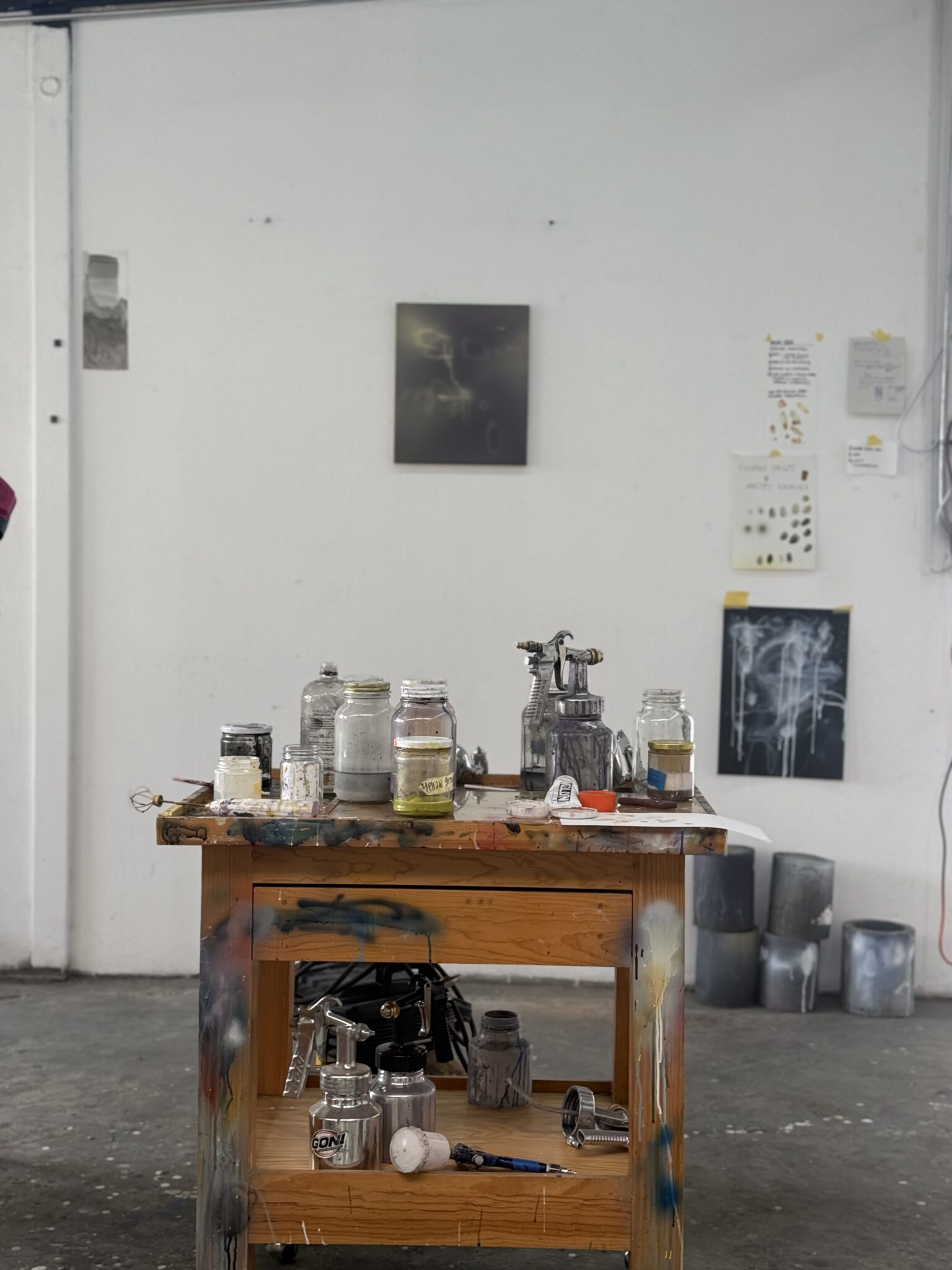
Jerónimo Rüedi: I would say the former, though shifts in the studio also often come as a response to specific problems that arise. The processes of building up layers grew out of an interest in the atmosphere and light that can be achieved through the slow process of building up colour in layers. I am interested in reaching the desired tone or hue through optical rather than physical mixing.
LVH Art: You often use your own formulated primers and pigments. Why is that important to you, and how do you think it affects the final work?
Jerónimo Rüedi: I think that the longer you work with a medium, the more specific your needs become. And in the end, those specificities become a core part of the work. There simply came a point where ready-made primer mixes or colours bought in tubes no longer worked for me.
I also find it an interesting way to relate to the history of painting. Until relatively recently, in the mid-19th century, there was no pre-mixed paint sold in tubes. Before that, all painting studios were also kind of laboratories where each painter developed their own unique formulas. To me, there is something meaningful about the feeling of being part of this centuries-old tradition.
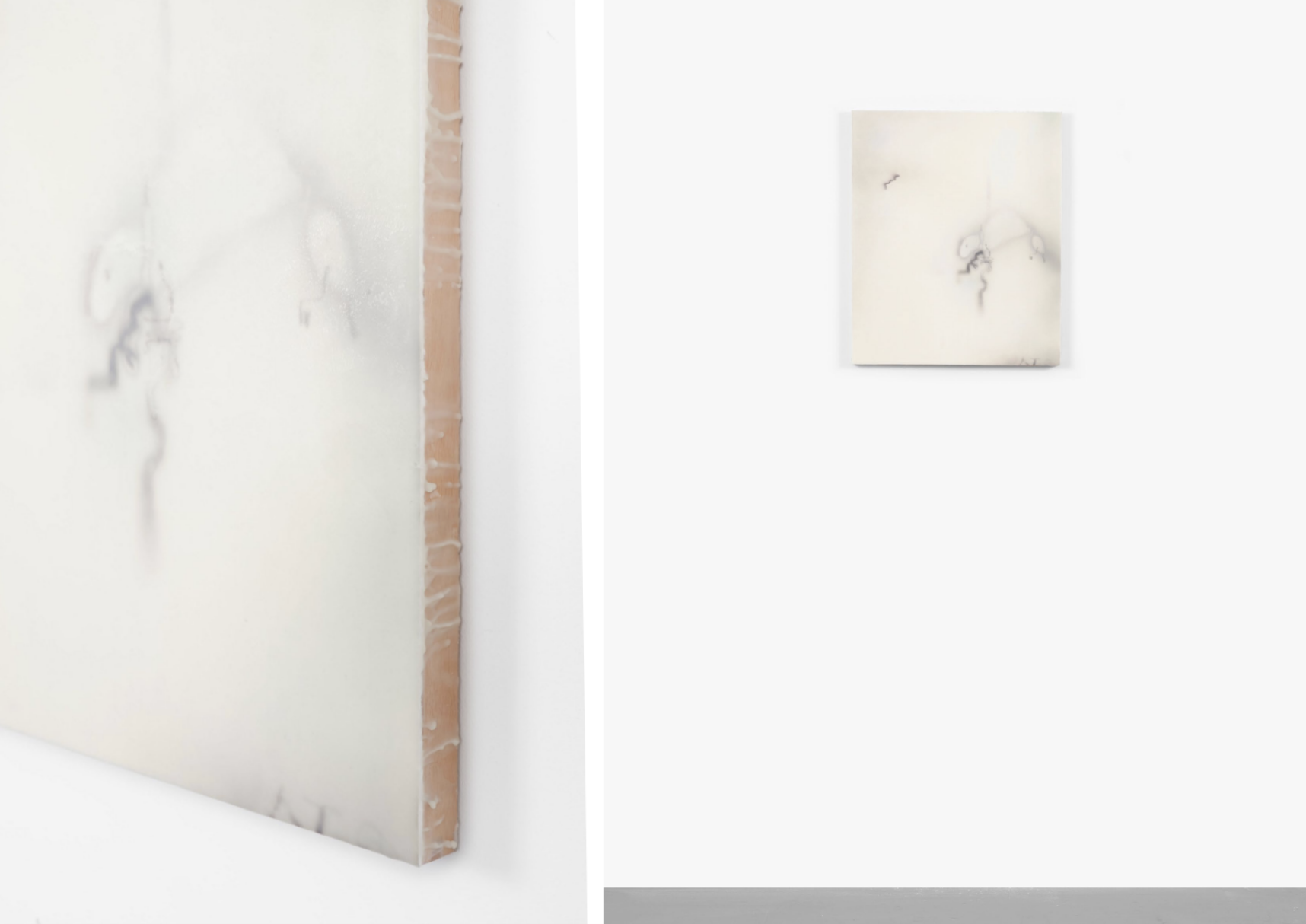
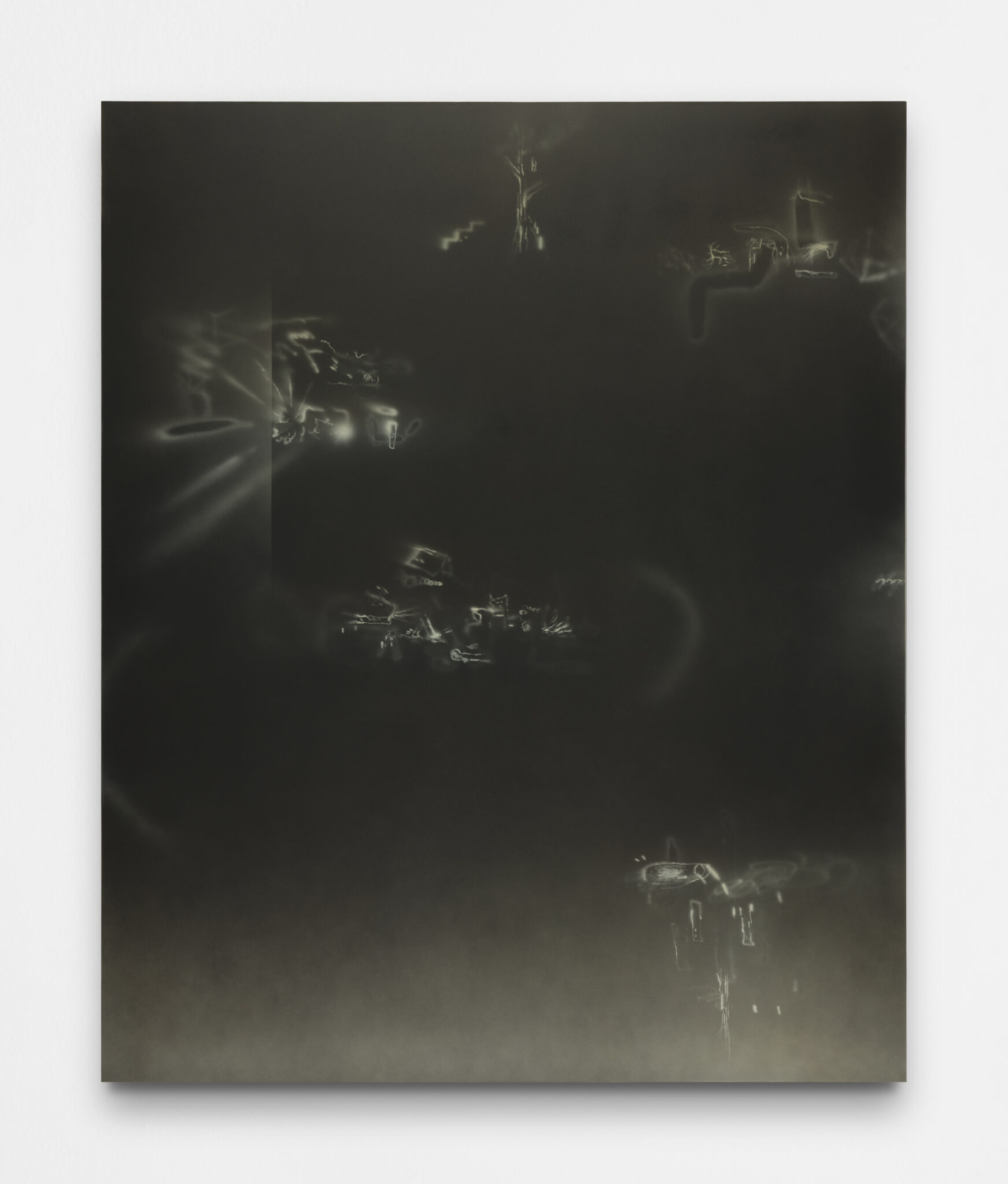
Jerónimo Rüedi, ¿Quién habla por esa boca?, 2026, encaustic on wood, 60 x 50 cm, 23 5/8 x 19 3/4 in. This work is included in Rüedi’s current exhibition at Galerie Nordenhake in Stockholm, which runs from 5 March – 11 April 2026.
LVH Art: Would you call your works ‘paintings’? I’m fascinated by how they seem to shift or move as a viewer walks around them. They almost take on a sculptural presence. How intentional is this sense of changing perception in your practice?
Jerónimo Rüedi: For me, the answer is clearly yes, my works are paintings. Even though I sometimes use more contemporary methods, my main formal concerns are those of painting in the most classical sense. Of course, I also pay attention to the spatial dimension—thinking about the painting as an object, considering how a work will inhabit a given environment, taking into account the incidence of light, and exploring different forms of installation—but all of this has long been part of the history of the medium.
LVH Art: You have published books that engage with language and perception, such as Colorless Green Ideas Sleep Furiously (2020) and Tuning the Sky (2024), and are also a co-founder of Aeromoto, a public library for contemporary art and culture in Mexico City. Language and writing clearly play an important role in your practice and life. Could you please expand on this a little and speak about how it manifests in your painting practice?
Jerónimo Rüedi: A central question in my work is how our minds operate within versus outside of language. Everyone is familiar with discursive thinking, which is the kind of step-by-step linear mode of reasoning that unfolds through language. But in the studio, the mind spends much of its time functioning outside of the logical structures of language. I believe this is similar to musical thinking. In these cases, people often talk about intuition or inspiration, but I believe it is a type of non-linear intelligence that we have largely neglected: we are not taught to train it or pay attention to it because in many ways it is not practical, but I believe that there is something there that is less limited and has a different kind of potential. I am fortunate to be able to work with these two states, and I believe the interaction between the two states opens up many possibilities.
LVH Art: Does your study of language and writing influence your painting practice in other ways? And do you see these different mediums, not only writing but also drawing for example, as interconnected?
Jerónimo Rüedi: I work a lot with drawing, and in my daily practice, a kind of proto-language develops—mainly in notebooks– These “sign dictionaries” inform the paintings, and there is a kind of strange logic in them that becomes more complex over time. The premise is simple: to draw without knowing what you are drawing. For me, it is a direct and effective method of capturing and recording states of consciousness in their unfiltered state. It’s like automatic writing but without actually writing.
Right now, I am in the process of publishing a facsimile of my “sign dictionary” notebooks with a Berlin-based publisher that I greatly admire, called BOM DIA BOA TARDE BOA NOITE. I’m enjoying this exercise of publishing something so intimate; for me, it is a bit like publishing a diary.
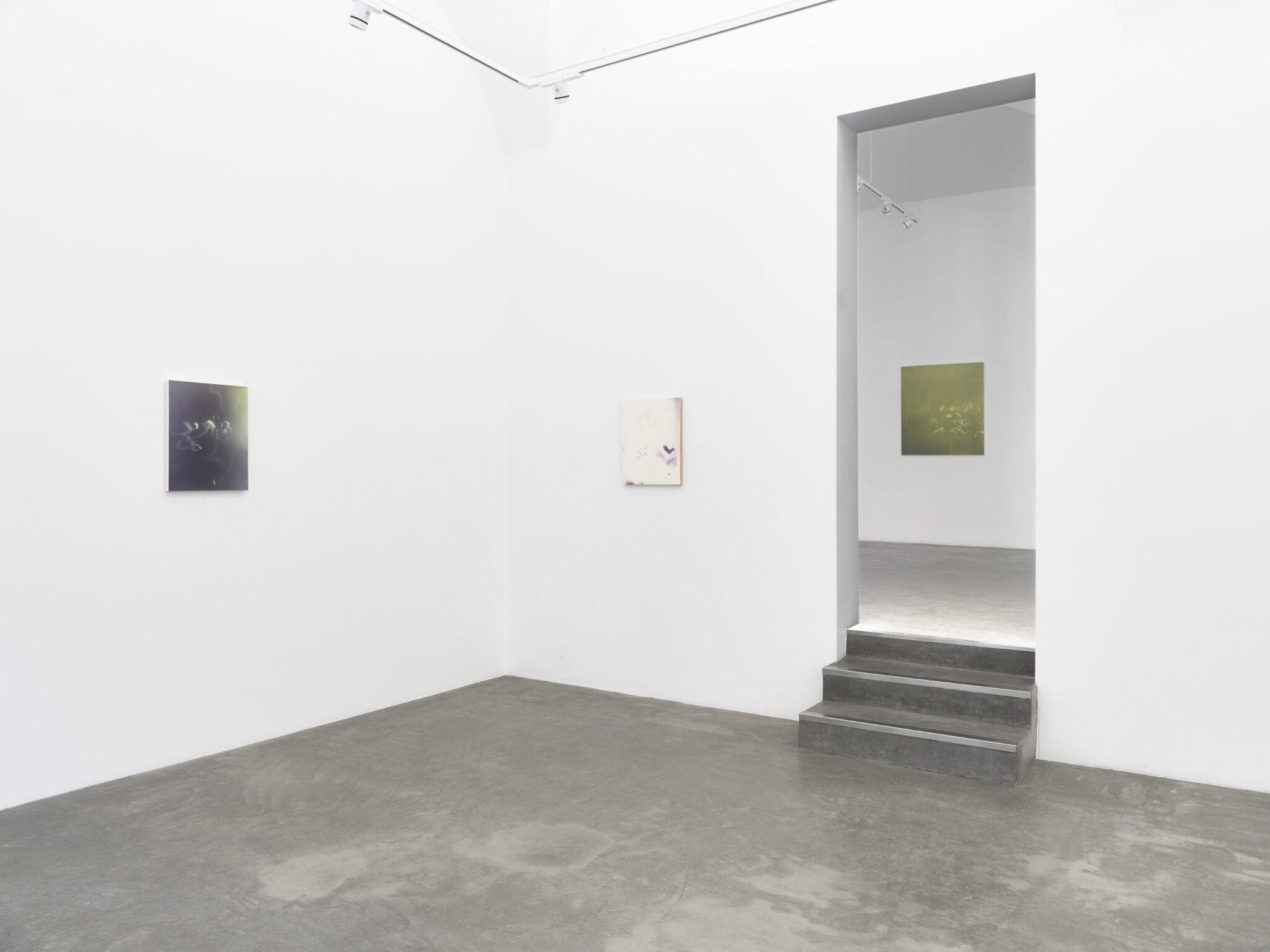
Jerónimo Rüedi, solo exhibition SCIÉANCE, at Galerie Nordenhake in Stockholm, 5 March 2026 – 11 April 2026. Image Courtesy of The Artist and Galerie Nordenhake Berlin/Stockholm/Mexico City. Photo: Viktor Sjödin.
LVH Art: Could you walk us through your creative process? Are there any rituals or routines that help you stay focused and inspired while working?
Jerónimo Rüedi: The truth is, I don’t really believe in inspiration. What I do believe in is the necessity to remain receptive and alert to whatever is happening in the studio, so that I can recognise when something interesting manifests and be ready to harness it. There are methods that facilitate this process and improve your ability to seize these moments fully. Meditation is one of them. Another important factor for me is establishing a working perimeter that lets me avoid thinking afterwards and allows things to develop naturally on their own. It’s always a negotiation between planning and leaving room for movement and error. Another important factor is that when no obstacles present themselves while I am working, I sometimes have to create them myself. Bring in something that doesn’t work, forces you to move pieces around that you wouldn’t otherwise have done
LVH Art: Can you talk a little about your titles? Some are long and poetic, like “We could doubt each of these facts, but we cannot doubt all of them” (2025), while others seem more methodical or mathematical, like “Oirgn 01” (2025). What guides the way you come up with them?
Jerónimo Rüedi: They come from different places. Funnily enough, some of the titles that seem more poetic are actually scientific quotes. And some that seem like surrealist or absurdist are in fact quotes from philosophers.
I have recently started making up words for the titles. It’s a way of playing with language in the same way that I play with drawing. Just as many of the marks are left in a place in which they’re about to become something, I am practising something similar with the written word for my titles. Sometimes it is a word halfway between two different words, and other times, languages are mixed. In general, I give more weight to the sound or rhythm of a “word” or what is written than to the meaning of it.
LVH Art: You have lived and worked in Mendoza, Berlin, and now you are based in Mexico City. How have these environments influenced your style or ideas?
Jerónimo Rüedi: My work, as you can see, is not very literal. That’s why it’s difficult for me to know in what sense a place influences it. What I can say is that everything you see, read, hear, talk about, etc., filters into what you do. There’s no way around it. We as humans change constantly according to our experiences, and so our work changes with us…
LVH Art: Is there anything you are looking forward to next year or something you are working towards in your practice?
Jerónimo Rüedi: Yes! My next Museum show in Mexico is going to take an interesting turn from my usual practice. I’m very excited about it! But I can’t say too much because I’m still in the pre-production process, so there’s still time for it to go in unexpected directions. And as I said before, it’s important to leave room for chance.
From her Iconic Paintings Back to the Origin: Retracing Tracey Emin’s Journey
From her Iconic Paintings Back to the Origin: Retracing Tracey Emin’s Journey
The Top Contemporary Artists Reimagining Textile Traditions