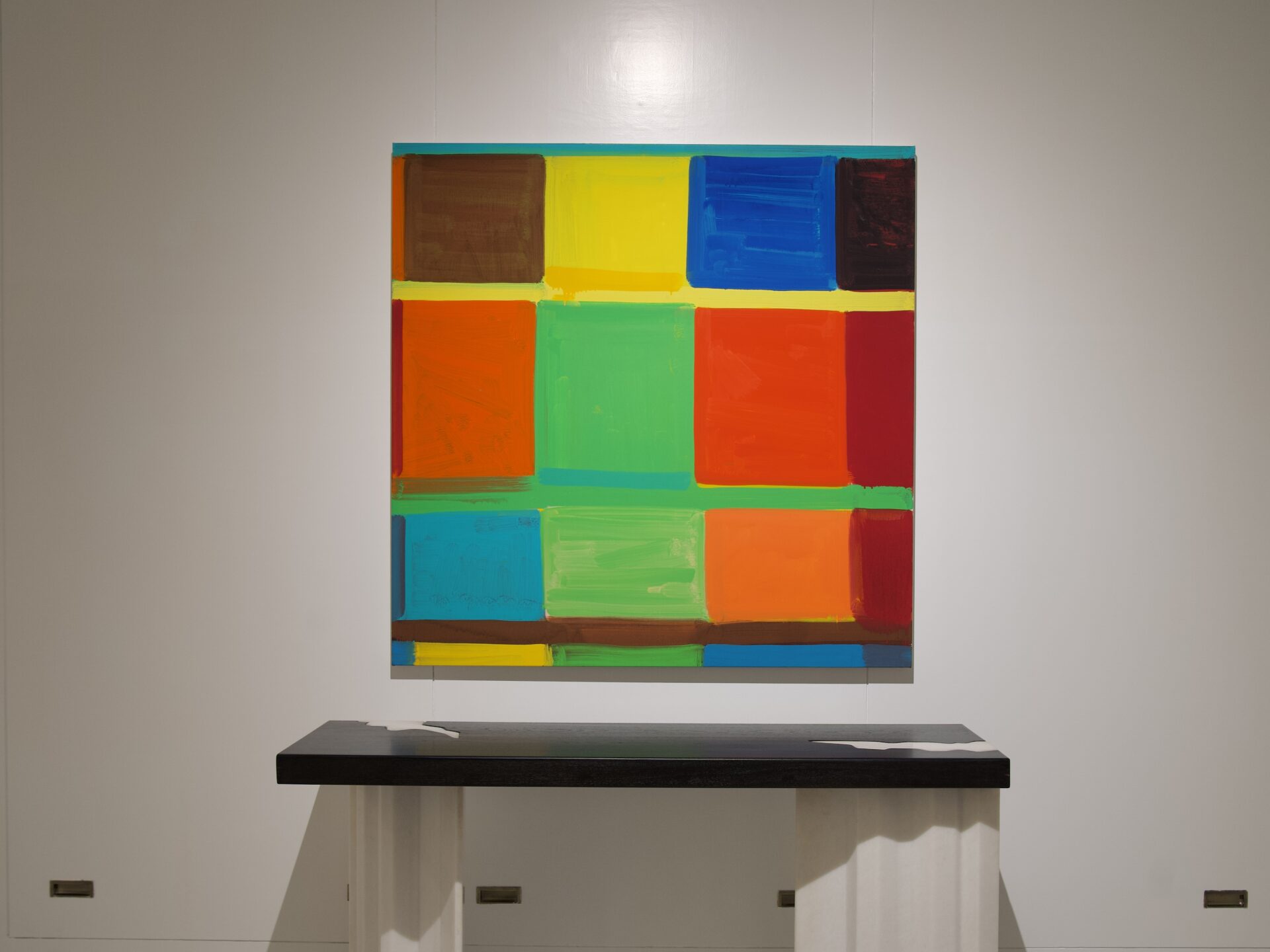
b. 1929, Terzigno, Italy
d. 2006, Terzigno, Italy

Salvatore Emblema was born in Terzigno, at the foot of Mount Vesuvius. He forged an artistic language inseparable from the landscape of southern Italy. The eruption of 1944, which covered his town in volcanic ash, left a lasting impression on the young artist, instilling a lifelong sensitivity to how light, matter, and time shape perception. The materials he used in his works such as raw jute, oxidised metals, volcanic sand, leaves, and earth pigments were taken directly from his environment. As Emblema explained, “My main concern was to have a direct relationship with truth.. Leaves and sackcloth were truth to me.” A central focus of Emblema’s career was exploring transparency, absence, space, and light. As art historian Giulio Carlo Argan observed, his work is “space which serves no purpose other than to be space.” From the late 1960s onward, he explored these ideas through the meticulous technique of detessitura, removing threads from the woven jute to let light pass through the canvas. By subtracting material, he paradoxically generated new forms, turning absence into a creative force that shaped the work.
Enquire about this artist


Beyond Form