Sculpting the Invisible: Fujiko Nakaya’s Fog Environments

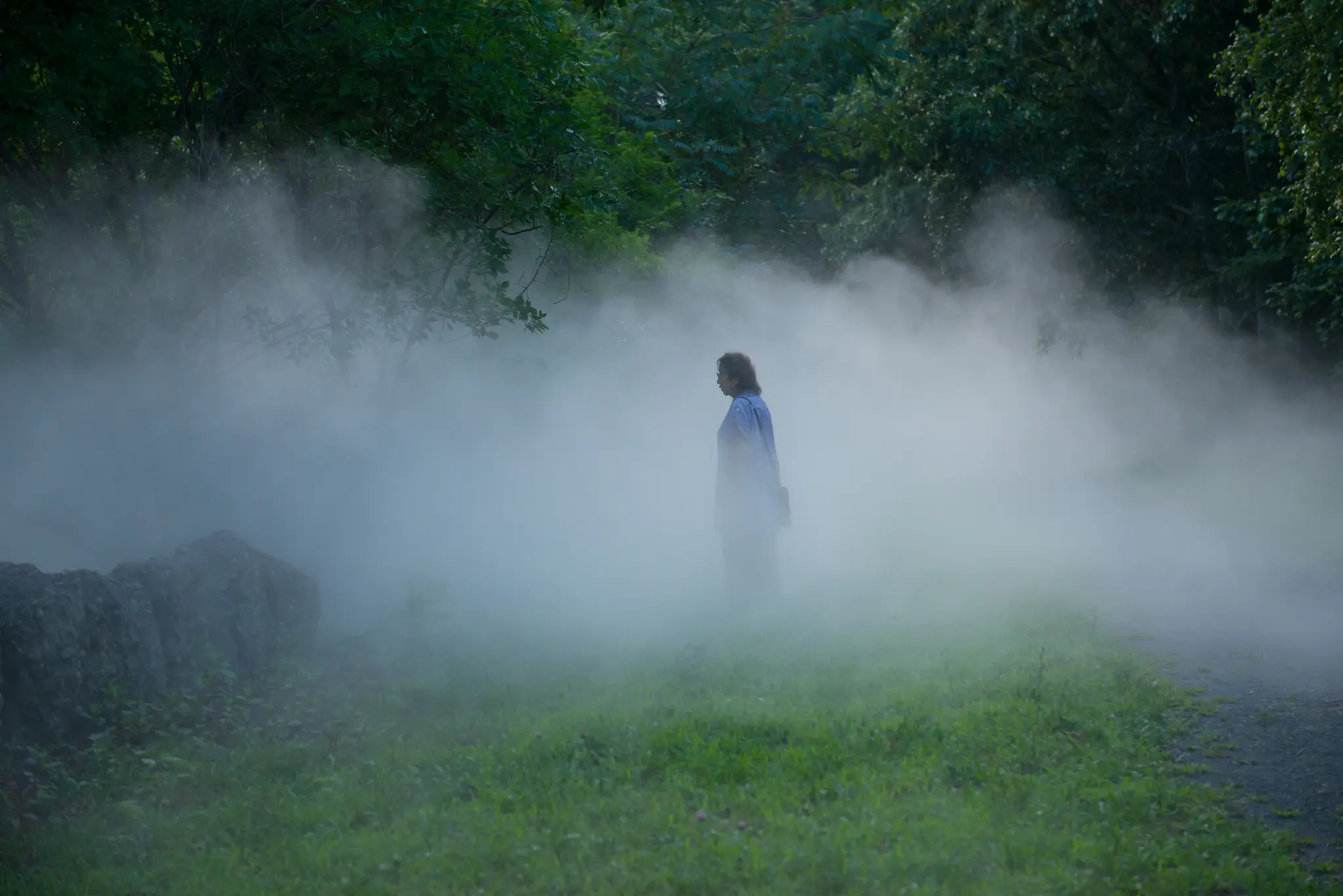
For more than five decades, Fujiko Nakaya has worked with one of the most elusive materials in contemporary art: fog. Neither solid nor stable, it resists the conventions that have long defined sculpture. Using advanced misting systems that atomise water into microscopic droplets, Nakaya creates clouds that move through landscapes and around architecture. It cannot be fixed, held, or preserved, but instead is continuously shaped by wind, humidity, temperature, and the movement of visitors.
Born in Sapporo, Japan in 1933, Nakaya grew up in a family deeply engaged with scientific research. Her father, Ukichirō Nakaya, was a physicist known for his pioneering studies of snow crystals and for creating the first artificial snowflakes in laboratory conditions. His work on atmospheric phenomena strongly influenced Nakaya’s later artistic interest in weather and environmental processes.
Nakaya studied painting at Northwestern University in the United States before returning to Japan in the 1960s. During this period, she became involved with Experiments in Art and Technology (E.A.T.), an initiative that brought artists together with engineers and scientists. This interdisciplinary environment proved crucial in practice, and rather than focusing solely on traditional materials, Nakaya began to explore technological systems capable of producing environmental effects. This experimentation eventually led to the development of fog as her primary artistic medium.
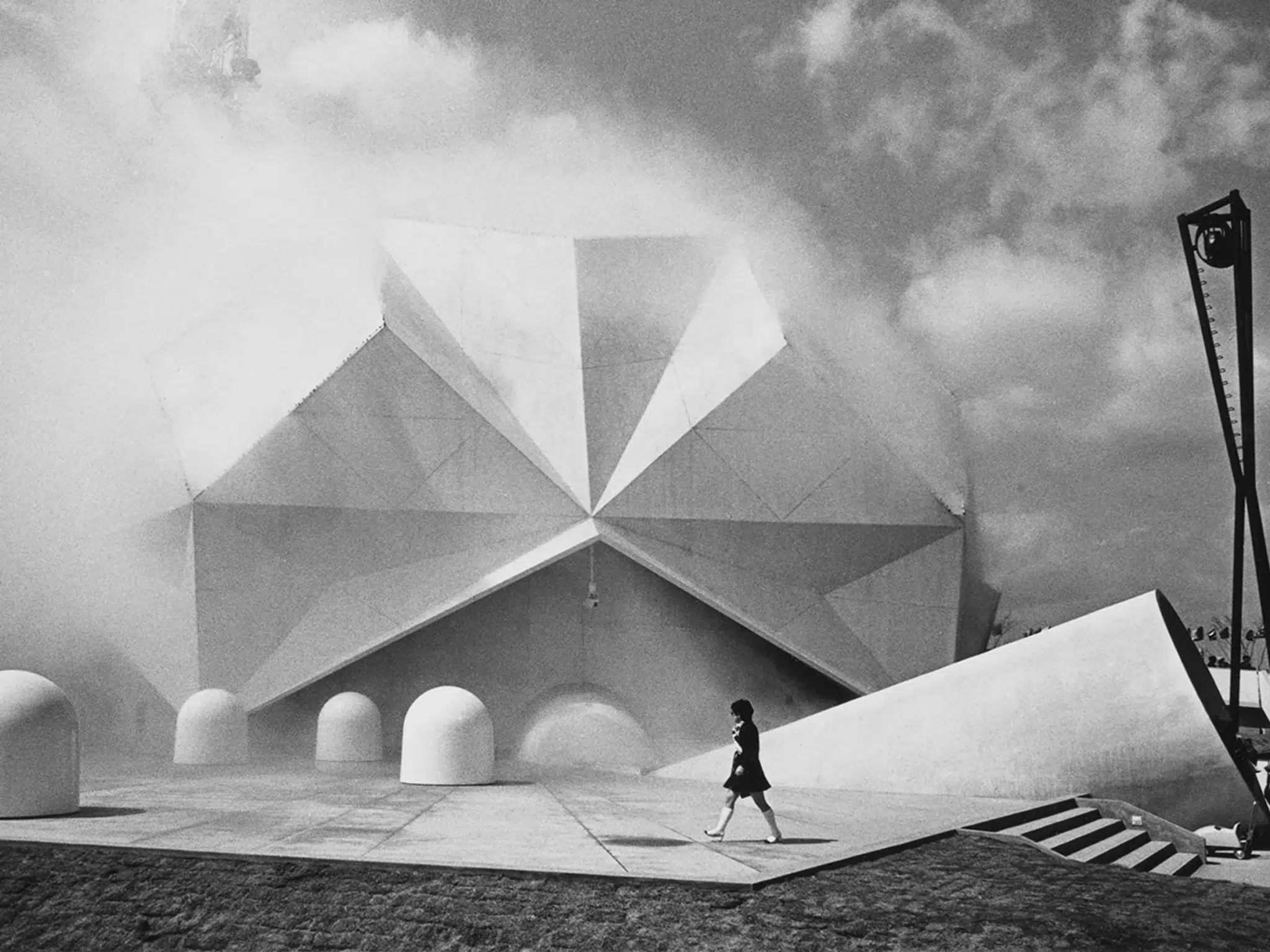
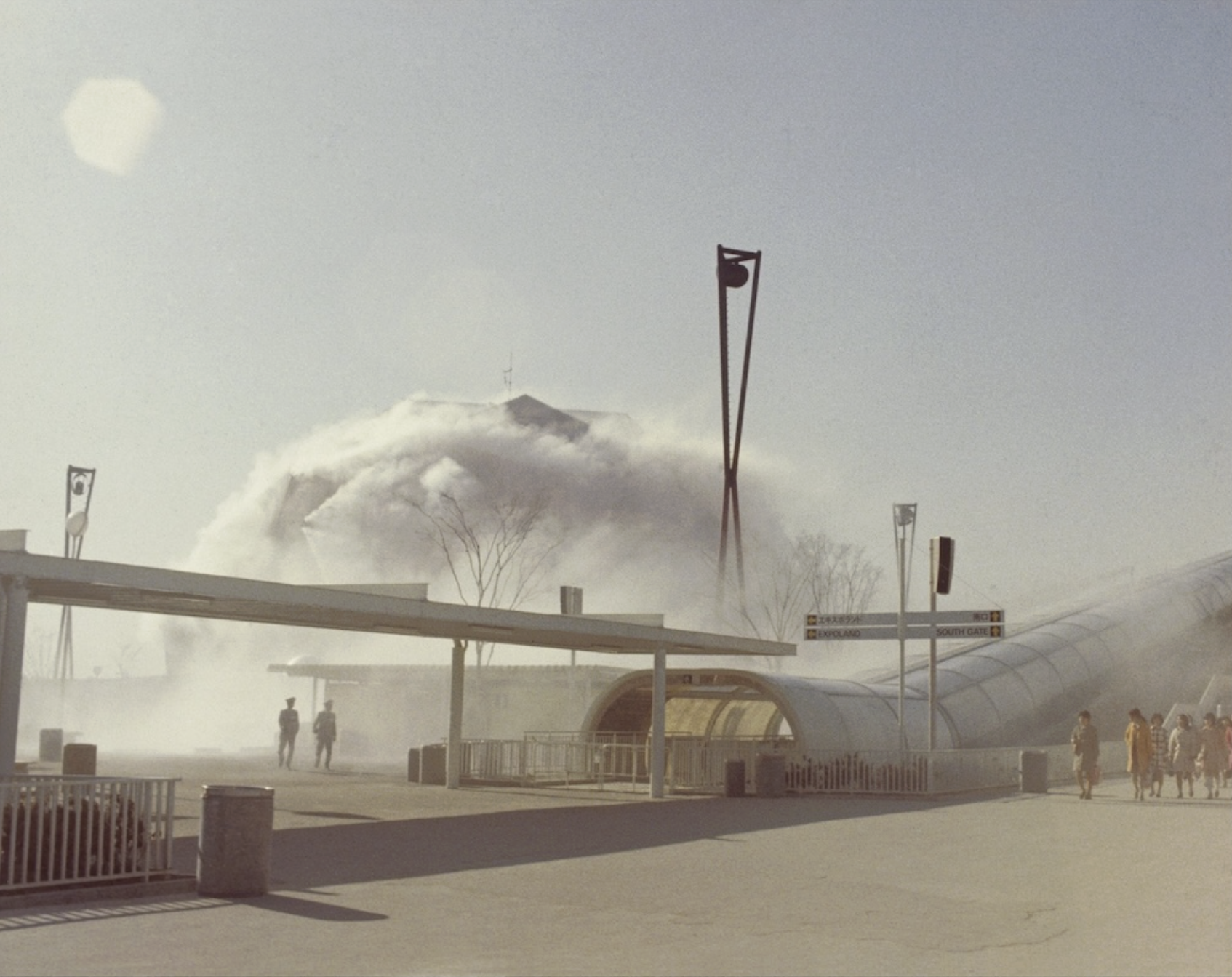
The Pepsi Pavilion: The First Fog Sculpture (1970)
Nakaya’s first fog sculpture was created for the Expo ’70 Osaka at the Pepsi Pavilion. Commissioned as part of a large collaborative project organised by Experiments in Art and Technology, the pavilion aimed to integrate art, architecture, and emerging technologies. Nakaya effectively created an artificial cloud that continuously surrounded the exterior of the building. Hundreds of fog nozzles were installed along the roofline, releasing fine mist that enveloped the pavilion in a shifting atmospheric layer. Rather than declaring a solid form, the pavilion breathed in and out of a drifting veil of fog—appearing, vanishing, and reappearing like a mirage, something which had never been done before. This project marked the beginning of Nakaya’s lifelong exploration with “fog sculptures”. It demonstrated how atmospheric phenomena could function as a sculptural medium and opened new possibilities for environmental art.
Nakaya’s fog works rely on a precise technological process that transforms water into airborne droplets. High-pressure pumps force purified water through specialised stainless-steel nozzles, producing droplets typically between 10 and 20 microns in diameter. At this scale, the droplets remain suspended in the air rather than falling immediately to the ground. Because the droplets are extremely fine, the fog behaves similarly to natural mist or clouds, so that in the end, wind direction, humidity, and temperature all determine how the fog expands. Unlike theatrical fog machines, which often use chemical vapour or smoke, Nakaya’s installations use only water. The fog eventually evaporates, rejoining the natural water cycle—an approach as ephemeral as it is environmentally restrained.
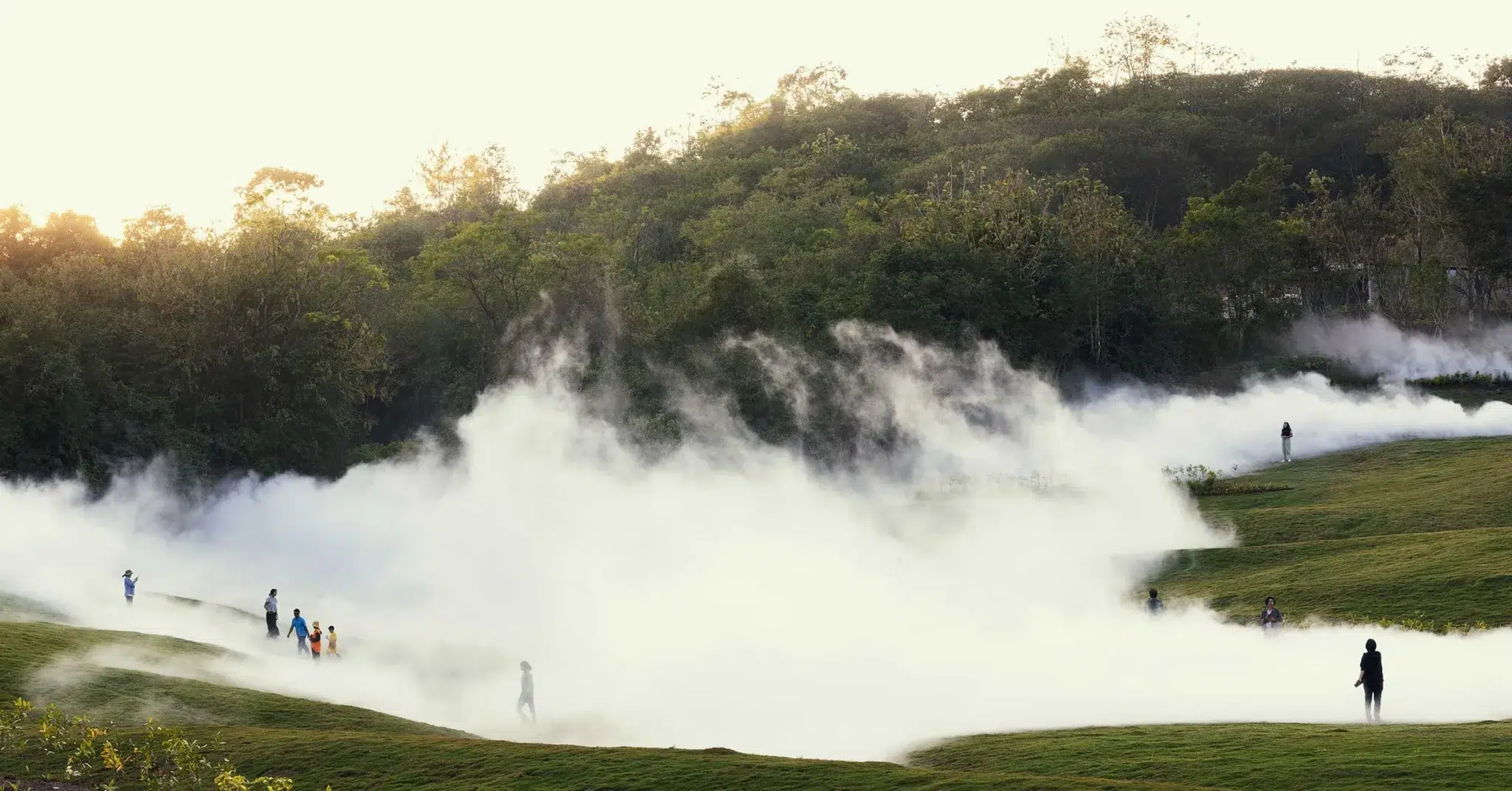
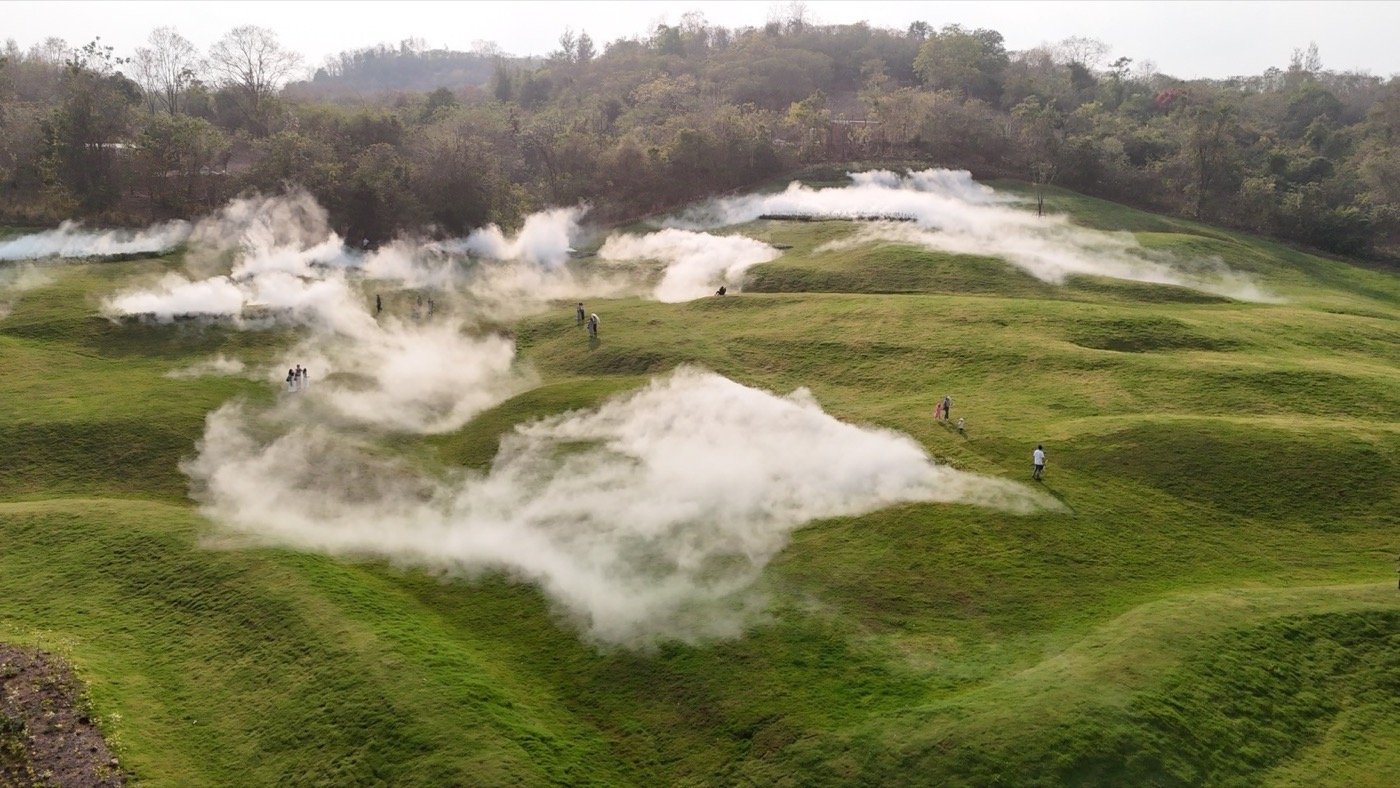
Khao Yai Fog Forest: Fog Landscape #48435 (2024 – current)
Khao Yai Art Forest is a large-scale outdoor contemporary art site located in Thailand, near Khao Yai National Park, founded by Marisa Chearavanont. Developed as a long-term cultural and environmental project, it brings together local and international artists to create site-specific works directly within the landscape. Fujiko Nakaya’s Fog Landscape #48435 (2024 – current) at Khao Yai Fog Forest represents a defining addition to the Art Forest. The work is situated within a 10,000-square-foot site in the forest, yet its perceptual and spatial reach extends far beyond this measured footprint. It does not impose a discrete sculptural form onto the landscape, but instead, activates the site by making its atmospheric conditions visible. For this work, Nakaya altered the terrain to guide the movement and accumulation of fog, allowing the landscape itself to function as a compositional element. Fog gathers in lower areas, drifts across slopes, and disperses through vegetation, responding continuously to shifts in wind, humidity, and temperature. At times, the landscape is fully obscured, collapsing depth and confusing orientation. At others, the fog thins, revealing fragments of trees and terrain. The experience is immersive and destabilising. Vision becomes unreliable, and attention shifts toward bodily perception, such as moisture, temperature, and movement.
The fog is produced in collaboration with Aquaria, a San Francisco-based company whose technology is designed to harvest atmospheric moisture and convert it into clean drinking water. Drawn from the atmosphere and released as fine droplets, the water forms fog that naturally disperses without oversaturating the environment. Once the fog forest activation has been completed, it leaves no lasting trace, and no environmental damage—as if it had never occurred at all. The fog operates as a medium of connection, linking atmospheric processes with embodied experience. It reveals the circulation of water and air while situating the viewer within that cycle. We had the opportunity to interview Marisa Chearavanont this month, where she reflects in depth on this work and its central role within the sculpture park. You can read the full interview here.
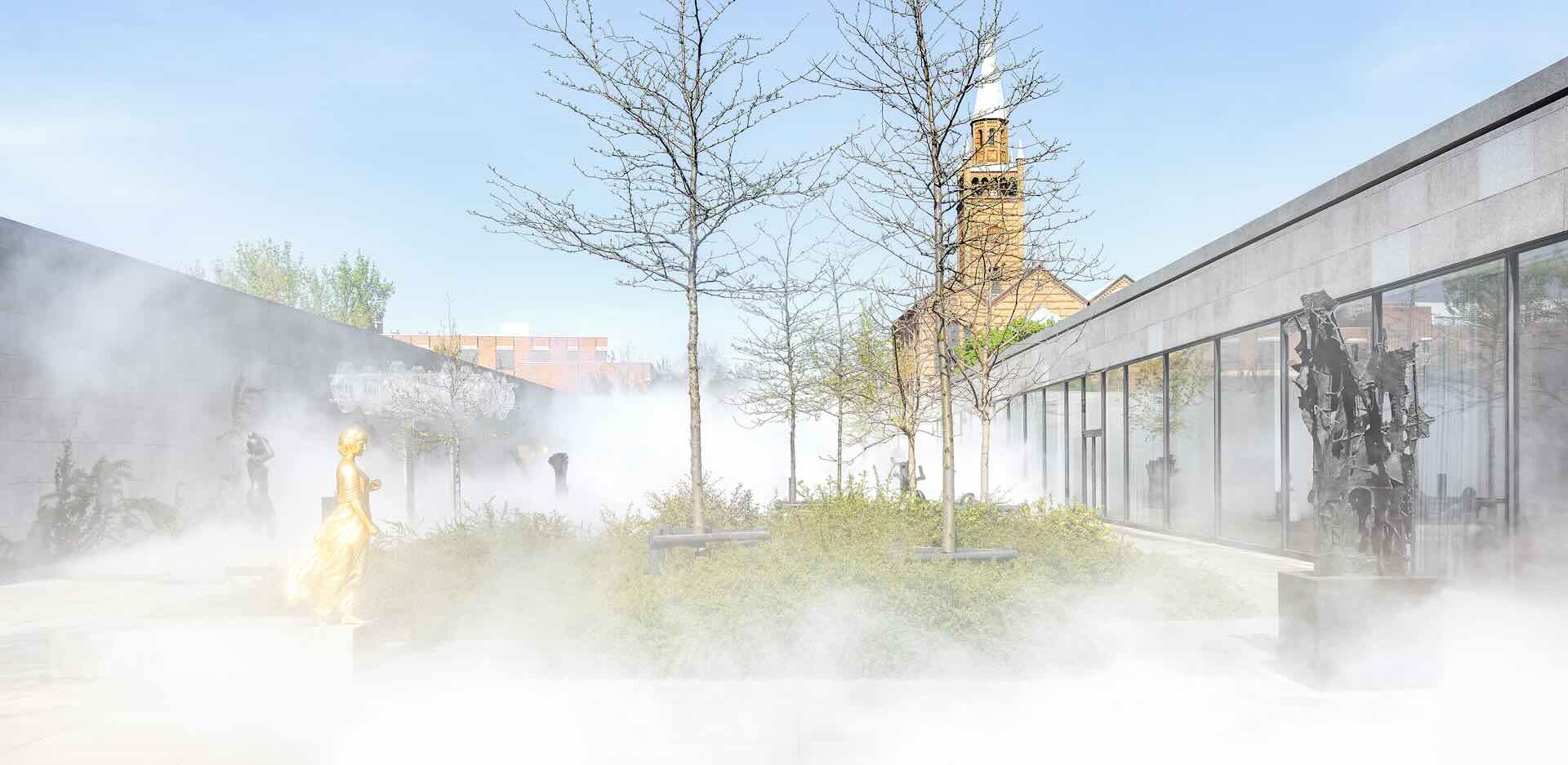
Cult of Mist (2025) in the Sculpture Garden of the Neue Nationalgalerie
Nakaya’s Cult of Mist (2025) in the Sculpture Garden of the Neue Nationalgalerie in Berlin engages a markedly different spatial and historical context. The installation occupies the entire sculpture garden of Mies van der Rohe’s building, a site defined by precision, clarity, and modernist order. The fog is released from multiple points along the perimeter of the garden, gradually filling the space before dissipating upward. The scale of the work corresponds to the full dimensions of the garden, transforming it from a stable display environment into a dynamic atmospheric field.
A defining feature of this installation is its interaction with the existing sculptures. Works by Henri Laurens, Wolfgang Mattheuer, and Alicja Kwade are intermittently obscured and revealed as fog moves through the space. Their forms, typically stable and legible, become contingent. This transformation extends to the architecture itself. While Mies van der Rohe’s design emphasises structural clarity and visual continuity, Nakaya’s fog introduces instability into this system.
Veil (2014) at the Glass House
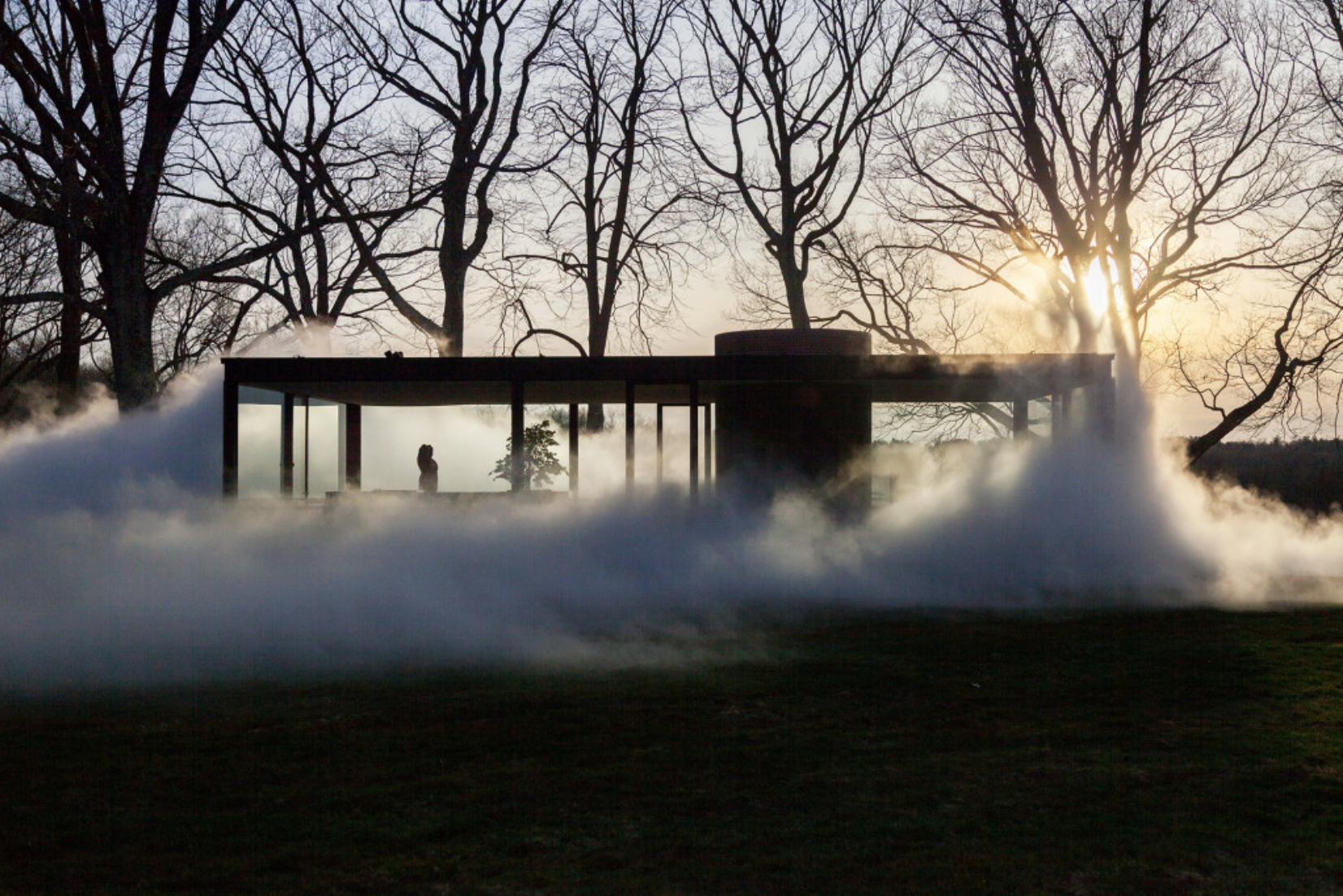
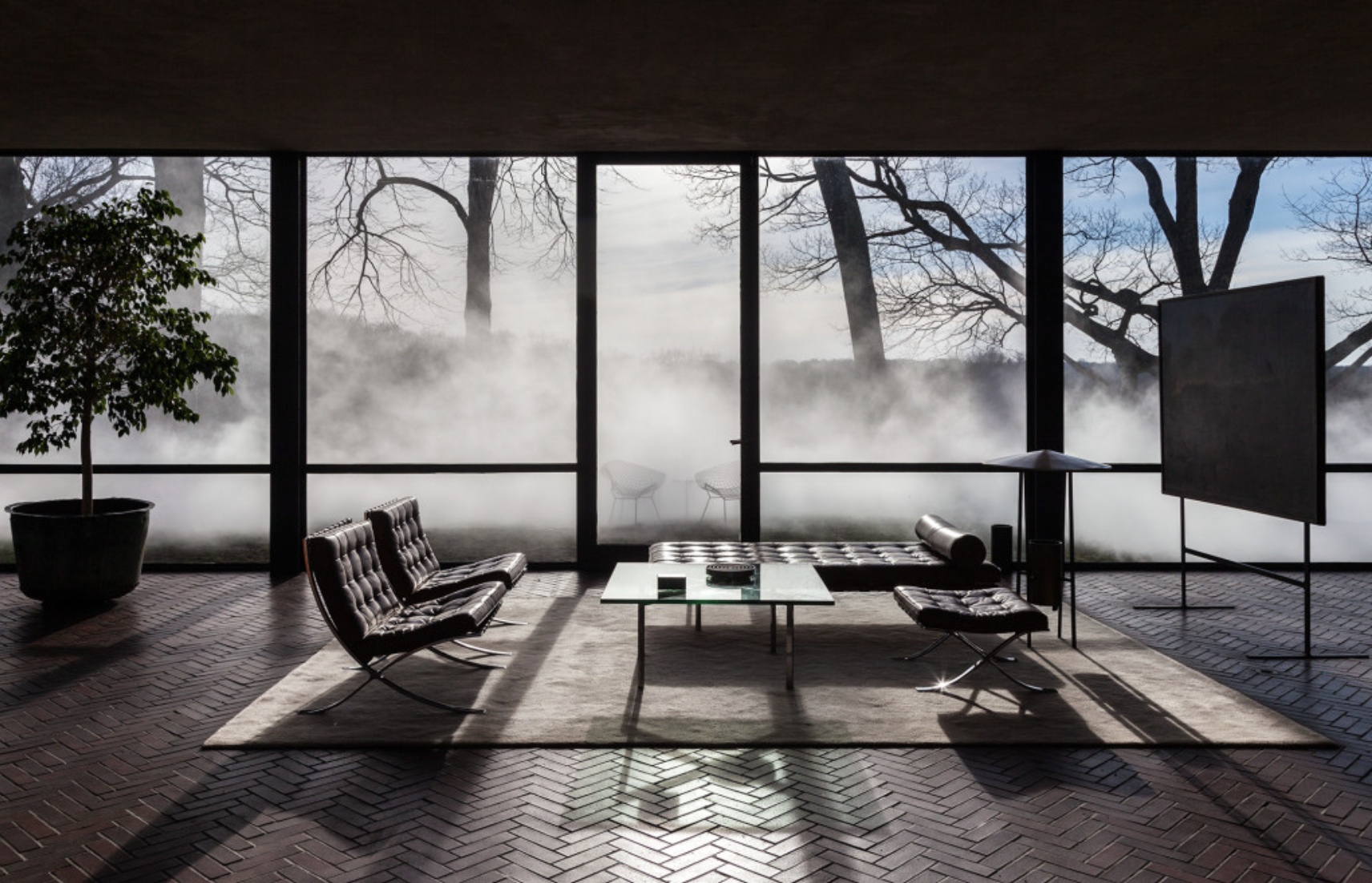
The Glass House is a canonical work of modernist architecture in Connecticut, defined by its transparent glass façade. The building is conceived as an object of visual continuity, where landscape flows into architecture and architecture extends into landscape. Nakaya’s intervention introduces a fundamental inversion of this condition. The installation introduces opacity into a structure defined by transparency. At regular intervals, a dense field of fog gathers around the building, gradually obscuring it until it disappears from view. The house, typically defined by its clarity and presence, becomes uncertain and contingent. The fog interacts directly with the material surface of the building. Moisture gathers on the glass, softening reflections and introducing layers of visual distortion. The glass becomes perceptible as a surface, no longer functioning as an invisible boundary.
From the Pepsi Pavilion to forests and modernist sites, Nakaya works with what cannot be held. Her fog gives form to air in motion—only to dissolve again, reminding us that atmosphere is always in flux, and that change is constant. In making these shifting conditions perceptible, her work heightens our awareness of the environment, emphasising it not as a static backdrop, but as a living, responsive system we are already part of.
LVH Art Guide to the Art World before year-end: Exhibitions, Auctions, Fairs and Prizes